

 Online Reporter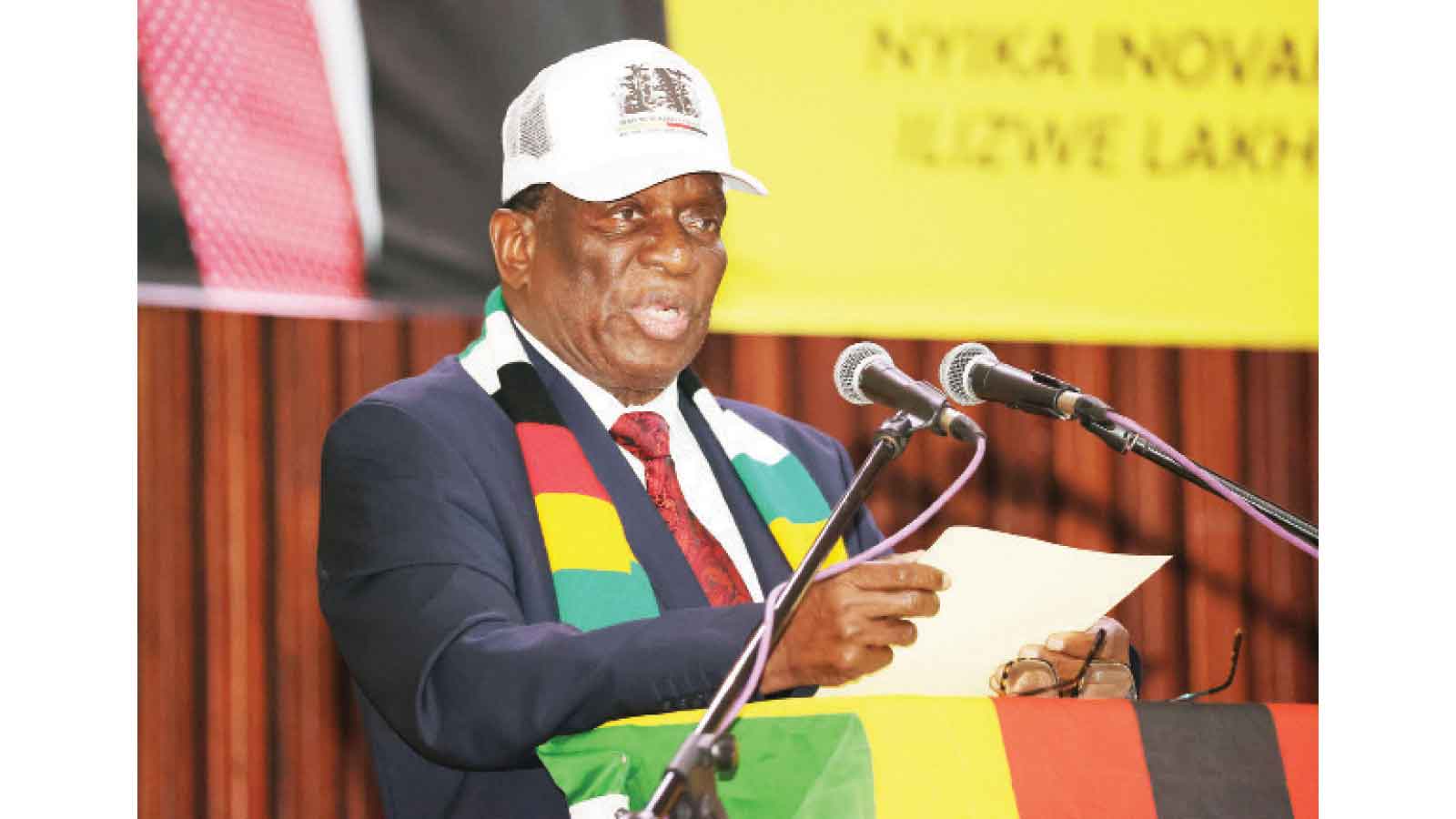
MacDenias Moyo
AT Zanu PF Headquarters in Harare, the 4th National Assembly of the War Veterans League convened under the leadership of His Excellency President Mnangagwa.
This assembly was not a routine gathering of party structures. It was a profound reaffirmation of Zimbabwe’s revolutionary covenant, a continuation of the struggle that began with the First Chimurenga and now advances in the Fourth Chimurenga through Vision 2030 and CAB3.
The theme, “Empowering War Veterans: Securing Land Title for a Lasting Legacy and Prosperity”, captured the essence of this moment — the binding of past sacrifice to present empowerment and future sovereignty.
The war veterans are not a constituency to be placated. They are the living custodians of Zimbabwe’s freedom. From the First Chimurenga, where Mbuya Nehanda and Sekuru Kaguvi consecrated the soil with their blood, through the Second Chimurenga, which delivered independence in 1980 and the Third Chimurenga, which reclaimed land from colonial dispossession, the veterans have been the compass of our destiny. Today, in the Fourth Chimurenga, defined by economic sovereignty, technological modernization and institutional renewal, they remain the vanguard. Their welfare is not charity. It is sovereignty itself.
President Mnangagwa’s words at the Assembly were clear and binding as he said, “By securing land title for our veterans and the rest of our communities, we are cementing the foundation of our sovereignty. Under the Second Republic, we are a listening party and Government, we will never neglect the liberators of this great country.” This is not ornamental language. It is a covenant that the liberation struggle continues in economic form and the veterans are both beneficiaries and drivers of this revolution.
The Assembly announced Presidential Empowerment Schemes that expand the arsenal of economic tools for veterans. The War Veterans Wealth Fund, capitalised with USD 1.5 million, finances provincial projects and ensures veterans are not passive recipients but active entrepreneurs. A further US$2 million allocation for borehole drilling rigs ensures veterans will own rigs, drill at their residences and subcontract to government contractors under the Presidential Rural Development Programme. This transforms infrastructure into enterprise, sovereignty into income. Scholarship schemes and enterprise development projects secure the future of veterans’ children, ensuring generational continuity. Land title deeds secure ownership, dignity and permanence, the very essence of sovereignty. These measures are recognition that the veterans’ welfare is inseparable from national welfare. As the President emphasized, “The welfare of our veterans is inseparable from that of their families. These include comprehensively updating the Registry of missing revolutionary fighters and speeding up the exhumation and reburial exercise.”
Zimbabwe’s path is acknowledged beyond its borders. The African union has hailed the empowerment of liberation movements as central to continental sovereignty. The Southern African Development Community has recognised Zimbabwe’s stabilisation under the Second Republic. The United Nations Development Programme has testified to the strides in rural development. The African Development Bank has acknowledged the infrastructure modernisation that underpins empowerment. Domestically, the Confederation of Zimbabwe Industries has lauded the empowerment schemes as catalysts for enterprise. The Zimbabwe Council of Churches has recognised the inclusivity of reforms that bind communities together. War veterans, through their League, are not passive recipients. They are active participants in governance, enterprise and social renewal. Their Assembly is a compass for the Party and the nation, reminding Zimbabweans that sovereignty is defended not only with arms but with enterprise, land and dignity.
The welfare of war veterans is not a peripheral issue. It is the heart of national stability. Neglecting them would mean neglecting the very foundation of independence. By empowering them, Zimbabwe empowers itself. Their children and widows, their enterprises and land, their dignity and recognition — all are pillars of national cohesion. As President Mnangagwa declared, “Land is the birthright of all Zimbabweans and the sacred inheritance for which many fought and sacrificed.” This inheritance is now secured with title deeds, wealth funds and empowerment schemes that bind the veterans to the economic revolution.
The Fourth Chimurenga is not fought with rifles. It is fought with policies, institutions and enterprise. Vision 2030 is the battlefield and CAB3 is the arsenal. War veterans are the generals of this economic war. Their empowerment schemes are not isolated projects. They are strategic deployments in the war for sovereignty. The issuance of land title deeds is the consolidation of the Third Chimurenga. The wealth funds are the ammunition of economic sovereignty. The borehole rigs are the infrastructure of empowerment. Together, they constitute the arsenal of the Fourth Chimurenga.
The 4th National Assembly of the War Veterans League is not just a gathering.
It is a declaration that the liberation struggle continues in economic form, under the stewardship of President Mnangagwa.
The veterans remain the compass of Zimbabwe’s destiny, their welfare inseparable from the nation’s sovereignty. Vision 2030 and CAB3 are not abstract policies. They are the Fourth Chimurenga and the veterans are its vanguard.
President Mnangagwa has delivered and continues to deliver. Everything else is noise. The Assembly is proof that Zimbabwe is on a positive path, acknowledged by international organisations, affirmed by national institutions and sanctified by the veterans who embody our sovereignty.



