Andrew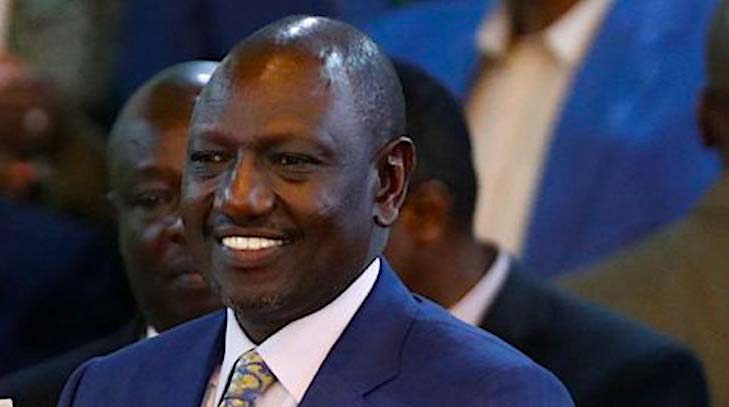
Kundai Vambe
ON August 15, William Ruto was declared President-elect of Kenya after edging past Raila Odinga in a tightly-contested election.
The election was held after outgoing President Uhuru Kenyatta dramatically endorsed his long-term rival Raila Odinga, a move seen by many as a betrayal of his Deputy President Ruto.
At the time of writing, it was highly likely that the result will still be contested in court, nevertheless this day will remain in history as the day a long era in Kenyan politics came to an end. Perhaps I should confess my interest in Kenyan politics which was born in 2019 during a holiday trip to Nairobi. From the airport, one is graced by a name that is impossible to miss, Jomo Kenyatta International Airport, not to mention the Kenyatta University and Kenyatta National Hospital. The Kenyatta name is inseparable from Kenyan Independence. Jomo Kenyatta is the founding President of Independent Kenya.
The formation of the dynasties
Jomo Kenyatta, father to Uhuru, became Kenya’s President in 1964 until his death in 1978. Just as much as the Kenyatta name is inseparable from Kenya, the name Odinga is inseparable from the name Kenyatta.
Jaramogi Oginga Odinga, father to Raila, was Jomo Kenyatta’s Deputy President from 1964 after he relinquished his position as the Luo King. Odinga resigned from his position and the party Kenyan African National Union (KANU) in 1966 following disagreements with President Kenyatta because he preferred alliances with the Eastern bloc, China and Russia, while Kenyatta preferred the Western bloc led by the USA. The fallout between the two marked the beginning of what was to become the greatest rivalry in Kenyan politics. Odinga went on to form an opposition party known as the Kenyan People’s Union in 1966. The rivalry was so intense that in 1969 they verbally attacked each other, causing chaos that resulted in the death of 11 people.
The Moi effect
After the death of Jomo Kenyatta, Daniel Arap Moi took over the presidency and tried to bring Odinga closer, but the relationship failed because the new president upheld his predecessor’s policies, to Odinga’s dismay.
The fallout with Moi resulted in Odinga attempting a failed coup on the government, leading to his arrest along with his son, Raila, and later formation of his FORD party.
The party split in 1992 after Odinga lost the election to become its leader.
It is said that FORD caused the end of KANU’s 40-year reign after Jaramogi Odinga’s death.
Raila Odinga took over the opposition reigns from his father through formation of the NDP and made his first attempt at being Kenya’s President in 1997 but finished third, with President Moi victorious. The NDP later merged with KANU but the relationship between Moi and Raila went sour in 2002 after Moi endorsed young Uhuru Kenyatta to succeed him, much to Raila’s disappointment. Raila Odinga led an exodus from KANU culminating in the formation of the National Rainbow Coalition (NARC)
Fallout of the heirs and Mwai Kibaki
With NARC, Odinga ran the campaign for Mwai Kibaki to win resoundingly against Moi-endorsed Uhuru Kenyatta.
Kibaki did not appoint Odinga as Prime Minister contrary to their agreement. Odinga went on to form the Orange Democratic Movement (ODM). After a split in 2007, the ODM elected Raila Odinga as its leader.
Interestingly, one of the contestants was William Ruto. Raila contested in 2007 losing to Kibaki by a narrow margin, which led to mass protests, resulting in the 2008 power-sharing deal which made Odinga Prime Minister.
In 2013, Raila’s CORD coalition lost to Uhuru Kenyatta and William Ruto’s Jubilee Coalition.
When one puts everything into perspective, 2013 was Ruto and Kenyatta against Odinga.
In 2017, Odinga and Kenyatta faced off in another tightly-contested election which ended with the Supreme Court nullifying the result and ordering new elections, but Odinga pulled out, leaving Kenyatta as the 4th President of Kenya deputised by William Ruto.
The last coalition
In 2017 Odinga and Kenyatta appeared in public to make peace, symbolised by a handshake. They announced their brotherhood dating back to their fathers; the same brotherhood that would lead them to team up against William Ruto in the 2022 election to unfortunately fall right on Ruto’s sword.
William Ruto, the unlikely candidate to end the 59-year reign of two strong Kenyan political dynasties, the Kenyattas and Odingas, who are often likened to the Kennedys and the Rothschilds, is just a common man from an ordinary family.
Ruto was introduced to politics by Daniel Arap Moi, whom he had met through church interactions.
William Ruto paved his own way and rose through the ranks from church leadership to being a teacher, then Member of Parliament until he became Moi’s director of elections and then Deputy President from 2013 to this year.
The fall on William Ruto’s sword
Throughout his campaign for the 2022 elections, Ruto branded himself as a hustler with reference to his rise and as a way of relating to the plight of young Kenyans doing what it takes to manoeuvre the economy and achieve their dreams. In one interview, Ruto said: “Every Kenyan thinks I am a hustler because politics in Kenya has been around people who have brands, either your father was this or your father was that. The competition now is largely between the current president, the son of the former president, the son of the former vice president and all those . . . I have grown my career from nothing, I have climbed the ranks and learnt the hard way to be where I am today.”
William Ruto is the unlikely sword that has put an end to the Kenyan era of political dynasties and will go down in history as such.
The Kenyatta and Odinga families have played a significant role over the past 59 years.
They have immensely contributed to the maturity of Kenyan democracy and have had a controversial impact on Kenyan political systems as well as its economy.
Sadly for the Odinga family, they have failed to produce a Head of State.
Raila Odinga is unlikely to ever contest again. When the next election is due, he will be 82. On the other hand, there is no other Kenyatta in the current matrix with chances of becoming President.
This is the end of an era of Kenyan dynasties at the hands of William Samoei Ruto who said: “I am a man on a mission, I don’t have the space to retreat or the luxury to surrender.”
◆ Kundai Darlington Vambe is a political researcher and a member of the Global Alliance for Justice Education.


 Online Reporter