Chronicle Editor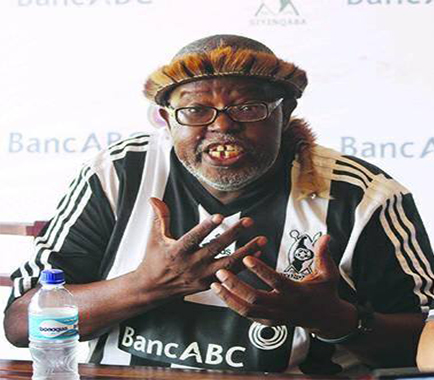
Pathisa Nyathi
I WAS driving past the Matopo Research Station along the Maphisa-Bulawayo Road when a devastating bolt of nerve-wreaking news struck me.
The date was 29 December 2021.
Ndumiso Emmanuel Gumede had just breathed his last less than an hour ago at Mpilo Central Hospital in Bulawayo.
I pulled off the road to absorb the shock of the least expected news.
I recalled, at that very moment of grief and deep sense of loss, that on 16 October, 2021 about two months earlier, Gumaz as I used to call him, had steered his Merc along the same road.
He was returning from my rural home, Sankonjana where he attended my 70th birthday celebrations.
On the return journey, he had lost three-wheel caps, a stark reminder of the treacherous road from Maphisa to my rural home.
Today, Tuesday 4 January 2022, Ndumiso Gumede’s body arrives at the United Congregational Church of Southern Africa (UCCSA)’s Inyathi Mission, the oldest mission station in Zimbabwe founded in December 1859 by the London Missionary Society (LMS).
At the mission is a historical cemetery where over the years pioneering missionaries’ children, leading church community members, early white farmers are buried.
Gumede joins both his parents whose remains are interred in the recently spruced up cemetery.
On several occasions, I visited his rural home not to visit him but the general area including the mission school itself.
One occasion that Ndumiso would always remind me of was when I visited his mother Elinah Msimanga when I was looking for a story for my Cultural Heritage column in the Sunday News.
She told me about the traditional Ndebele ways of dealing with vermin in crop fields.
She took me through the rituals that women beyond menopause and the young girls who had not then reached puberty performed to ensure birds did not land on crops and thus consume the grain.
She told me about the nearby hill known as Ndumba and that there were, in days gone by, sounds that were heard below the mystic hill.
My friendship with Ndumiso dates back to the 1970s at the time he was teaching at Mzilikazi High School.
He had transferred from Highfield Secondary School where he taught following his graduation from Gwelo Teachers’ College in 1969.
Initially, it was through the aegis of soccer that we made the first contact.
He was already involved with Highlanders Football Club, Zimbabwe’s oldest soccer outfit having been established in 1926 by the two royal brothers Albert and Rhodes, sons of Prince Njube the son of King Lobhengula okaMzilikazi.
Prince Njube, along with his two younger brothers Nguboyenja (okaSithwapha Ndiweni) and Mphezeni (okaMaThebe) were whisked out of Matabeleland by Cecil John Rhodes to ensure the erstwhile Ndebele monarchy was never resuscitated again.
Back then, I was a soccer fanatic and enthusiast.
Highlanders then had players such as Bruce Grobbelaar, Josiah Nxumalo, Barry Daka, Lawrence Phiri, Gavin Duberly, Boet Van As and Tymon Mabaleka, inter alia, with Silas Ndlovu as team manager.
Gumede was then cutting his teeth in soccer administration.
He used his charisma, charm and allure to rally supporters behind Bosso.
That was at the time when the team went by various motivational names such as Bosso, Tshilamoya, and Mantengwane among other names.
Poetic compositions and songs were crafted in praise of the team with a strong and loyal following as ithimu yezwe lonke, the national team.
However, this piece is not about Gumede and his exploits in soccer.
Rather, it is more about what linked us beyond soccer. Ndumiso had a strong social and artistic flavour.
It was that trait that provided the link and bond that endured and led to the man occupying some pride of place in my recently completed two-volume autobiography titled, “Pathisa Nyathi @ 70: A Life Dedicated to Arts, Culture and Heritage.”
For starters, we lived close by in Gwabalanda Township at a time when the Rhodesian state was characterised by deep-seated racism that translated to racially segregated settlements.
Blacks were not allowed to purchase and live in houses in the eastern low-density suburbs.
We rubbed shoulders at the social level when we used to arrange and attend social parties where music and dance were key elements.
We were a close-knit group that contributed “hot stuff” such as Bols Brandy, Smirnoff and the usual lagers.
Krest Lemonade was a popular brand for diluting the hot stuff.
Back then, we were not allowed to venture into the white drinking facilities in the centre of town.
As a result, we organised our social parties in friends’ houses.
House Number 20 in Barbourfields was a popular venue where our group comprising, inter alia, Gumede, Nivathi Songo, Roger Muhlwa, Edward Mguni, Howard Nyathi, Nathaniel Tshabalala and myself gathered to dance and drink the night away.
Jack Mlangeni Ncube, then a State Registered Nurse (SRN) at the nearby Mpilo Central Hospital, Edward Mguni, Bernard Dakamela (with wife MaSikhosana) and myself lived at the Barbourfields house and were an integral part of partying friends.
What I should point out is that Gumede was an accomplished and versatile dancer who was in full control of his not-so-small body.
I still remember that he danced expertly to the song by Babsy Mlangeni.
He also reveled in the sounds of Donna Summer.
When I read that during the function arranged to honour him just before he passed on, he danced with his sister Cebekhulu Fuyana, I was convinced dancing skills ran through the family.
That episode in our lives found its way into my autobiography that was launched on 16 October 2021 at Sankonjana by the Reverend Paul Bayethe Damasane where Gumede was also present.
Back in the 1970s, I recall our experiences at the Mushandirapamwe Hotel run by Solomon Tavengwa.
Both Gumede and Songo knew I had a girlfriend in Highfield’s New Canaan Township. One day we decided to visit Elizabeth.
Therefore, we decided to put up at the Mushandirapamwe Hotel. As already pointed out, blacks were not allowed into Salisbury’s CBD hotels, which were the reserve for the white rulers.
Two of us booked a room but the three of us went into the same room that we booked.
In the morning, tea was served.
When the man bringing the tea knocked on the door, Gumede quickly jumped out of bed, got into a wardrobe, and remained silent inside. When the tea man left, Gumede emerged from the wardrobe.
We avoided paying for the three of us.
In the morning, we proceeded to my in-laws where Elizabeth’s younger brother Charles Chamisa had been taught Mathematics by ‘Yours Truly’ at the nearby Highfield Secondary School.
About mid last year Gumede pitched up unannounced at my home in Gwabalanda. He was man on a double mission.
He had been sent by the Inyathi community to invite me for the official opening of the refurbished Inyathi Mission Cemetery, which, through some generous donation, had been provided with a new durable palisade.
The cemetery had, over the years, been the burial site for missionaries’ children who succumbed to malaria and other diseases prevalent back then.
Leading members of the church were also buried in the cemetery.
Mzingaye Dube the secondary school head was among those who were buried at the historic cemetery.
Gumede’s parents were also buried on the site.
Ndumiso goes there at a time when the site has had a befitting facelift.
Ndumiso’s second mission was from the Highlanders community who were requesting me to pen the history of the royal soccer outfit.
The community was aware that in five years’ time the club would be celebrating its first centenary celebrations.
It was only proper therefore that the celebrations be marked by the publication of a book that covers the 100 years of existence for the club.
My responses to both requests were in the affirmative.
I did advise Ndumiso that Luke Mnkandla had already made advances on the latter and I had identified Lovemore Dube the sportswriter to team up with me in the onerous task before us.
As already pointed out above Gumede earned himself some pride of place in my voluminous two-part autobiography.
On the 16th of October 2021 we held my first ever birthday celebrations at Sankonjana and Gumede was present alongside some of the members of the partying group from the 1970s.
What he stood up to say in a few minutes was that he married once and divorced.
He married the second time and divorced again.
Now he has given up on ever getting married once again.
That he said amidst animated laughter from the big audience.
The last time we met was when the Highlanders Football Club leadership was going for antigen Covid-19 tests at the Arundel Hospital in Bulawayo.
The tests were in preparation for the flight to the Victoria Falls where the team leadership was going for some strategic meeting.
I sat close to him outside the health premises.
“Pathisa, I will never again go to your rural home.
I lost three wheel caps due to the treacherous nature of the road from Maphisa to Sankonjana,” said the broadly smiling Gumede.
“You will never again be invited to my rural home.
That was the first and last,” I mused.
Indeed, it was the first and was to be the last.
I had got to Arundel Hospital in the company of Luke Mnkandla with whom I was due to record our weekly episode of Amafa Ethu with Skyz metro FM. Mnkandla thought he had alerted me to the planned function to recognise the illustrious role Gumede played in the growth and development of Highlanders Football Club.
I missed out on that function that was held timeously to give due honour to one who made no mean contribution to the growth and development of Highlanders Football Club which is a household name all over Zimbabwe and beyond.
He led the club at the time it received attention from artists who immortalised the club’s name.
He certainly was going to revel in the proposed centenary celebrations in 2026.
My promise is to do all within my power to fulfil his wish and that of many others to see the history of Highlanders Football Club, iBosso, iTshilamoya, uMantengwane have its history captured for posterity when its history is indelibly etched on the sands of time.
I will go further and promise to push for the establishment of a museum to capture, in a tangible way, the life and times of Highlanders Football Club and push for the facility to be named after the legendary and iconic leader of the royal team that has prevailed through trying and tumultuous storms.
Go well eGumede
ESifunda samathole
EKhuzwayo
EGabhazana owagabha ngemikhonto emazibukweni
Mkhabuzeli,
Owakhabuzela ngenyawo ezinengi
ENtshizamdluli,
UJodo lathendeka
Umhlamb’ olomuwa njengamabele
UMnguni uYeyeye kaPhakathwayo
USenzel’ amanqe lamakheledwana
UMagwaza akhankase
UMagwaz’ ahibilize
UThiya lwezimbongi
UMalwa kubi aze alwe ngezidwatshana
Ilemb’ eleq’aamany’ amalembe,
Ngokukhalipha!
Once again, I say go well Gumede.



 Online Reporter