Chronicle Editor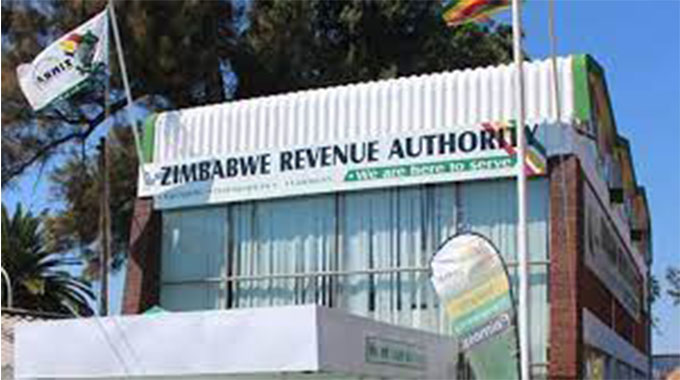
Thupeyo Muleya, Beitbridge Bureau
THE tightening of security along the country’s border with South Africa has helped build capacity of the Zimbabwe Revenue Authority (Zimra) to collect more revenue from imports and exports going through the Beitbridge Border Post, a Cabinet minister has said.
In a recent interview after touring the borderline with members of the national security council Defence and War Veterans Minister, Oppah Muchinguri-Kashiri, said more resources were being deployed to curb border crime in the area.
She said more patrol vehicles, material and human resources were gradually being dispatched.
As a result, revenue collection has improved by eight percent in July, 11 percent in August and 38 percent in September this year as more people are now adhering to formal border post processes.
“We have had feedback from Zimra and other stakeholders that their capacity has of late improved as security and defence members continue to suffocate criminals at the main border and border flanks,” said the minister.
“You will note that our members have been doing their best to curb crime in that area and we will continue to come up with strategies on how best to use technology to assist us in the good work that is being carried by security and defence forces.
“We understand there are also some very serious issues that we need to assist them with especially on the deployment of more patrol vehicles, fuel and allowance for those deployed to the border front.”
Minister Muchinguri-Kashiri said security along the border had been improved following the adoption of the zero tolerance stance to cross border crimes.
The move, she said, has ensured that people use designated border control areas and that the volume of commercial traffic had peaked from 200 during the peak of the Covid-19 era to 900 daily.
This benefits Government in terms of revenue collection to fund its commitments and obligations, she said.
“The President is on record talking about Vision 2030. So, we can only realise that vision if we mobilise enough revenue, which will then be invested in National
Development Strategy 1 (NDS1) to ensure that we continue improving our infrastructure like what is going on at the border currently,” said Minister Muchinguri-Kashiri.
“So, there are two combinations, we are looking at cross border crimes and also generally crime to do with livestock within the province itself.
“We know through the bi-national commission between Zimbabwe and Botswana, the issue of livestock thefts took centre stage. So, we have a very strong commitment to the two countries as the Joint Operations Command (JOC) to make sure we put mechanisms in place to address issues of crime in this area.”
The minister said the national security council had also noted relative challenges that are faced by stakeholders operating at the border.
These, she said, will be addressed without delay as soon as they table their recommendations to President Mnangagwa who chairs the national security council.
Among other issues, Minister Muchinguri-Kashiri said they will urgently be addressing issues of touts and conmen who are operating within the border post.
“We play a very important role, we appreciated that there are so many touts at the border and we are strategising on how best we can address this issue,” she said.
“However, we are not only looking at touts, we are alive that there are issues to do with the smuggling of contrabands, which are being brought into the country with the capacity of threatening our own defence and security,” she said.
“We realise that there are explosives that are being smuggled through the border, and sometimes arms and ammunition that come through the border. At times, these people are brought to book and, in some instances, we don’t detect them and we have established what we need to do to contain this.”
While briefing the national security council, Zimra’s Commissioner for Customs and Excise, Mr Batsirai Chadzingwa, said the separation of traffic, automation of the border and upgrading of security was paying dividends.
He said they were making use of sniffer dogs, baggage scanners, mobile cargo scanners to detect contrabands.
Mr Chadzingwa said they were scanning 33 percent of imports and 43 percent of exports through the Beitbridge Border Post. “Zimra is at an advanced stage and expecting delivery of two new fast commercial cargo scanners with the capacity to scan 120 commercial trucks per hour –tentatively in the first quarter of next year,” he said.
“At least 70 percent of incoming traffic is cleared within three hours unlike before the border upgrade where this will go beyond 24 hours. As for buses we are clearing 40 to 50 daily going either way of the border,” he said. — @tupeyo.



 Online Reporter