admin
admin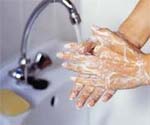
Officials from the Government, Unicef, the World Health Organisation and other experts attending Global Hand Washing Day commemorations at Bondamakara Secondary School in Mutoko last Friday called for greater vigilance against unhygienic habits.
In a speech read on his behalf by the deputy director for environmental health Mr Regis Magausi, Health and Child Welfare Minister Henry Madzorera said although many people washed their hands, very few used soap under running water.
“Washing hands is common practice but using soap is a significant public challenge.
“Soap breaks down the grease and dirt that carry most germs,” he said.
He said hands were principal carriers of many diarrhoea-related diseases hence it was important to wash them after using the toilet and before handling food.
Unicef country representative Dr Peter Salama said progress had been made in rehabilitating water infrastructure in urban areas and the focus should now be on rural population.
Dr Salama — whose speech was read by Mr Kiwe Sebunya (Unicef chief of water sanitation and hygiene) — said rural dwellers bore the brunt of poor infrastructure.
“Ensuring access to clean water and adequate sanitation for the most vulnerable populations of our society should now be our focus if we are to meet our health related Millennium Development Goals.
“Unicef, therefore, urges Government and other partners to invest in provision of reliable supplies of safe water and hand washing facilities, particularly in schools and other public places,” Dr Salama said.
Since February 2009, Unicef has worked with 20 urban councils in provision of water treatment chemicals worth approximately US$6,4m.
In addition, 21 councils were provided with gas chlorinators to ensure proper and continuous disinfection of drinking water.
WHO’s Dr Custodia Mandlhate said the challenge that faces them was to make children and adults aware that washing of hands was “simple, inexpensive and yet so effective in reducing diarrhoeal diseases and other infections”.
“Children have special roles in health and hygiene education.
“They can educate other children through child-to-child programmes, role plays, story telling, drama, school quizzes, competitions and hygiene education classes.
“Interpersonal communication approaches using some of the above mentioned programmes could indeed result in behaviour change in pupils,” Dr Mandlhate said.
Her speech was read by WHO’s communication and social mobilisation officer, Ms Norah Ngwenga.
The theme for this year’s Global Hand Washing Day commemorations was “More than just a day”.



 Online Reporter