Online Reporter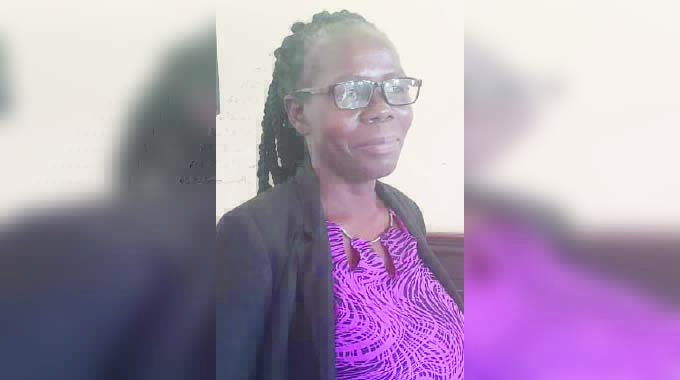
Sikhulekelani Moyo, [email protected]
SMALL and Medium Enterprises (SMEs) have emerged as significant contributors to the nation’s progress since Zimbabwe gained its independence, with active participation across various sectors of the economy as they continue to shape the country’s future.
Before independence, black individuals, particularly the youth and women, were often relegated to menial roles due to discriminatory practices that restricted access to education and better employment opportunities. The struggle for independence was a vital movement to overcome these injustices and achieve equality.
As Zimbabwe commemorates its 45th Independence Day on April 18, there is palpable excitement among women and young entrepreneurs who have found ways to showcase their innovations across different sectors through government support. They note that independence was not only about political liberation; it also marked a significant turning point towards economic and social emancipation for the majority of black citizens. The shackles of colonial oppression began to loosen, allowing for progress in various spheres of life.
The Government introduced programmes aimed at empowering the youth, who are now actively involved in politics and the economy of the country. Significant strides have been made in delivering on promises to empower youths and women, with thousands benefiting from various programmes.

Entrepreneurs have said that independence has allowed them to explore their innovative ideas, develop home-based solutions to national challenges, and contribute immensely to economic development through different blueprints such as the National Development Strategy 1 (NDS1). “Independence is a great achievement, and I’m happy to celebrate it. Right now, as a young entrepreneur, I have the chance to explore my creativity in my own country. It is through this independence that we are celebrating,” said Mr Justin Tshuma. “Independence is good for entrepreneurs, and we should embrace it as Zimbabweans because it’s for us as citizens.”
The SMEs sector in Zimbabwe has grown tremendously over the years and now contributes more than US$8,6 billion to the Gross Domestic Product (GDP), employing 4,8 million people on a full-time basis. This sector has become the bedrock of the country’s journey towards attaining the vision of becoming an upper-middle-income economy by 2030.
After independence, women and youths were given the opportunity to start businesses, with the Second Republic’s initiatives to introduce innovative hubs in different universities offering the youth a platform to showcase innovations in food processing, health, education, and other sectors. Many are now successful farmers, benefiting from the land reform programme initiated by the government in the early 2000s, while others have become company owners and directors.
The Government continues to spearhead youth empowerment programmes across the economy. In education, the Presidential Scholarship provides underprivileged, deserving youths from all the country’s provinces with scholarships to study abroad. Additionally, the Youth Empowerment Bank and Zimbabwe Women’s Microfinance Bank were established after independence to empower youth and women, regardless of political affiliation, with loans and business starter packs.
Mr Nhlanhla Dabengwa of Diamondberry, an organisation that offers capacity building to SMEs, said the attainment of independence has brought substantial support to SMEs. He applauded the Second Republic for introducing Heritage-Based Education 5.0, saying it has brought much-needed skills development initiatives that instil entrepreneurial thinking in students, encouraging them not to wait to be employed after school, but instead to come up with their own ideas to start businesses and create employment for others.
“The Government, over the years, has introduced blueprints such as NDS1 and Education 5.0, which are pro-entrepreneurship, so, at the end of the day, it has given us an opportunity to have meaningful conversations,” said Mr Dabengwa.
Anchored on the adoption of disruptive innovations to produce goods and services, the country’s Heritage-Based Education 5.0 is one of the transformative strategies embraced by the Second Republic. Previously, universities focused on Education 3.0, which emphasised teaching, research, and community engagement, but with Education 5.0, higher and tertiary institutions are now concentrating on innovation and industrialisation.
The impact of Education 5.0 was evident during the Covid-19 pandemic when local universities produced personal protective clothing and equipment, saving the country US$12 million.
Mr Dabengwa said local institutions, such as banks and universities, have been supporting entrepreneurship, which serves as a testament to the involvement of indigenous people in economic development. “NDS1, in two parts — at Government level and at the local authority level — has been well articulated. These innovative hubs in universities also help, and these are programmes initiated by the Government through independence,” said Mr Dabengwa. “It is critical for us to embrace the opportunities presented, as much as there are challenges.”
He added that entrepreneurs should also focus on finding home-based solutions to the challenges they face.
Analysts noted that under President Mnangagwa’s leadership, Zimbabwe is firmly on track to fulfil the values and ethos of the liberation struggle that culminated in the attainment of independence in 1980. The 45th anniversary of independence will be celebrated in Nembudziya, Gokwe. This year’s commemorations, themed “Devolve, Develop, Together Towards Vision 2030,” will be held in Gokwe, Midlands Province, in line with the Second Republic’s policy of leaving no place and no one behind.
President Mnangagwa has launched cross-cutting development projects across the country, steering it towards the attainment of Vision 2030 to become an upper-middle-class society. To bring national events to all parts of the country, President Mnangagwa introduced rotational Uhuru Day celebrations, ensuring that every Zimbabwean can enjoy the festivities associated with the day, in a true reflection of the devolution of power to communities. With support from the Government, entrepreneurs have initiated numerous innovative ideas, ranging from the value addition of traditional fruits and vegetables to developing homegrown solutions for skin problems and other health issues.
Mrs Irene Sambo, who is involved in the value addition of traditional fruits into juices and sauces, said the innovation would not have been possible without the attainment of independence.
“Independence is a milestone that allows us to grow mentally. I now have the mindset to start my own company and employ others. In the past, we were trained to work for others, but with independence, we’ve been taught that we can also employ others and become businesspeople,” she said.
“When we approach the Independence Day commemorations, I feel happy and I celebrate as a woman because now I can have my own money, open my own bank account, and have anything that I want. With this, I’ve also empowered my children; all seven of them wish they could open their own businesses, and I’m a proud mother and a proud woman.”
Mrs Sambo added, “I wish the Government could continue assisting us here and there. This government has empowered us greatly, and we are now able to feed our families, and if this continues, it will reduce gender-based violence.”
She noted that when the father struggles to make ends meet, women step in to help by sending children to school, providing food for the family, and many other things.
“Independence has also given us an opportunity to address some of the Sustainable Development Goals (SDGs), because now I’m helping to reduce poverty and hunger, and I’m also helping other women by empowering them through different initiatives,” she said.
“Where I buy these traditional fruits, I also encourage sustainable harvesting to preserve the environment.”