Freeman Razemba
Senior Reporter
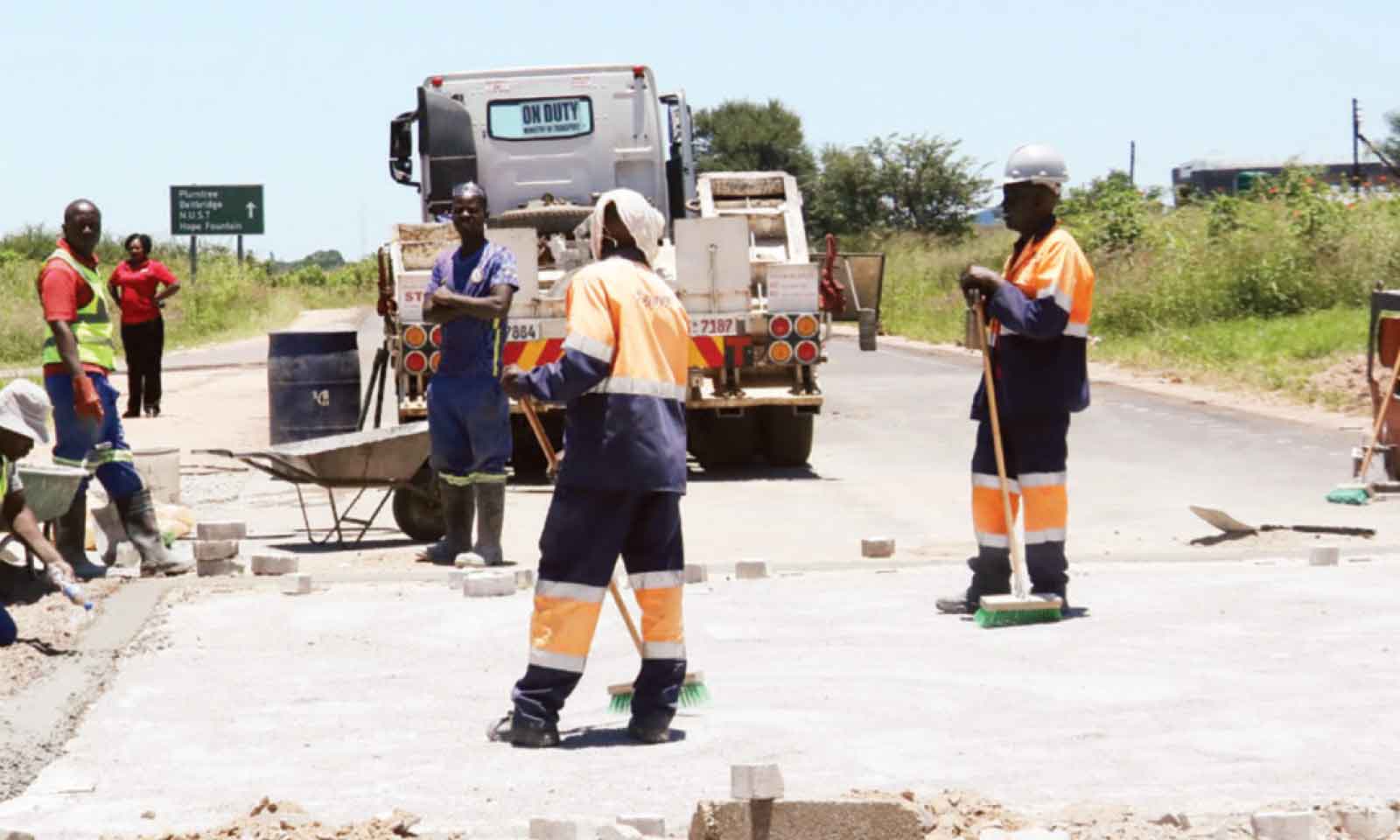
THE Government has announced a major increase in employment opportunities for youth and women under the extended Emergency Road Rehabilitation Programme Phase 2.
Transport and Infrastructural Development Minister Felix Mhona confirmed that the nationwide initiative, now extended to 2026, will deliberately engage these groups as it scales up operations to repair roads.
The programme is a collaboration between the Government and local authorities.
“The good news to the people of Zimbabwe is that as we partake in this exercise, we are saying let us come together and work together,” Minister Mhona said in an interview. “We have got our youths, we have got our women who are supposed to be working in all these projects. So you will see that as we then embark on these very massive projects of attending to our roads we will also be creating employment for our people.”
The employment drive is linked to a major capacity-building effort. Minister Mhona revealed that two new asphalt plants have been acquired for Harare and Bulawayo, with an additional four in the procurement pipeline.
Plans are also advanced to resuscitate the City of Harare’s own plant through a direct collaboration, which will include sourcing trucks and labour from the municipality.
“This is a working arrangement already in place where we will also get trucks and also get human elements in terms of labour from the City of Harare,” Minister Mhona said, noting that payments for this would be facilitated through ZINARA.
Originally launched in March 2021 as a short-term response, ERRP2 has been transformed by President Mnangagwa into a long-term national infrastructure revival project.
It’s goal is to build a modern, interconnected transport network to position Zimbabwe as a regional logistics hub, in line with Vision 2030.
The extension is expected to accelerate the construction of new roads, the rehabilitation of existing routes and the upgrading of critical drainage and safety infrastructure, particularly along strategic economic corridors linking Zimbabwe to the wider SADC region.
Concurrently, the ministry is enhancing public engagement.
A new, user-friendly digital platform for citizens to report road issues is slated for launch by the end of the week.
This platform will complement the recently established provincial hotlines, which direct reports to regional road engineers for faster response.
“This platform is going to be user friendly . . . in addition to the numbers that we circulated, will also be tapped into this platform so that you interface with the ministry,” Minister Mhona said.