Online Reporter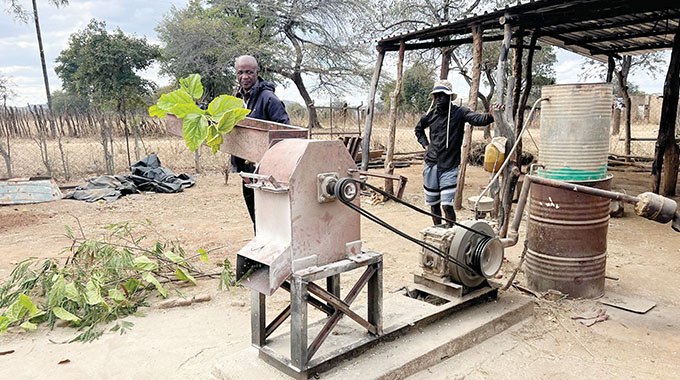
Sukulwenkosi Dube-Matutu, [email protected]
ESIGODINI-based communal farmer, Mr Douglas Masilela, (65) has found a lucrative niche in dairy farming and now targets to be a major supplier of milk in Matabeleland South.
Mr Masilela who has been practicing dairy farming for eight years says on a good day he can get 75 litres of milk from five beasts, which gives him US$75 as he sells his milk for about US$1 a litre.
At this rate, he can get over US$2 000 a month. Mr Masilela started off with two indigenous breeds and later bought Jerseys, which are a pure dairy breed.
“I prefer dairy farming because it doesn’t have much losses compared to indigenous breeds, which can stop producing milk.
“In order to keep indigenous breeds, one needs to have a high number of animals. In order to sell an indigenous I would have to look after it for about six to seven years and during that time I would have to employ someone to take care of those cattle while they don’t bring me cash over those years,” he said.
“With dairy farming in a year I can milk it for 10 months. On a good day, a beast can give me 15 litres and I sell a litre for US$1, which gives me $15 per beast. In a month I can get US$450 from milking one beast, which makes it a lucrative business.
“With the proceeds I get from dairy farming I can sustain my family,” he added.
In order to sustain his enterprise, Mr Masilela has dedicated 13 acres of land towards growing fodder crops. He grows fodder crops such as velvet bean, lab lab, sunhem, cow peas and traditional grains for silage in addition to locally available trees.
Mr Masilela said growing fodder has helped preserve his livestock during the El Nino-induced drought and drafted a menu for each day, which he follows in preparing feed for his livestock to ensure they consume appropriate nutritive portions.
Mr Masilela said he sometimes mixes sun hem, velvet beans, hay, monkey bread tree popularly knowns as ihabahaba, bhankali to achieve 40 percent protein content. On other days he feeds his animals silage.
“On my piece of land, I’m no longer growing food for our own consumption but I have focused on growing fodder crops. Stock feed is generally expensive when compared to food for humans,” he said.
“My cattle can consume a 50kg bag of feed within four days while as a family we can consume 50kg bag of mealie-meal over two months. I have, therefore, seen it better for me to grow stock feed and then buy food for our consumption.
“I have 13 acres of land, which makes it difficult for me to grow fodder crops and food for our consumption as the space is limited.”
Mr Masilela said dairy cows are a special breed and should not be allowed to walk long distances to get feed. He said if a dairy cow walks kilometre it can lose a litre of milk hence he has prepared a paddock where his cattle feed. Mr Masilela said it was his desire to increase his production in order to contribute in the production of organic milk in the country.
He said many people are relying on processed milk purchased from neighbouring countries, which is low in nutrients. Mr Masilela sells his milk at the Mawabeni Milk Centre and his community and going forward, he wants to supply the whole of Matabeleland South with milk and establish his own milk centre.
Matabeleland South Agricultural and Rural Development Advisory Services (Ardas) deputy director Mr Bhekilizwe Ncube said Government’s thrust is to see communal farmers take up initiatives that have long been practiced by commercial farmers such as dairy farming.
He said efforts are in place to commercialise activities of communal farmers and commended local farmers practicing dairy in a communal set up.
“This settlement area was established in 1989 and by then, Government was trying to empower communal farmers with land. Farmers like Masilela have taken the challenge by being productive in the land that he has,” said Mr Ncube.
“Government is also coming on board to assist such farmers with inputs to produce fodder and put up milling parlors in communal areas.
“Our desire is to see Masilela having electronic milking equipment someday.”
Mr Ncube said the desire is to also see Mr Masilela supply his milk to other provinces in the country.
Matabeleland South provincial livestock specialist, Mr Hatityi Muchemwa, said livestock farmers have to utilise local feed resources such as trees and plants.
“In the livestock enterprise the major cost driver is feed.
“If farmers manage their feed well their enterprise will be viable. Here we see a thriving enterprise, which is hinged on utilisation of local feed resources and good management in terms of utilisation of the local breeds,” he said.
“For feed resources, he is using the acacia and monkey bread and other high value nutrition fodder crops. For a viable dairy enterprise, farmers have to produce their own feed, formulate the feed through hay, silage or urea,” he said.
@DubeMatutu