Online Reporter
Gibson Nyikadzino
Zimpapers Politics Hub
ETHIOPIA’s quest for national unity and Pan-African solidarity or cooperation has remained unshaken despite being tested many times in history.
THE country continues to hold down the fort at a time the global context is changing, especially in the context of climate change, sustainable development and letting Africa have a climate-resilient future.
In this trajectory, Ethiopia in 2019 launched the Green Legacy Initiative (GLI) which led to the planting of 48 billion trees, thus increasing its forest coverage from 17,2 percent to 23,6 percent.
Having to plant these trees means millions of Ethiopian communities have been economically empowered by the biodiversity they depend on and that the trees will help in mitigating climate change by acting as carbon sinks, absorbing billions of metric tonnes of carbon dioxide annually.
For a continent that contributes a combined less than four percent of global greenhouse gas emissions, yet is most vulnerable to the effects of climate change, the GLI is a model sanctuary.
As the political capital of Africa and home to the African Union, Addis Ababa is also continuously implementing the GLI to position itself as a global hub for tourism. However, it is not doing this alone. In Zimbabwe, Ethiopia, through its Embassy in Harare is already leading a green diplomacy initiative in collaboration with Government meant to plant eight million trees in the country while supported by other African diplomatic missions.
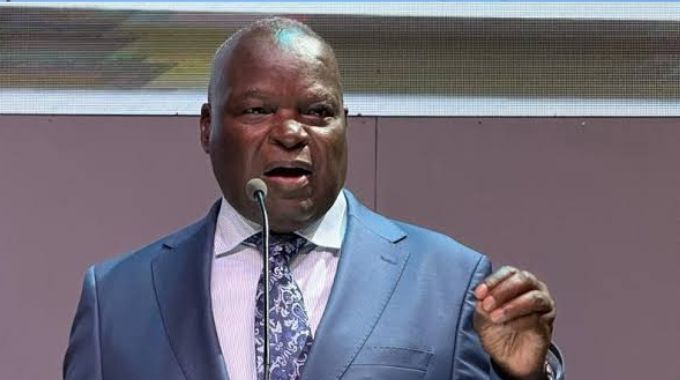
Ethiopian ambassador to Zimbabwe Mr Rashid Mohammed Abdulwahid says Zimbabwe can achieve the eight million tree target.
“We found out that Zimbabwe has about four million students. If one student plants two trees, that will be achievable,” he said.
The country has long been a regional leader in sustainable development, with flagship initiatives that integrate climate adaptation into national planning and community livelihoods.
From its GLI, to its massive investments in hydropower, wind and geothermal energy, Ethiopia is setting development templates towards a low-carbon, climate-resilient future.
Why does it matter?
Dealing with climate change issues is not only an environmental and scientific issue.
It is a diplomatic call and a strategic execution.
Diplomatically, Ethiopia and Zimbabwe are looking for ways to recover nature, while strategically they intend to move into further avenues that bring opportunities in ecotourism, conservation, sustainable forest management or rewilding programmes.
Therefore, to Zimbabwe, Ethiopia and the greater Africa, climate change sustainability matters.
Severe droughts and intense floods are exacerbating food insecurity and degrading natural resources.
Thus, sustainable climate change practices like afforestation help recover and boost continental resilience and also give the African citizen topicality when exchanging ideas with others.
On a broader scale, the GLI has given Ethiopia strategic global recognition of in climate leadership as the country has been highlighted internationally for large-scale reforestation and environmental commitment.
These climate efforts and other renewable energy strides Ethiopia has made have helped position it to host over 60 000 delegates at the 32nd United Nations Climate Change Conference (COP32) next year.
This reflects the vigorous preparatory efforts and strategic coordination undertaken by Ethiopia’s Foreign Affairs Minister, Dr Gedion Timothewos, who will chair the convention.
This strategic diplomatic success signals Ethiopia’s rising global and continental influence, and also Africa’s status as the leader in driving climate change conversations from a practical point of view.
Hope and disappointment
In 2009, the Copenhagen Summit promised Africa a US$10 billion annual climate financing from 2010-2012 that would total US$100 billion yearly by 2020, to help with climate adaptation and green development. However, this fell apart because of lack of strong commitments from the developed world.
In 2015, the Paris Agreement was signed. Developed countries also devoted to providing US$100 billion yearly to support developing nations in addressing climate change.
Additionally, during the COP29 negotiations in Baku, Azerbaijan in 2024, the amount was increased to US$300 billion per year.
Overall, developed countries are yet to fully deliver on the initial US$100 billion commitment.
This lack of commitment by developed countries and Africa’s disappointment has led to the amplification of “climate debt” debates.
This debt is framed on the premise that rich nations polluted more than their fair share of the atmosphere with greenhouse gases hence have a responsibility to compensate developing countries which disproportionately suffer the effects of global warming.
A report by Action Aid last February highlighted that rich countries owe US$36 trillion to African countries in climate debt.
Some researchers say the true climate debt is closer to US$192 trillion in total, or approximately US$4 trillion per year until 2050.
While these findings and debates ignite hope for African countries, they also share a greater disappointing pattern in the lack of commitment by rich nations to clear the debt.
Ethiopia’s lead, Africa’s pride
Climate change is the defining development challenge of our time and Africa is the continent most vulnerable to its consequences.
These vulnerabilities have emanated from the limitations of Africa countries to adapt to climate because of little resources, unfulfilled promises by major global polluters and unwillingness by multinational corporations to lead the conversation.
Climate change has led to changing rainfall patterns that are affecting agriculture and reducing food security, dropping underground water levels for agricultural, rural and urban communities and contributing to migration and fight for scarce resources.
Ethiopia’s GLI, which is also extending to Zimbabwe as a diplomatic undertaking, and the hosting of the COP32 Summit in Addis Ababa are significant strides that came thorough diplomatic engagements by Africa countries.
The decision to let Ethiopia host reflects Africa’s unified position and support for Addis Ababa.
The summit builds upon the country’s visionary leadership of Dr Abiy Ahmed, who spearheaded the GLI and elevated it into a global model for environmental stewardship and sustainable development
It is now an opportune moment for governments, civil society, scientists, youth, private sector and international organisations to advance global climate goals on African soil, for the second time, without pushbacks.
This is an opportunity for Africa to reinforce climate priorities, that is, adaptation finance, green growth and resilience, to be amplified on the global stage. Africa should see this as a strategic opportunity for climate finance, sustainable development and a way to emphasise or position its role in shaping global climate dialogue.
Every opportunity should be an expression of support and mobilisation of solidarity for Ethiopia as a representative backed by the continent.
F o r f e e d b a c k :