Online Reporter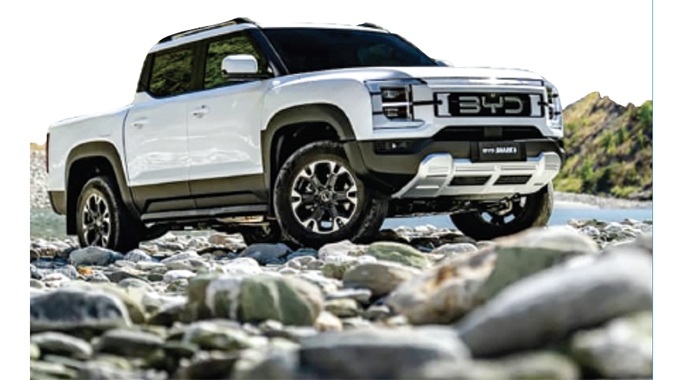
Own Correspondent
The BYD SHARK 6, available in Zimbabwe, represents a significant leap forward in automotive engineering, successfully merging the raw power of a pickup with the sophisticated efficiency of a plug-in hybrid (PHEV) system.
Designed for those who demand high performance alongside cutting-edge innovation, the SHARK 6 stands as a testament to the future of versatile driving.
Unrivalled power and performance
Under the bonnet, the SHARK 6 features a formidable hybrid system powered by a 1.5L Turbo engine paired with dual electric motors.
This configuration enables an intelligent all-wheel drive (AWD) system that delivers a combined output of approximately 320–321 kW (430 hp) and a staggering 650 Nm of torque.
The result is a pickup that defies expectations of speed, capable of accelerating from 0 to 100 km/h in just 5.7 seconds.
Beyond its sprinting capabilities, the SHARK 6 is a marathon runner, offering a combined range of up to 670 km, with an EV-only range of approximately 100 km for silent, emission-free city driving.
The blade battery: The heart of safety
The SHARK 6 is built around the revolutionary Blade Battery, which sets a new benchmark for the industry. This battery technology utilises a unique structure that significantly improves thermal stability and safety, even under extreme conditions.
By integrating the battery into the vehicle’s chassis—a concept known as Cell-to-Chassis (CTC) technology—BYD has enhanced the structural integrity of the truck, providing a safer and more stable ride while maintaining peak energy efficiency.
Exterior: Bold and functional design
The exterior of the SHARK 6 exudes a sense of “rugged sophistication”.
Its wide stance and muscular lines are complemented by a distinct LED lighting signature that gives it a commanding presence on the road.
It is not just about looks, however; the truck is engineered for hard work, featuring a 2,500 kg braked towing capacity.
Every curve and panel has been optimised to balance aerodynamic efficiency with the tough requirements of a multi-purpose utility vehicle.
Interior: A tech-forward sanctuary
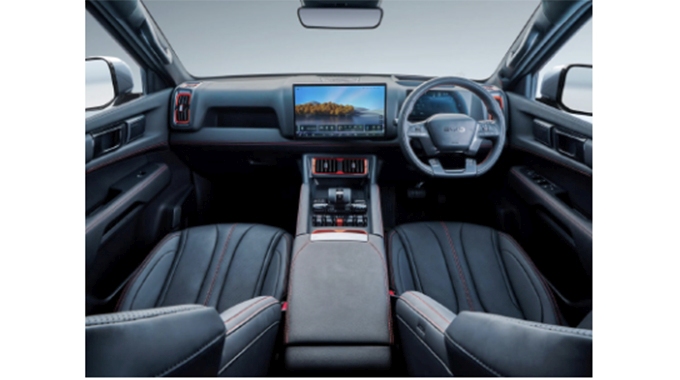
Stepping inside the SHARK 6 reveals a cabin where advanced technology meets premium comfort.
The interior is designed to be a high-tech hub, featuring intuitive controls and high-resolution displays —including BYD’s signature rotating touchscreen — that put the vehicle’s performance data at the driver’s fingertips.
The use of high-quality materials ensures that the cabin remains a quiet, refined space, whether you are navigating a job site or cruising on the open motorway.
The drive: Versatility without compromise
The driving experience in the SHARK 6 is defined by its adaptability.
In electric mode, the truck offers a smooth, whisper-quiet ride perfect for urban environments. When the turbo engine engages, the transition is seamless, providing the sustained power needed for heavy hauling or off-road adventures.
The intelligent AWD system constantly monitors road conditions to distribute torque effectively, ensuring maximum grip and stability at all times.
The BYD Shark 6 is now available in Zimbabwe at 265 Samora Machel Eastlea and 31 Airport Rd Hatfield. Also contact +2638677010071 or 0785569428 for more information.