admin
adminre-engagement hand could be said to be part of EU’s carrot to its much-vilified Southern African “foe”.
The EU Ambassador to Zimbabwe, Aldo Dell’Ariccia, a couple weeks ago went gloriously statistical illustrating how the latest move meant that one third of the listed persons and two thirds of the companies had been removed, adding to the removal of others in 2011, etc. But there are some salient points that should throw some light in the envisaged talks.
Never mind that Prime Minister Morgan Tsvangirai’s party is reportedly unwilling to let the dialogue kick off and that while in London last week Tsvangirai himself called for the suspension, but not the abolition of the remaining sanctions, a position at variance with the GPA. While it is clear that the EU is dangling some carrot, it will be curious to know how sincere the EU is in dealing with Zimbabwe.
Does it make much sense that all the bloc has done is removing, among key criteria, dead people, spouses of influential politicians and lightweight politicians but essentially keep the embargo?
Lately, the EU also removed six journalists, two white businessmen and 20 companies belonging to the white businessmen. The closest the EU came to considering the people who matter in Zimbabwe was the ad hoc suspension of visa bans on two ministers — Patrick Chinamasa and Simbarashe Mumbengegwi who will be going to Europe for re-engagement talks.
Some quarters have described the move as a non-event, not unjustifiably. No doubt, the EU is approaching the diplomatic table with a big head but should Zimbabwe be cowed, or be made to regret its own individuality, its interests and its own sovereignty — and superiority in a way?
If there is any doubt that Zimbabwe is superior to the EU and should approach the table with its head high one only needs to consider the following:
At a dialogue forum in Harare on February 23, this writer asked the EU Ambassador, “How important this small country called Zimbabwe is important to the whole bloc of 27 European countries that the EU would be interested in Zimbabwe’s internal affairs, including how it ran its elections?”
(I also asked about how the EU would deal with legal suits in EU courts by Zimbabweans. On the Georgias case, the EU had behaved cowardly by removing him in 2011?) The response by the ambassador was candid, if tragically so for a policy that has been predicated on lies on human rights, democracy and so on.
Ambassador Dell’Ariccia said something to this effect: “Zimbabwe has resources that we want . . . we used to get them for free but now we have to buy. We are partners . . . ”
He also said there was a huge population of EU citizens in Zimbabwe. With this coming from the a resource-famished Europe, that is in the throes of an economic crisis there should be no reason why Zimbabwe should approach the dialogue with tails stuck in between the legs.
(Dell’Ariccia hails from an Italy, one of the PIGS — Portugal, Italy Greece and Spain — of Europe wallowing in deeper problems than others. These PIGS, like much of Europe, have even been trekking back to former colonies for salvation.) Interestingly, while EU houses the so-called diamond capital of the world, Belgium, Zimbabwe has a capacity to satisfy a quarter of world diamonds.
It becomes clear that the EU is desperate to be close to Zimbabwe — as slave masters of yore or as a rider of a horse — both of which scenarios are unacceptable in this civilised world. Or is it Robert Cooper all over again and the EU wants to play savage politics with Zimbabwe? It is most unfortunate when people like PM Tsvangirai, obviously with the slave mentality, believe that the EU should maintain sanctions because “You want a full commitment that the country will not slide back to where it was with abuse and murder and mayhem.”
He says Zimbabwe should not be a “pariah”. He said this at the London meeting. Will somebody please enlighten Mr Tsvangirai that the EU, those former slave masters and colonialists and present day neocols are the ones that have visited, and are visiting, abuse and murder and mayhem to the non-Caucasian world?
If Zimbabwe is to approach the dialogue with the mindset like that of Tsvangirai, which sees liberators and civilisers in the EU, Zimbabwe will be in big trouble. Zimbabwe cannot afford to be a beggar while it sits on a beach of gold. The EU, through Dell’Ariccia, conceded that it is in a weak position — it needs Zimbabwe as a partner. This is a grudging admission and climbdown from a former slaver and colonialist.
Because Zimbabwe has refused to become a colony again and sits on a good position to resist the same, it cannot be expected to be tossed around.
Or be afraid of guns, which the EU seems to have, instead of the nourishing and life-giving resources and other endowments. The EU thrives on bully tactics and coercive diplomacy. But that can only go as far.
After all is said and done it is all back to the fundamentals of survival. Who would have thought that the EU would so helpfully tell us that it has nothing to do with human rights and democracy but resources and the security of its kith and kin here?
If Zimbabwe stands its ground, it will have to accommodate the EU, on Zimbabwean terms.


Online Reporter
- Herald
- September 29, 2026
- 75 views
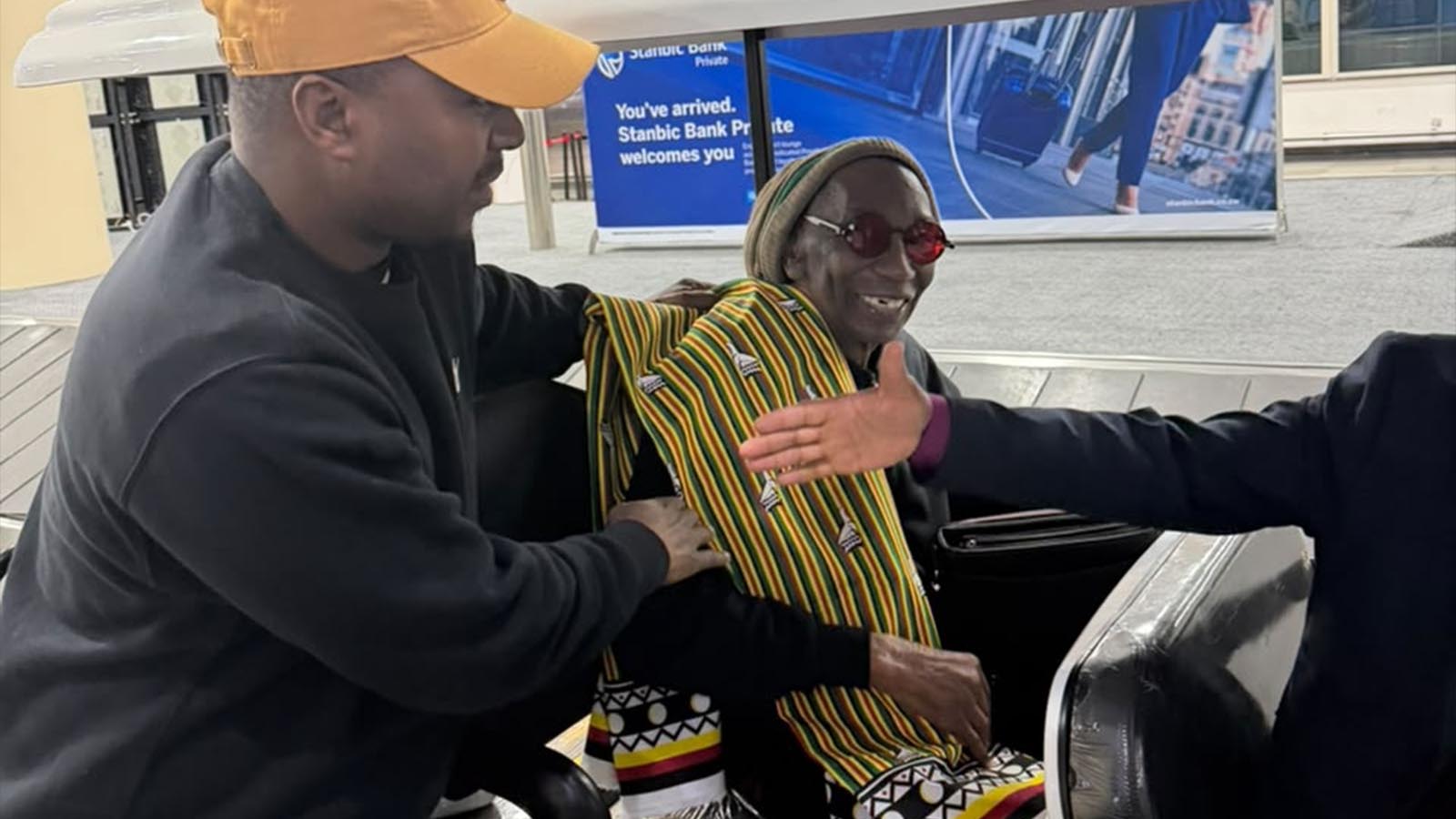
Thomas Mapfumo arrives in Harare
Tafadzwa Zimoyo Zimpapers Entertainment Editor Legendary Zimbabwean musician Thomas Mapfumo has arrived in Zimbabwe, ending months of speculation over his much-anticipated return home. The Chimurenga music icon touched down…