


 Andrew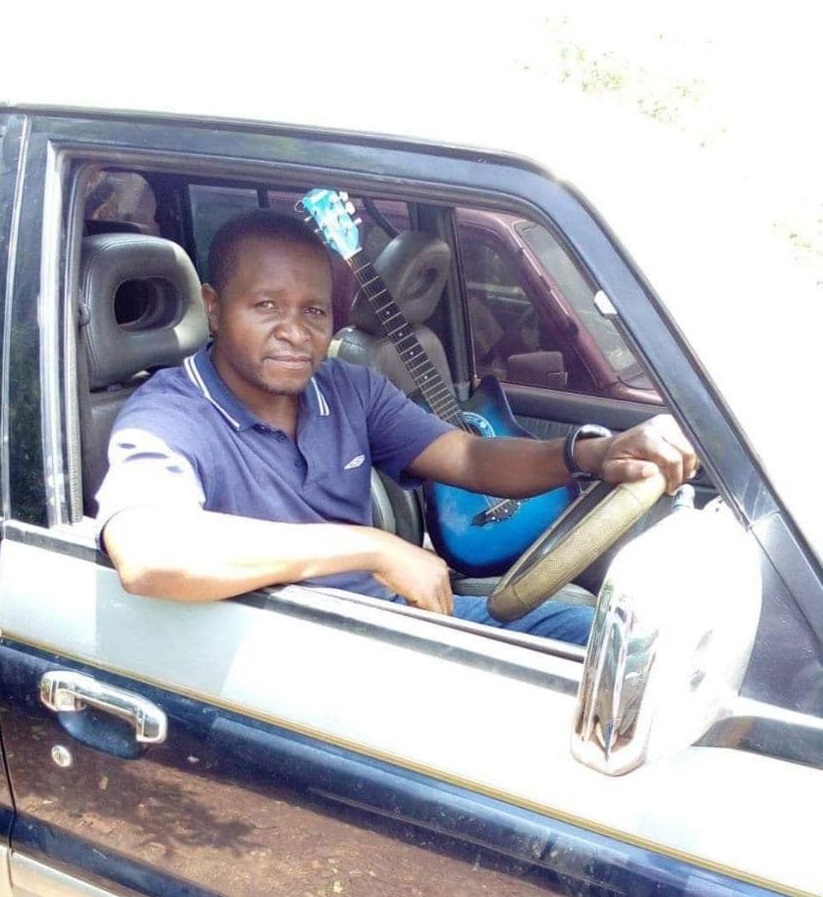
Veronica Gwaze
FOR 16 years, Philip Gwaka was a tormented and dejected Harare Central Prison inmate.
Barely a year after he was incarcerated for a spate of robberies back in 2005, his wife abandoned him and their daughter, who was 19 months old then.
The baby had to be taken in by Gwaka’s mother, who was also struggling to take care of herself owing to old age.
Seventeen years on, the wife has never visited or reached out to either Gwaka or their daughter.
The ex-convict still finds it hard to talk about the experience. He recalls how hopes of seeing his wife vanished with each passing day, as he counted down to his freedom.
For 10 years, Gwaka sought solace in music. He would, during his spare time, come up with some compositions, although he never thought of venturing into music seriously someday.
While other inmates engaged in various rehabilitation activities, the reserved Gwaka preferred to be alone with his thoughts.
However, one day, he decided to try out a guitar, and he instantly fell in love with it, much to his surprise.
“The first 10 years were tough; adjusting to prison life was not easy, the heartbreak, too!” he broke down into tears.
“I don’t justify myself for the incarceration, but I wish my wife would at least have taken our daughter with her; she needed a mother’s love.”
To express himself, Gwaka would write songs in prison, although he never performed openly.
His first proper song was titled “Angie”, which he penned in 2015. It was about his life. In the song, he was venting out his feelings, questioning why destiny had seen the couple break their vows.
“When I received a message that she had left, I was heartbroken and, in the song, I poured my heart out to her, questioning why she had abandoned me, yet, I had found myself in a mess for her sake.
“She loved the finer things in life and I was foolish to think I could give that to her through crime.”
In his second song, titled “Seiko”, Gwaka questioned God why he had to endure a painful life.
While he was content with just penning lyrics and secretly playing the guitar, one day, he was forced to perform in front of an audience in an event that transformed him into an artiste.
Gwaka captured the interest of the prison authorities, who then motivated him to record his compilations.
“Recording meant I had to take music seriously and invest more into it. Miraculously, it somehow gave me a new perspective to life and I was ready to start afresh,” he said.
Recently, Gwaka and his ensemble, The Reformation Crew, released their first album “Ndewenyama”.
Some of his compositions on the six-track album are pieces of advice to the public to live a crime-free life. In other tracks, he continues to pour his heart out.
The title track “Ndewenyama” narrates how people are unpredictable, and how his friends, as well as relatives, neglected him while he was in prison.
He recalls how none of his “close” friends never checked on him while he served time. It is only then, according to Gwaka, that he realised he was alone in his predicament.
“Now that my life is getting back on track, I am surprised that they are back in the picture.”
“In fact, my lyrics are motivated by emotions and the situations that I found myself in. The experiences stuck to my mind and I found lyrics flowing just like that,” added Gwaka.
“At times, lyrics come in dreams, and by the time I was released from prison, I had already written more than 30 songs, some of which were motivated by prison experiences. Now, I am into music full time.
“I know I have an ex-con tag, but I believe it is that experience that taught me this much, and I have to use it to educate the world.”



 Bongani Ndlovu
 Online Reporter