Chronicle Editor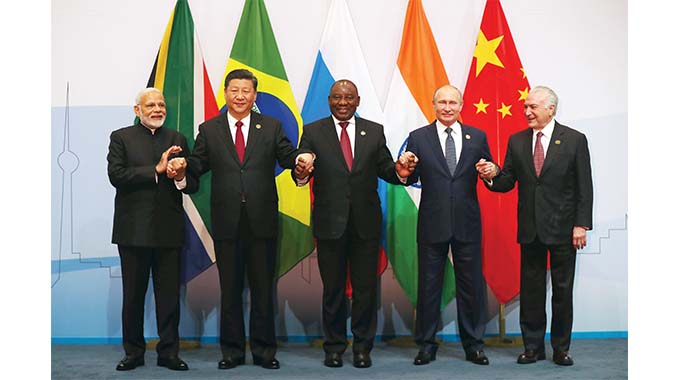
Marshall Ndlela – [email protected]
THE BRICS alliance comprising Brazil, Russia, India, China, and South Africa, has emerged as a formidable force in the global economy. With their collective Gross Domestic Product of over US$32 trillion, these nations have demonstrated their potential to reshape the global economic landscape.
However, in order to further enhance their influence and solidify their position, it is crucial for BRICS to consider expanding its membership to include other significant economies.
Additionally, the establishment of a common currency among BRICS nations would create a powerful tool for trade facilitation and economic integration. By taking these steps, BRICS can unlock immense potential and foster greater cooperation among emerging economies on the global stage.
BRICS, as an economic bloc, can significantly benefit from the inclusion of additional countries that possess substantial economic influence and potential. Countries like Algeria, Argentina, Bahrain, Egypt, Indonesia, Iran, Saudi Arabia, and the UAE have demonstrated strong economic growth and possess significant resources and markets.

By inviting these countries to join BRICS, the alliance can widen its economic base and leverage the diverse strengths and expertise of its members.
The expansion of BRICS would create a vast market and facilitate increased trade and investment flows.
A larger alliance would lead to the elimination of trade barriers, the harmonisation of regulations, and the promotion of investments among member countries. The resultant increase in trade volumes would spur economic growth, enhance productivity, and uplift the living standards of citizens across the globe.
With an expanded membership, BRICS would gain further geopolitical influence. It would not only represent a larger proportion of the world’s population but also embody diverse cultural, political, and economic perspectives. This would enable BRICS to exert greater influence in global forums and shape international agendas, fostering a more balanced and inclusive world order.
The establishment of a common currency for BRICS would provide a robust foundation for economic integration and facilitate seamless trade within the alliance. A BRICS currency would reduce dependence on external currencies, mitigate exchange rate fluctuations, and enhance monetary cooperation. Furthermore, it would promote stability, boost investor confidence, and enable member countries to pursue independent monetary policies while fostering closer economic ties among nations.
An expanded BRICS alliance, supported by a common currency, would create a collective economic shield against global shocks and uncertainties. By diversifying their markets and sources of investment, member countries can reduce vulnerability to external economic fluctuations. Additionally, a unified currency would provide stability during periods of currency volatility, ensuring the continuity of trade and investments among member nations.
The inclusion of countries like Algeria, Bahrain, and Saudi Arabia within BRICS would further enhance the alliance’s access to vital natural resources, including oil, gas, and minerals. This expanded resource base would strengthen energy security for member countries and ensure a stable supply of critical commodities. By collaborating on resource exploration, production, and distribution, BRICS can establish a more sustainable and self-reliant energy framework, reducing dependence on external sources.
Expanding BRICS to include countries like Indonesia, Iran, and the UAE would foster greater collaboration in technology and innovation. These nations have made significant strides in sectors such as information technology, telecommunications, renewable energy, and aerospace. By sharing knowledge, expertise, and research resources, BRICS can collectively accelerate technological advancements, promote innovation-driven growth, and address common challenges in areas such as climate change, healthcare, and sustainable development.
The addition of countries like Argentina and Egypt to BRICS would bring valuable insights and experiences in infrastructure development. These nations have undertaken extensive projects in transportation, logistics, telecommunications, and urban planning. By leveraging their expertise, BRICS can enhance connectivity within the alliance and beyond, facilitating smoother trade, tourism, and cultural exchanges. Joint investments in infrastructure projects, such as transportation corridors, ports, and digital networks, would further strengthen economic cooperation and create a foundation for sustained growth.
BRICS expansion would enable the sharing of best practices in education, skills development, and human capital management. Nations like Indonesia and India have demonstrated successful models in nurturing a skilled workforce, while Algeria and Iran have made strides in higher education and scientific research. By fostering student exchanges, joint academic programs, and skill-sharing initiatives, BRICS can build a robust talent pool and enhance the capabilities of member countries, driving innovation and competitiveness in the global market.
An expanded BRICS alliance, with a wider representation of countries, would have a stronger collective voice in addressing global challenges such as climate change, poverty eradication, and sustainable development. By leveraging their collective economic and political influence, BRICS can play a pivotal role in advocating for equitable and environmentally sustainable policies on the international stage. By collaborating on initiatives related to clean energy, biodiversity conservation, and poverty alleviation, BRICS can drive positive change and contribute to a more prosperous and inclusive world.
Without a doubt, expanding BRICS while establishing a common currency, would unlock immense potential for economic cooperation, geopolitical influence, and global stability. By leveraging diverse resources, knowledge, and expertise, BRICS can collectively shape the global economic landscape, foster innovation and sustainable development, and address shared challenges. Through inclusive collaboration, BRICS can pave the way for a more interconnected, prosperous, and resilient world.
lMarshall Ndlela is a Zimbabwean based in South Africa. He is a holder of a Master’s Degree in Finance and Accounting from the University of Chichester, England. He can be contacted via [email protected]


 Online Reporter