Chronicle Editor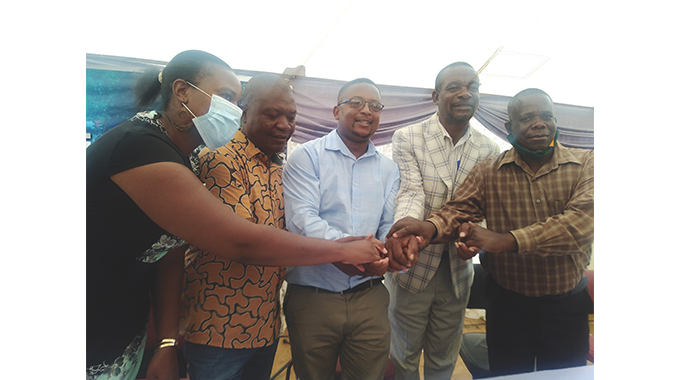
Patrick Chitumba, Midlands Bureau Chief
WHEN Gogo Sharai Sibanda of Mutanhaurwa Village under Chief Njelele in Gokwe South was born in 1960, her parents were just 13 years old in the new area.
Now aged 60, Gogo Sibanda who is now a grandmother, has been eking a living from land left behind by her parents.
Mutanhaurwa just like Chatungwa and Bomba areas is very popular for supplying sweet potatoes, tomatoes, onions, bananas among other fresh produce to travellers using the Gokwe- Kwekwe highway.
The people from these villages just like Gogo Sibanda, grow crops all year round and have something to sell to travellers at any given time.
These people’s livelihoods have for decades depended on working the land and taking their produce to the roadside where there is a ready market of travellers.
Their way of life will unfortunately change soon as they are being asked to vacate the land to pave way for the expansion of Njelele Growth Point.
Gogo Sibanda however, said she is not very worried by the latest developments as the Gokwe South Rural District Council has promised to compensate her with 1 000m2 piece of land. She said the local authority has also promised to drill a borehole and construct a dam for the villagers that will be moved from the State land.
“My family was relocated here from Ngondoma resettlement area to make way for the establishment of farms back in 1947,” she said.
Gogo Sibanda said since birth in 1960, she has known no other place besides this land which she inherited from her parents.
“My father was allocated 10ha of land and so were the other villagers he was relocated together with. We have been tilling the land ever since,” she said.
Gogo Sibanda said in 2015, they were approached by the council and were told that they must vacate the land without any form of compensation.
She said they were told that the area, communal as they thought it was, was State land.
Communal land is State land vested in the President of Zimbabwe. Local communities, regardless of their historical claims and how long they would have occupied the land, have no ownership but are permitted to occupy and use communal land by the President.
Gokwe South RDC riding on the concept of growth points which was mooted by the Government in the 1980s as a means to decongest cities and towns and develop rural areas, earmarked surrounding villages for the expansion of Njelele Growth point.
Mutanhaurwa and Chatungwa villagers were then asked in 2015 to vacate the area to pave way for the expansion of the growth point.
The villagers refused to vacate the area insisting council should first find them alternative land as they depended on land for their livelihood.
“The main problem was that the original occupants, our parents all died and council was now refusing to compensate us. After five years of engaging, we are happy that we are here signing an MoU which came about after a local non-government organisation Centre for Conflict Management and Transformation (CCMT) brought the villagers and council to the round table. Now we are each getting 1 000m2 among other benefits,” said Gogo Sibanda.
She said the pieces of land were big enough for them to engage in many income generating projects such as poultry or market gardening.
Gogo Sibanda said they would use the Intwasa/Pfumvudza concept to boost production on their new land.
Mr Foreman Ziwome, a representative of evicted Chitungwa villagers said they were dispossessed of their cropping land without notice and efforts to defend their land were in vain.
“In 2015 the council arranged a meeting with the villagers and advised that the expansion of the growth point will takeover our fields. In 2018, council moved in and started pegging residential stands in our fields. We tried to resist and on the first day they came, we managed to chase the council workers away. The following day they came back with dogs and armed police officers and we could not resist anymore,” he said.
The last meeting that was held in an effort to try and resolve the issue was in May 2019 following the intervention of CCMT. Mr Ziwome said it was finally agreed that the villagers will be compensated for their land.
CCMT director Mr Wonder Phiri said his organisation is advocating for the development of national and local level policies that protect rural communities from the adverse effects of displacement.
He said the policies should balance the interests of bringing about development in an area and the rights of affected communities.
“It is only through such a win-win situation that conflicts emanating from development-induced displacements are minimised. CCMT has realised that such conflicts have, in several instances, actually stood in the way of development. The policies for which CCMT is advocating must also provide for improved tenure systems so that the occupants of such land’s bargaining power for compensation is strengthened,” he said.
Gokwe South District Development Co-ordinator Mrs Netsai Mushauri said the Government has always had plans for the council to develop and that saw the gazetting of the land which the villagers were occupying.
“Gokwe South RDC, didn’t just wake up and decided to displace you but is implementing a Government programme to expand the growthpoint. Yes, some conflict arose but processes were to be followed and we are here today witnessing this milestone after the two parties reached a consensus. It’s the efforts of the villagers, the Government, the council and CCMT,” she said.
Mrs Mushauri said the signing ceremony between the council and the community set a benchmark for other councils that could use the experience to avoid unnecessary conflict which hinder development.
RDC chief executive officer Mr Silas Velani said the area was gazetted in 1982 for development.
“Maybe our approach was not good but with the assistance of the Government and CCMT we engaged in dialogue. Even when the law is on your side, there is always a need for dialogue. Njelele people taught us to come up with guidelines to deal with development induced displacements. Now we have the guidelines in place,” he said.
Mr Velani said they were looking at a smart city concept and want better houses and commercial buildings.
“Now villagers who buy stands here should know that they will do it with approved plans from the RDC. No more construction of houses without approval from the RDC. Chitungwa and Mutanhaurwa areas are the first locations you will see before getting to Gokwe town and therefore the need for us to put up beautiful structures,” he said.



 Online Reporter