Online Reporter
Judith Phiri
EXPERTS at the Zimbabwe Economic Development Conference (ZEDCON) 2026 have called for a phased, governance-first approach to managing the relationship between Government finances and the domestic banking sector as part of efforts to strengthen financial stability and expand access to finance.
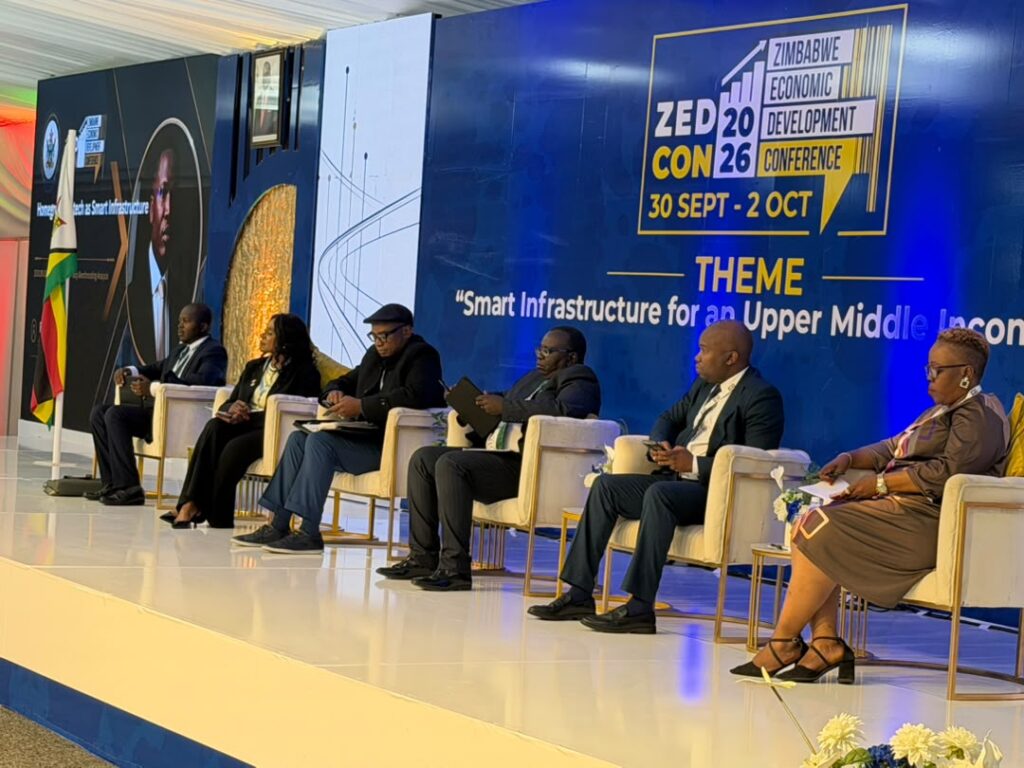
Presenting a paper titled “Homegrown Fintech as Smart Infrastructure for Upper Middle-Income Societies: A Global Policy Benchmarking Analysis” in Bulawayo, Sustainiverse Analytica’s Mr Frank Kundeya said reforms should be sequenced carefully to manage risks within the sovereign-bank-institutional nexus.
The sovereign-bank nexus refers to the close interdependence between the financial position of a government and the health of its banking system. High exposure by banks to domestic government debt can create risks for banks if sovereign finances deteriorate, while banking-sector distress can in turn place pressure on public finances.

Mr Kundeya said Zimbabwe should therefore prioritise governance and transparency before introducing structural financial reforms.
“A phased, governance-first implementation framework designed to manage and decouple macro-financial risks within the sovereign-bank-institutional nexus. The sovereign nexus reform blueprint outlines the sequential sequencing of institutional and financial reforms required to manage vulnerabilities within the sovereign nexus,” he said.
“By prioritising governance and data transparency before altering structural capital demands, this framework ensures macro-financial stability while mitigating the risk of procyclical market shocks.”
He said some of the numerical targets proposed in the paper were illustrative, while the broader policy recommendations were intended to provide directional principles for reform.
Mr Kundeya also called for measures to reduce transaction costs, improve interoperability and expand access to financial services in rural areas.

“There is need to treat the proposed 5th cost ceiling as a starting point for consultation, not a proven threshold. We also need collateral registry integration as it is widely considered the strongest regulatory lever for unlocking credit access for SMEs and informal traders,” he said.
He said traditional banking systems tended to favour fixed assets such as real estate when assessing borrowers, disadvantaging small businesses and informal traders whose assets were often movable.
“Traditional banking systems heavily favour fixed assets like real estate. However, the vast majority of small businesses and informal traders only own movable assets (such as equipment, inventory, receivables, livestock, or intellectual property).”
Mr Kundeya said a modern, centralised collateral registry that legally recognised movable assets could help reduce lending risks and widen access to formal finance.
“By establishing a modern, centralised collateral registry that legally recognises movable property, Governments can dramatically lower the risk for financial institutions and bring marginalised economic actors into the formal financial ecosystem.”
The sovereign-bank nexus has become an increasing area of policy concern in emerging and developing economies, with recent IMF research finding that domestic banks’ exposure to sovereign debt has strengthened in many countries since the Covid-19 pandemic.
ZEDCON 2026 is being held under the theme “Smart Infrastructure for an Upper Middle-Income Society.”