Doris Mpala
Agriculture Correspondent
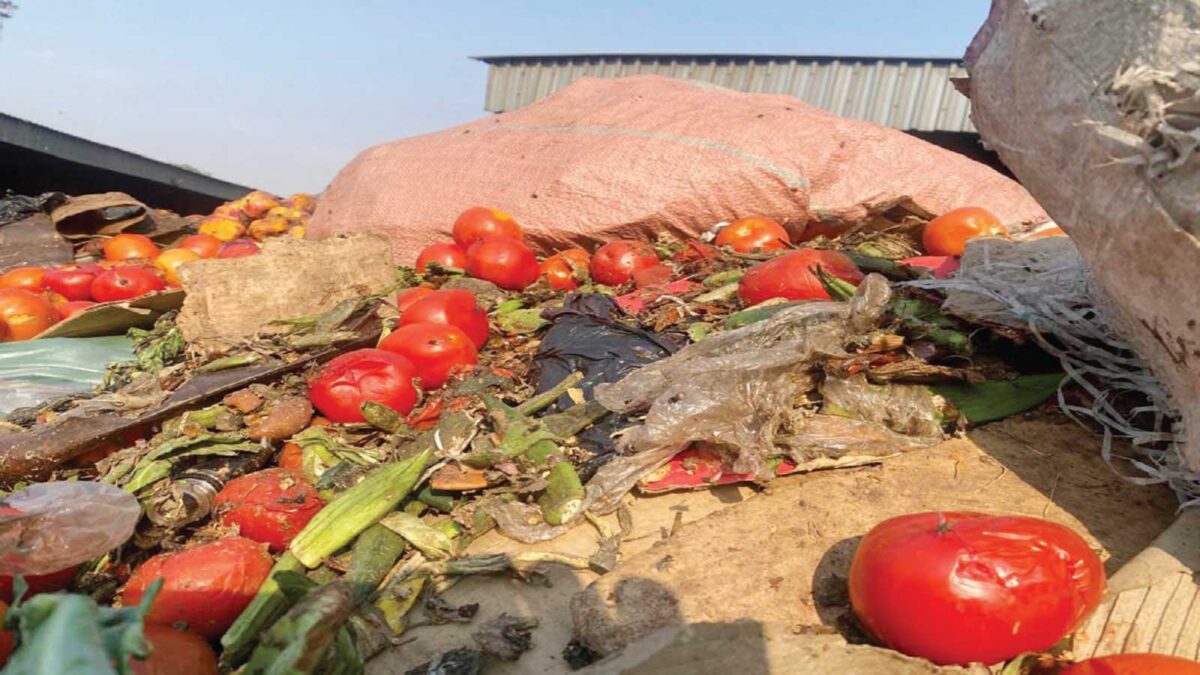
HIGH temperatures have resulted in farmers losing significant quantities of fresh produce at the traditional markets.
Inadequate storage infrastructure and uncoordinated seasonal production have worsened the situation, prompting experts to call for urgent investment in post-harvest handling technologies.
Fresh produce market expert Dr Charles Dhewa confirmed that fresh produce farmers and traders were discarding four out of every 10 crates of tomatoes as hot weather accelerated ripening.
Dr Dhewa said bananas that normally took five to seven days to ripen during winter were now ripening within three to four days, while the quality of potatoes and sweet potatoes was also deteriorating much faster.
“What is worsening the situation is the absence of other actors within value chains, leaving farmers to do everything from production to transporting to storing and to marketing,” said Dr Dhewa.
“It’s like expecting defenders to be also midfielders and goal scorers.”
He said farmers need to regularly engage markets to obtain information on consumer demand and receive guidance on what to produce, when to produce it and whom to supply.
“If there’s excess on the market, they can just keep it on the farm rather than throwing and pushing everything to the market like what is happening now,” he said.
He said farmers needed infrastructure such as storage sheds and cooling facilities to preserve tomatoes, sweet potatoes, watermelons and other perishable commodities until market conditions improved.
Dr Dhewa called for the revival and modernisation of traditional food-preservation techniques, saying indigenous knowledge could be combined with contemporary science and technology to extend the shelf life of agricultural produce.
“We need the pit storage(Pfimbi); a modern type of such storage which our elders used to preserve sweet potatoes for even two to three years.
‘‘They would just dig some pits and put it underground,” he said.
He added that some traditional preservation methods allowed groundnuts to be stored in granaries for extended periods.
“With so much science and technology, we’d be able to produce the best preservation methods, increasing the shelf life of our food,” said Dr Dhewa.
He said improving food preservation required coordinated action from Government, development partners, the private sector, farmers and local authorities.
Dr Dhewa said farmers were generally better positioned to concentrate on production, while other players could provide specialised services in marketing, logistics, preservation and processing.
He said greater investment in food processing could also help absorb surplus produce, reduce pressure on fresh produce markets and create additional value from commodities that might otherwise go to waste.
He also identified disorganised seasonal production as another major contributor to food losses, pointing to the current oversupply of onions, which exceeds the amount local consumers can absorb.
He said farmers should pay closer attention to market signals when deciding which crops to grow and the quantities required.
“Everyone knows onion on its own is not a relish. Households don’t consume sadza or rice with onion alone,” he said.
“We can’t blame seed houses and nurseries because they are in the business of selling seed. Farmers have to listen to market signals,” Dr Dhewa said.
His concerns come amid expectations of a potentially strong El Niño event, which could increase pressure on agricultural production and food availability, depending on how rainfall patterns develop.
He cited a reported incident in France on the night of October 11, in which hackers allegedly manipulated refrigerator and freezer temperatures at hundreds of supermarkets, resulting in fires and food spoilage worth millions of euros.
The incident, he argued, highlighted the need to consider the risks associated with technology-dependent food preservation systems and explore complementary approaches.
The country can therefore benefit from a combination of modern cooling facilities, improved market infrastructure, food processing, traditional preservation methods and better production planning.
Reducing post-harvest losses would protect farmers’ incomes, improve the availability of food and ensure that more agricultural produce reaches consumers instead of being discarded.