Online Reporter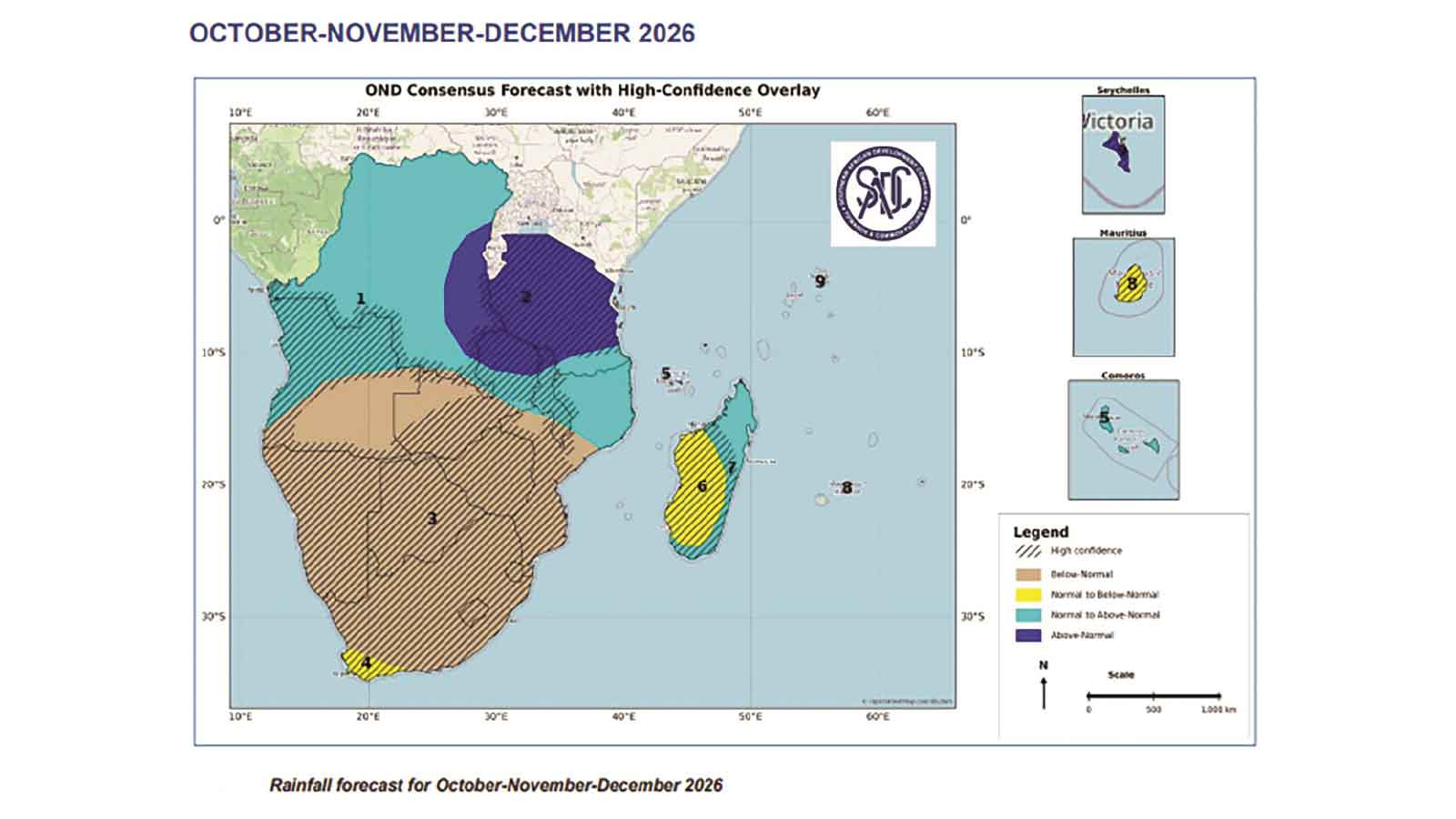
Victoria Ruzvidzo in SWAKOPMUND, Namibia
ZIMBABWE ranks as one of the countries in SADC most prepared for the El Niño, with anticipatory action frameworks already in place to mitigate its effects.
It emerged here last night that most countries in the region, including Zimbabwe, were indeed facing an El Niño-induced drought in the 2026/7 period.
In a statement, the 33rd Southern African Climate Outlook Forum said much of the region was likely to receive below normal rainfall between October 2026 and March next year.
Normal to above normal rainfall would be experienced over most of the Democratic Republic of Congo, north-western Angola, northern Zambia, central Malawi, northern Mozambique and southern Tanzania.
Above normal rains would fall in eastern DRC, much of Tanzania, northern Malawi, northern Zambia and the Seychelles.
Temperatures would be above the long-term averages across the region.
Climate experts from the SADC national meteorological and hydrological services and the region’s Climate Services Centre formulated the latest outlook.
SARCOF-33, which ends here tomorrow, was held to develop a consensus climate outlook for the 2026/7 rainfall season over the SADC region.
“Climate scientists considered key oceanic and atmospheric drivers that influence rainfall variability over the SADC region. El Niño conditions currently established in the tropical Pacific are expected to strengthen further, with most models indicating a strong to very strong event, and peak intensity expected around the OND 2026 period (October, November, December),” said the regional climate body.
This means the region needs to move into overdrive to mitigate the effects of the El Niño which had previously been viewed as a possibility before it was revealed last night that it’s a fact the region would have to face.
Earlier, climate experts had said a few countries had been preparing for the eventuality since early this year with Zimbabwe being identified as one of the countries to have already approved anticipatory action frameworks to mitigate the impending effects of the El Niño.
Zimbabwe has already put in place systems and initiatives to confront the dry spell and high temperatures whose manifestation would be more pronounced around November.
This comes as President Mnangagwa has urged immediate national preparation for a looming “Super El Niño,” warning that proactive climate-smart planning was critical to safeguarding Zimbabwe’s agricultural sector.
He stated recently, “Let us work hard on our God-given land so that we produce what we eat and we guarantee national food security and sovereignty,” emphasising the need for increased adoption of the Pfumvudza/Intwasa Programme.
Permanent Secretary in the Ministry of Agriculture, Mechanisation and Water Resources Development Professor Obert Jiri said the Government was strengthening climate-smart agriculture, water harvesting and soil conservation to protect production.
“Irrigation infrastructure and fertilisers are useless if the seed placed in the soil cannot withstand thermal stress, optimise water-use efficiency or resist emerging pathogens,” Prof Jiri said.
Every household, Prof Jiri said, was expected to establish at least three Pfumvudza plots, with land preparation beginning while conditions remain dry.
Zambia and Malawi were said to have also put their frameworks in place as countries move to confront the impending drought, hardly two years after the 22023/24 patch that ravished agriculture and economies at large in the region.
Under the 2026/7 Summer Production Plan, Zimbabwe has adopted such initiatives as strategic grain reserves purchase systems, acceleration of Climate Smart Agriculture (Pfumvudza), enhancement of irrigation systems and facilitation of duty-free importation of fertiliser, among others strategies to empower the farmer to ameliorate the effects of drought on food security, disease control and economic growth. At SARCOF-33, Zimbabwe is being represented by officials from the Meteorological Services Department, the Civil Protection Unit and other climate experts.