admin
admin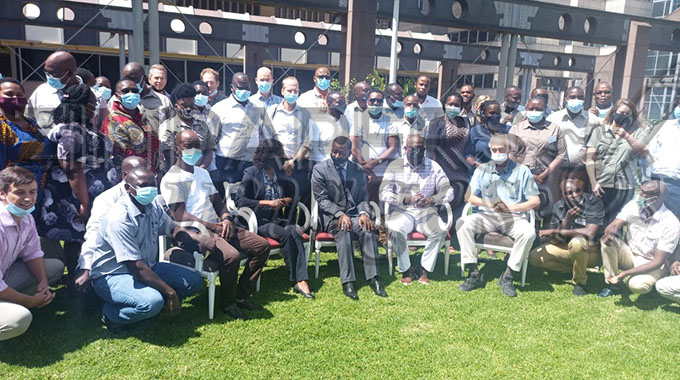
Sifelani Tsiko Agric, Environment & Innovations Editor
A meeting of wildlife experts opened on Wednesday to develop a Middle Zambezi Landscape Conservation Strategy that seeks to protect, conserve and promote the sustainable use of the country’s wildlife resources in line with the country’s Vision 2030.
AWF Zimbabwe country director Olivia Mufute told the Herald that the workshop sought to develop a 10 –year plan to harness the vast opportunities that the Mid-Zambezi region holds for economic growth and job creation.
“We are meeting here to develop a conservation strategy in line with the Nation Development Strategy (NDS1) for the next 10 years for the Mid – Zambezi Landscape. This area is rich with biodiversity,” she said.
“It’s a mosaic of protected areas and communal areas with significant conservation and biodiversity values at both local and continental level. Zimbabwe developed its own NDS1 (2021 -2025) and what we are doing now is to support the Government in actualising the country’s vision in this part of the region.”
The AWF in collaboration with stakeholders organised the three-day workshop to develop a Middle Zambezi Landscape Conservation Strategy AWF.
The Mid-Zambezi region has various UNESCO World Heritage Sites rich in wildlife biodiversity.
Situated at the northernmost point of Zimbabwe straddling the Zambian border, the area has floodplains, baobab trees, forests and riverine wilderness with the biggest concentration of hippos and crocodiles in the whole of the country.
The region also boasts of having large herds of elephants, buffaloes, eland, zebras, baboons and waterbucks among other animals.
About 40 participants were mainly drawn from ZimParks, Environmental Management Authority, Forestry Commission, local government, local communities, CSOs, NGOs, private sector and the international development community.
The participants will collectively analyse critical threats to targets, including climate change, design threat reduction strategies that maximise benefits and take advantage of opportunities to strengthen the livelihoods of local communities and enhance biodiversity conservation.
Mufute said the main objectives of the workshop included the development of a shared vision for the Middle Zambezi Valley landscape, drawing up conservation and livelihood targets and identifying and assessing critical threats to the conservation targets.
“We are taking the broader NDS1 strategies and bringing them down to the local level. The Mid-Zambezi Landscape has its own unique needs and aspirations different from say the Save conservation region,” she said.
“I am happy that the AWF and its key partners are supporting Zimbabwe’s Vision 2030. We have technical experts and partners from Kenya, Cameroon, South Africa, Zambia and the US who are assisting us.”
The meeting will lay the initial foundations of the Middle Zambezi Landscape Conservation Strategy developed also using the AWF’s internal framework – the Landscape Conservation Process (LCP), a participatory, evidence-based framework used to plan, implement and measure conservation impact.
The Zimbabwe model is expected to be replicated in other African countries.
Zimbabwe is one of the most mega-biodiverse countries in the world and efforts are underway to find ways in which to harness the sector so that it can effectively contribute to economic growth.
The country has a rich biodiversity base that includes 5 930 plant species, 670 bird species, 270 mammal species, 156 reptile species, 120 amphibian species and 150 fish species found within and outside protected areas.


 Online Reporter