admin
admin
 Herald Reporter
Experts in chemical engineering have defended the country’s direction on ethanol saying if the fuel tanker which exploded in the Chisumbanje horror crash had been ferrying petrol, the nation would have been facing a greater tragedy in the form of more lives and a greater damage to the environment owing to the chemical properties of gasoline.
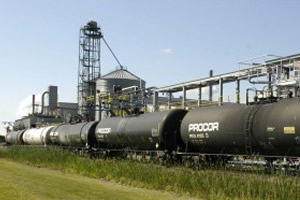
The recent accident in Chisumbanje involving a T-35 truck carrying mourners and an ethanol tanker has ignited debate over the safety of ethanol conveyance through rural areas. Eye-witness accounts indicate that in the side swipe by the T35 truck, the diesel tank of the ethanol truck got pierced, resulting in diesel spillage and a fire which then illuminated the aluminium fuel tanker.
University of Zimbabwe-based mechanical engineering expert, Engineer Clement Shonhiwa, says the fact of the matter is that petrol, which is the alternative to ethanol, is much more dangerous due to its chemical profile.
“Petrol is much worse than ethanol. It is not stable and in any fire the risk is much higher because it is very volatile,” said Eng Shonhiwa. Volatility refers to how easily a liquid becomes vapour.
Chemical Engineer David Muwandi said a comparative analysis of the chemical profiles of both ethanol and petrol clearly shows that if the tanker had been carrying petrol, the disaster may have trebled in terms of the death toll and the damage to the environment.
“If we look at the flames in the picture of the scene of the accident, it’s a clean flame and people are even standing close to the inferno, which is impossible with petrol. So fundamentally, the death toll may have trebled to include nearby homesteads if the tanker was loaded with petrol,” said Eng Muwandi.
He said scientifically, ethanol burns smoothly because the combustion products are just water and carbon dioxide.
Petrol contains many other hazardous chemicals hence the darker smoke and vicious flames which would not accommodate anyone in the vicinity. “We are not condoning these accidents, but to attack ethanol production on the basis of this accident is a mischievous misrepresentation of scientific facts. Even in the absence of a flame, a comparative analysis of an ethanol and a petrol spill informs of a situation where the environment suffers more damage from petrol.
“Ethanol is biodegradable and if it spills, it can easily dry up but petrol is a heavier substance whose spill is evident in the form of damaged trees and heavily contaminated water bodies in rural areas among other things,” he said. In determining the amount of fire risk from any substance, chemical scientists compare the MSDS (Material Safety Data Sheet) profile of each fuel — this outlines, among other things, the level of concentration at which a fuel explodes.
It also includes the flashpoint, which refers to the temperature at which a liquid generates a flammable vapour; the vapour pressure, which is a measure of volatility. Research has shown that petrol has a much higher risk of fire than ethanol. Chemical engineering experts say it is the mandate of traffic safety authorities to carry out safety awareness campaigns so that drivers approach fuel tankers with extreme caution because of the fire risk.



 Online Reporter