Online Reporter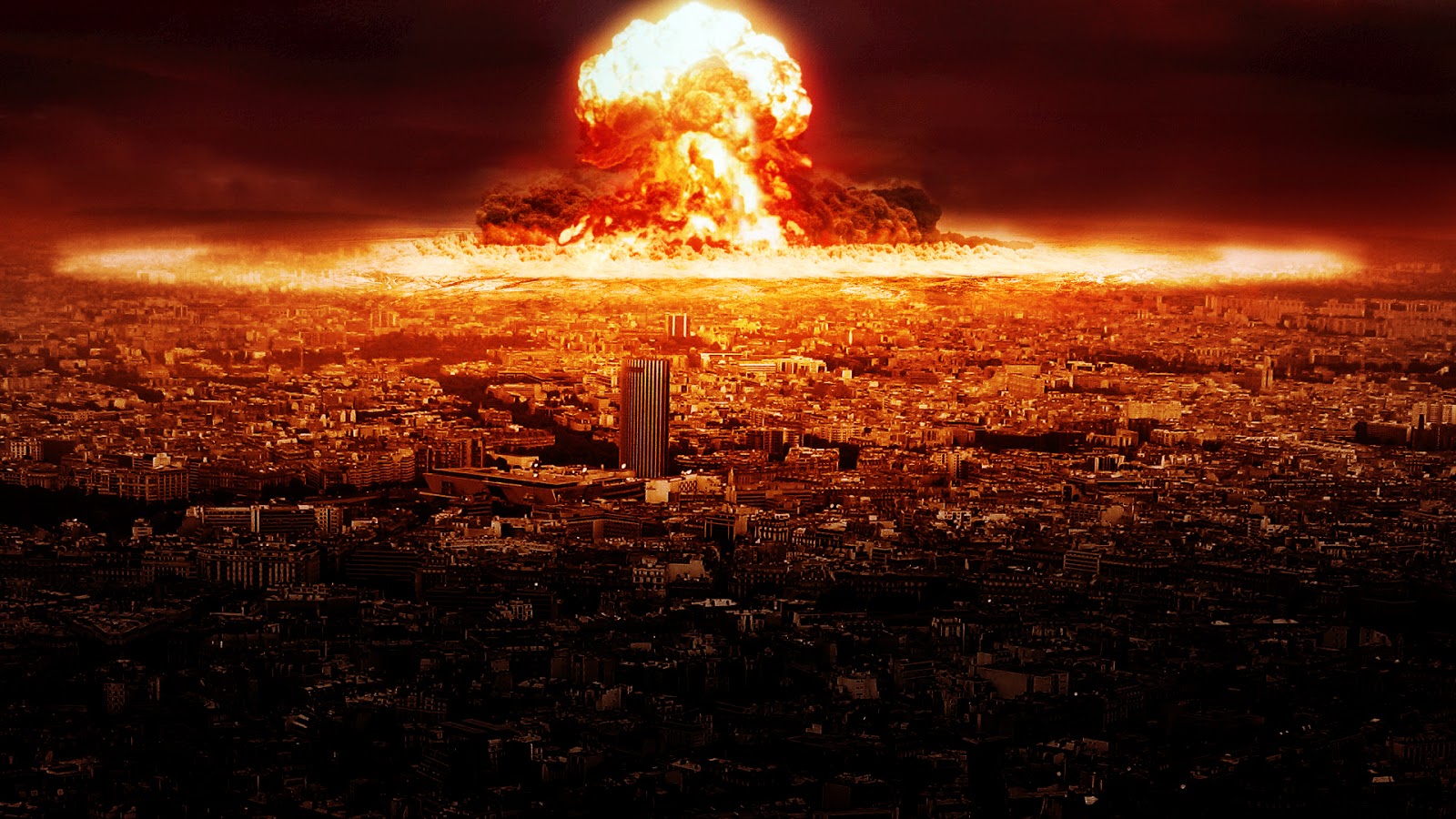
Cuthbert Mavheko, Features Correspondent
MILITARY experts estimate that since the end of the Second World War in 1945, the USA, Russia, China, France, Britain and other major powers have developed nuclear weapons of such overwhelming destructive power that they could annihilate all life on earth.
Numerous other advanced and disturbing weapons of mass destruction have also been created, including hydrogen bombs, pure fusion bombs, neutron bombs and laser based systems.
Leading scientists and global leaders warn that these weapons collectively possess the capability to extinguish human civilisation. Many military analysts now argue that humankind is on a perilous trajectory, predicting that, in the foreseeable future, the planet could be rendered barren and uninhabitable.
The late Philip Noel Baker, Nobel Peace Prize laureate, once cautioned: “If a nuclear world war breaks out, we will all be dead and the earth will be an incinerated relic.”
British scientist Sir Robert Watson Watt, the pioneer of radar technology, delivered a similarly bleak assessment: “I am not optimistic the human race will survive.
There are now three ways in which the human race could be obliterated in just a few hours. The first is the hydrogen bomb, which with nuclear fallout could wipe out humanity. The second are biological substances, and the third method that could destroy mankind is through nerve gases.”
One troubling observation is that many people avoid the subject of nuclear warfare entirely, as its consequences are so horrifying that they seem beyond comprehension. Psychiatrists refer to this as “psychic numbing”.
While we acknowledge the existence of the nuclear threat, we rarely grapple with its implications. Today, there is broad consensus among serious philosophers, scientists and world leaders that unless humanity undergoes a profound shift in its collective mindset, nuclear war is inevitable.
Even more alarming is that, should such a conflict occur, it would be a “calamity unprecedented in human history,” according to the US Office of Technology Assessment.
Some maintain that nuclear weapons and other weapons of mass destruction merely serve as deterrents and will never be deployed in battle. However, this view is widely regarded as unrealistic. History shows that every major weapon developed by humankind has eventually been used. As one prominent American essayist observed: “Until now,the world’s great armies have always gone to war sooner or later.
The great fleet of Darius, the Roman legions, the Spanish Armada and the Wehrmacht were all intended for war, and that is what they were used for. Why should the present situation end differently?”
Although the United Nations was created to restrain conflict and promote global peace and prosperity, many analysts argue that it has fallen far short of this mission. World leaders once referred to the UN as
“The World’s Last Hope For Peace,” yet the decades since its founding have been marked by persistent conflict. Illustrating this reality, British Prime Minister Margaret Thatcher told the UN Special Session on Disarmament on June 23, 1982: “There have been something like 140 conflicts fought with conventional weapons since the end of World War 2.
In these conflicts, up to 10 million people have died.” Countless additional wars have erupted since then, underscoring the organisation’s limited ability to prevent global violence.
Today, a devastating war continues between Russia and Ukraine, and the UN appears unable to resolve or contain the conflict, which some military experts warn could escalate into a full scale nuclear war.
Adding to global unease is that, at the time of writing, the unpredictable US President Donald Trump had threatened military action against Iran and several other nations, intensifying geopolitical tension.
Russian President Vladimir Putin recently underscored the gravity of the situation, saying: “The situation on the international stage is increasingly deteriorating. I don’t think anyone would argue with that. Long-standing conflicts are intensifying, and new serious flashpoints are emerging.”
It is worth noting that during his presidency, former US leader Joe Biden warned that the risk of a nuclear “Armageddon” was at its highest since the 1962 Cuban Missile Crisis. Biden issued this warning after President Putin threatened nuclear retaliation against Ukraine if Nato continued to intervene.
Russian officials have repeatedly cautioned that a nuclear conflict between Russia and Ukraine would be “catastrophic for all mankind”. Many world leaders and scientists increasingly believe that the only viable safeguard against global destruction lies in the creation of a single world Government with one unified military authority.
Just five years after the end of the Second World War, British Prime Minister Winston Churchill warned in Copenhagen: “Unless some effective world super-government can be brought quickly into action, the proposals for peace and human progress are dark and doubtful.”
In the early 1960s, renowned nuclear physicist Edward Teller, a key figure in the development of the hydrogen bomb, expressed similar views, stating: “We must work for the establishment of a world authority sustained by moral and physical force — a world Government capable of enforcing worldwide law.”
Some scientists and global leaders argue that humanity’s most pressing need is a world Government, contending that global stability and lasting peace can only be achieved if nations unite under a single, authoritative governing body. However, the irony remains that many believe such a Government is impossible under current moral, social and political conditions. In World Politics, scholar A.F.K.
Organski wrote: “World Government is still a long way off. The creation of a world Government through the voluntary agreement of existing nations is so unlikely that we can say flatly that it will never happen.”
Likewise, Hans J. Morgenthau, in Politics Among Nations, asserted: “There is no shirking the conclusion that international peace cannot be permanent without a world state, and that a world state championship cannot be established under the present moral, social and political conditions of the world.”
Taking a hard, cold and realistic look at current world conditions and trends leads only to disillusionment. According to various reports, around half of the world’s population is trapped in deep poverty, living in conditions of filth and squalor.
To make matters worse, the grim forces of starvation and disease continue to claim millions of lives across the globe.
No amount of misinformation can disguise this reality: the world is troubled and unsettled, burdened by poverty, corruption, crime, violence, immorality, oppression, injustice — even within judicial systems — and a rise in conflicts that, according to some military experts, point towards the possibility of a nuclear world war capable of obliterating all life on earth.
But will such a nuclear catastrophe be averted? This is a question weighing heavily on the minds of many people who follow global developments closely and critically.
To some, it may seem a strange line of inquiry, rooted in a dimension of knowledge unfamiliar to most. Yet the Holy Bible, regarded by believers as the infallible and divine revelation of truth from the Creator and Supreme Ruler of the universe, teaches that God will ultimately intervene in human affairs to prevent mankind’s misguided scientific ingenuity from destroying all life on this planet.
That discussion, however, remains a subject for another day. I rest my pen.
l Cuthbert Mavheko is a freelance journalist and theologian. He can be contacted on 0773963448 / 0775522095 or email [email protected]