admin
admin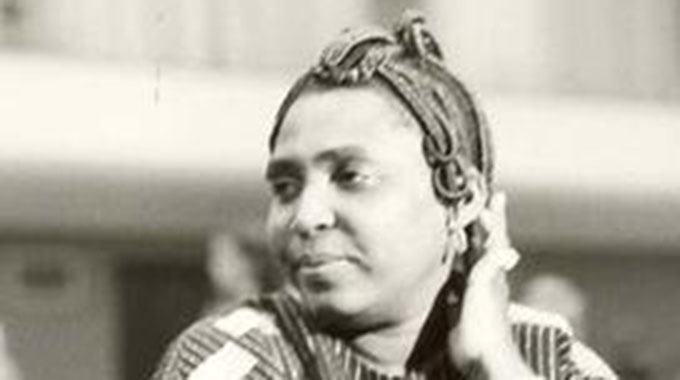
Elliot Ziwira, At the Bookstore
Mariama Ba’s “Scarlet Song” is an enthralling novel which delves into the complexities of love, choice, and marriage—sacrificial enigmas prevalent in African literature.
Through the story of Ousmane Gueye, a highly educated teacher, and his tumultuous relationships, Ba adeptly exposes the flaws in societal impositions on love and marriage. The protagonist’s journey of life is a moving reflection of the human experience, marked by poverty, hard work, and determination.
Ba suggests that love shares the same metaphorical fascination with the rainbow as a cursory illusion—only as beautiful as the fleeting sunlight and drizzle last after a storm. Love is premised on hurt, making it inadequate and impermanent in curbing societal and human frailties.
As God’s gift to humankind, love seems to be wonderful. Paradoxically, however, it cuts both ways—causing both harm and good.
Through love, monuments can stand proud, unshakeable, in the same way that eternal scars are left along the trail. Hence, love remains an unfathomable enigma.
It is this nature of love that Ba underlines in “Scarlet Song”, particularly when examined through societal lenses, using an inter-racial relationship in post-independent Senegal.
Growing up under the domineering influence of his mother, Yaye Khady, Ousmane ultimately becomes “mummy’s boy”, much to the disappointment of his father, Djibril Gueye. About 20 years older than his wife, Djibril fears that Yaye Khady would “turn the lad into a sissy”.
A “mummy’s boy”, Ousmane becomes an object of ridicule, especially targeted by Ousseynou, the brother of the girl of his dreams, Oleymatou. Owing to her brother’s low estimation of the protagonist, she rebuffs him.
This upbringing shapes Ousmane’s views on women and relationships, leading him to stereotype the fairer sex as “flighty and irresponsible, ready to lie and deceive”.
However, his encounter with Mireille de La Vallee, a white woman and daughter of a French diplomat, challenges his preconceived notions. Despite societal norms and expectations, he finds himself drawn to Mireille, his classmate at university. Unable to resist the feeling that only love offers, Ousmane, “who had mistrusted all women”, found himself “at the mercy of a woman, and a white (one) at that”.
As their romantic relationship blossoms, his love is tested against this choice.
Ba skilfully explores the tensions between individual desire and societal expectations, highlighting the hypocrisy and betrayal that can lead to individual inadequacy. Using characterisation to effect, she critiques societal norms that dictate individual choices.
She lambasts characters like Oleymatou, Jean de La Vallee, Ousmane and Yaye Khady, who use societal customs to justify their folly. Interestingly, in the African traditional milieu, a mother plays a pivotal role in determining her son’s choices or in sanctioning them.
Conversely, fathers influence their daughters’ choices as depicted in Yaye Khady and Djibril’s marriage. Nonetheless, the individual reserves the last say, the writer suggests.
Despite her father’s part in their union, Yaye Khady is reminded by her husband that she was not forced to marry him. Ironically, she also believes that “Ousmane should make his own choice”.
However, she changes tact when she realises that Ousmane has fallen for a white woman. Shifting to custom, Yaye Khady tells her son that since Mireille has converted to Islam, she should “know that he has a right to four wives”.
Hypocritically, she does not entertain the same idea when it comes to her husband, Djibril, taking in three more wives.
On the other hand, Jean de La Vallee was raised in a society prejudiced against blacks.
He calls them “primitives”, brands Ousmane “that object”, and shames her daughter as “a snake-in-the-grass slut!” He seals “off his heart against reason and love”, and subsequently disowns her, despite her pleas for tolerance and declarations of love for Ousmane.
The Senegalese author argues that love should be a personal choice, free from constraints imposed by societal expectations. However, Ousmane’s relationship with Mireille is tested by the same society surrounding them.
His friends and family question his choice, citing cultural and religious differences when it suits them.
He is not the only one married to a white woman—most of his friends are. Deceitfully, they castigate him for his choice, arguing that their unions were cemented before independence when it was socially advantageous to do so.
They insist that for him to do the same after independence was out of sync, for “he was the black woman’s hope”. When “a black man marries a white woman,” his friends dubiously reason, “he is lost to his country”.
It is such two-facedness and betrayal that expose the individual and create a sense of inadequacy and normlessness.
In addition to societal restrictions on human choices, Ba intriguingly explores the theme of identity and belonging.
Ousmane’s relationship with Mireille sparks questions about his own identity and sense of belonging.
As a black man in a post-independent Senegal, he is caught between his cultural heritage and his desire for modernity.
The novel raises essential questions about the purpose of love and marriage.
In essence, if love leads to marriage, why does its allure fade?
Ba argues that love should grow within marriage, requiring compromise, humility, and mutual respect.
When societal forces dictate personal choices, then love falters, and marriage becomes a source of sorrow.
Ousmane’s marriage to Mireille fails due to his own intolerance and refusal to listen to others, including his wife. He allows himself to be manipulated by Oleymatou, who seeks to rebound from her previous relationship.
Despite being raised to help with household chores, Ousmane shirks his responsibilities as a husband, citing his masculinity as an excuse. This, combined with his infatuation with Oleymatou, leads him to abandon Mireille, and seek comfort elsewhere.
Oleymatou’s influence further exacerbates the situation, as he becomes increasingly enthralled with her. However, his subsequent marriage to his old flame only leads to more problems, eventually resulting in tragic consequences, including Mireille’s descent into mental illness and the loss of their son, Gorgui.
Mariama Ba critiques the destructive nature of human folly in love, deception, and marriage. She argues that love should be respected and nurtured, growing stronger through compromise, humility, and mutual respect.
When marriage is dictated by personal whims or societal pressures, it falters, leading to grief.
A successful marriage requires continuous effort, sacrifice, and understanding, as emphasised by one philosopher, who says: “A successful marriage requires falling in love many times, always with the same person”.
This is reinforced by Ousmane’s cousin, Lamine, also married to a white woman, who declares, “If to respect my wife and let her live happily in the way she chooses means that I am colonised. . . I admit. I want peace”. Both statements highlight the importance of respecting one’s partner’s choices and desires.
Through “Scarlet Song”, therefore, Ba delivers a powerful commentary on the human condition, urging readers to re-evaluate their understanding of love, choice, and marriage. Her timeless novel testifies to the enduring power of love and the importance of respecting individual choices.
Ultimately, the book reminds the reader that love is a complex and multifaceted emotion, influenced by societal norms, cultural expectations, and personal desire.
Through masterful storytelling and paradoxical exploration of the human experience, the award-winning author makes this novel a must-read for anyone interested in understanding the intricacies of love and relationships.



 Online Reporter