admin
admin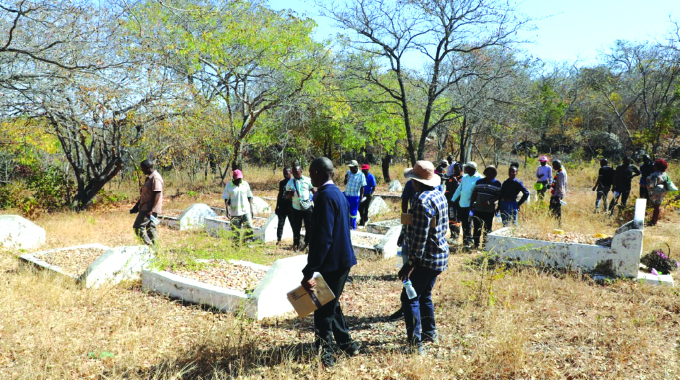
Edmore Mazivofa, Herald Correspondent
The cracked dry sand, rolling mountains, harsh sunlight with dust crumbing rocks is clearly visible. Sandstones accompanied by wind-worn rocks on dotted small hills, cattle and goat tracks clearly evident as the small pathways pass through dead brown grass, it is unbelievable these have been once lush.
The brown patches of undergrowth between the tiny fields is what has been left for the indigenous people when colonisers came. Domestic animals graze as if all is well. These east-lying border areas are part of where the winds of Zimbabwe’s freedom blow from.
The year is 1979 when the whistling winds of freedom are blowing violently across the southern African country which during this time was known as Zimbabwe-Rhodesia.
A group of birds flap their wings in encouragement, some squawking in place of men who peep through cracks of their broken and damaged African huts in fear. Peace is not easy to achieve.
As the sound and squawking gets louder, footsteps in the dry quartz infested sand join the noise. The dust filled boots shuffle the sand, as a group of newly trained freedom fighters walk with purpose to join the war front.
Body odour fills the air from a distance and sweat drops soak the dry baked earth as 65 Zimbabwe African National Liberation Army (ZANLA) men and women walk into the unknown.
The torrid heat takes a toll on them, dry and cracked lips narrate the time spent on an empty stomach as the unforgiving nature sucks the little energy left.
The gritty sand is bringing weakness and pain from split lips and dehydration, there is numbness in the legs from the distance covered, their AK47 rifles are dangling, making a rhythm sound from each step on the uneven ground.
This group of freedom fighters is driven by will and little of what is left in their power, yet the distance covered does not correspond with the time of the day.

Mr Tumai Mhaka, alias Masiyambiri, at the Zavhedho cemetery near Kotwa in Mtoko
They have been crawling and jumping ditches for twenty kilometres, avoiding land mines and all sorts of traps from the Rhodesian Forces.
From the Mozambique border to Mudzi, through the harsh and unforgiving terrain, it is becoming unbearable for the newly trained freedom fighters, who by the nature of physics, is leaving a trail of faint dust and a formed path behind them.
They were to stay together in this number until reaching their rendezvous to await deployment by the detachment commander in the Zavhedho tribal trust lands. Nothing much was suspected because the area was one of the few “liberated” zones in the country.
The Kamusanzara and Mudzi rivers made a perfect tactical route to reach their destination. Like a towering beacon, to the south of the two rivers stood Tsawaya hill which made a perfect observation post for the suspecting enemy, General Peter Walls’ men.
By nightfall, the 65 had reached their destination at Zavhedho, a tactical deployment was done for the night with the hope of an initial deployment by their detachment commander Mr Tumai Mhaka, alias Masiyambiri, the following morning.
The fish and water guerrilla maxim from Chairman Mao had created a relationship that pulled the parents from their homes, all speaking in whispers.
By early morning food had been prepared in the small bushy and hilly terrain within the meeting place for the freedom fighters.
In the summer moonlight, smoke emanated from the small fires. Unbeknown to the freedom fighters, up in the Tsawaya hill, an Empire 214 binocular is piercing through the bushes and counting.
The enemy had located the unsuspecting freedom fighters.
From the lower west side of the base, a tall figure comes towards the waiting freedom fighters, scouting and navigating through twigs and the tired long grass, with one hand clutching an AK47 rifle.
There are few moments of smiling during wartime, but this was an exception. The detachment commander had come to meet his comrades who had travelled from Mozambique and Kenya to join him in the struggle.
They are reinforcements for the Takawira sector in which Masiyambiri is in charge of detachment C1. Masiyambiri searched for a perfect position and struggled to balance and avoid being seen by the enemy.
The sun rose as a canopy of gold, bright amid the blue, as nature commanded the stars to take their nightly rest.
This transition for humans is a moment the body needs more relaxation. For warriors, it’s the most dangerous moment during combat.
Soon after sunrise, the comrades began packing their military gear to start a new day, from the eastern side of the base in the river Kamusanzara, a throbbing sound of a helicopter is heard and all freedom fighters froze for a while.
For an enemy copter, flying low along the river would bury the sound before launching a surprise attack on the freedom fighters. The whirling noises started getting louder with no chopper in sight, and the realisation by the combatants is they were caught off guard.
From the vlei out of the river, four Alouette III helicopters flew high their shape silhouetted by the reddish dawning horizon. The battle had begun, with lurid and disturbing sounds of military machinery.
Bullets hissed through the air and their sound tearing flesh were both visible and imagined. On the other hand, freedom fighters raised their levels of preparedness and frantically fired their weapons on the helicopters.
They could fly high to avoid being gunned down but still inflicting the damage on the unsuspecting fighters.
Civilians were caught in the cross fire, women with children on their backs were hit by bullets and died instantly. The helicopters flew around the base, their weapons diagonally pointing on the ground unleashing a sliver of death.
They give each other a chance to attack, leaving no chance for the freedom fighters to recuperate. There is death and anguish from the heat generated by the impact of bullets.
The area is engulfed in thick black smoke, the septic smell of death hung over the battlefield. On the ground a brown sludge from the blood of the fallen has accumulated.
Mr Daniel Nzombe, a war collaborator who lost a number of relatives in the battle still remembers this day many years later.
“My brother and I were very active members of the youth and we co-ordinated the arrival of these freedom fighters at the base.
“On the day of the attack I got sick and did not go to the base, that’s how I survived this attack. I lost my brother here but I am happy he died for a cause now that we are free,” Mr Nzombe said.
Mr Webster Kangara whose Chimurenga name was Green Forest Dondo, now a Wing Commander in the Air Force of Zimbabwe (AFZ) and a survivor of the battle is still hurt by the loss of comrades at such a magnitude.
“As a security person and a fighter during the liberation struggle and part of that battle, I feel that such kind of loss shouldn’t be forgotten.
“I played my role for those men to reach their destination safely but I always search where we got it wrong. I always conclude they saw us before we saw them that’s all and it happens in war,” Kangara said.
Another Havilland Vampire T11 (DH-115) vertically dives, the bombs go straight in the large pots of hot water on the remaining burning fire. The boiling water is squished out, burning those that have sought refuge on the nearby bushes, their skin turning pink immediately.
The battle field is filled with the sounds of war. The jet is fired upon on its second attack and is hit by rifle fire, its speeds off with its tail releasing smoke, never to be seen again on the battle field.
There is another moment of pause, while the able bodied are trying to carry the wounded to safety there is another sound of a plane. There are grunts and cries everywhere. The dust had started to settle when for Masiyambiri, Green Forest and other experienced cadres realised what it was. A Douglas C-47 Skytrain was approaching from the west. As the doors open to drop the paratroopers to completely finish the job, a hell of fire is released from the freedom fighters and the doors are instantly shut, it turns left and disappear behind the hill.
“It was a surprise attack on a lot of inexperienced comrades, we never had ample time to organise ourselves, and it was horrific. I fought many battles in these parts but that one was something else. We lost many comrades at Zavhedo.
“That day will go down in history as my worst day of the liberation struggle. I only managed to tell those I could to defend themselves and disperse.
“I saw death consuming people like a conveyor does quarry tones in a crushing machine,” said detachment commander Masiyambiri
By midday there are signs the battle is over, the local people gathered around and hastily buried the dead.
There is a forest on one side of the battlefield and a small hill on the opposite side. A makeshift hospital is created, there are also small caves between some rocks where the injured after receiving first aid are shoved in for safety, to be evacuated at night back to Mozambique, on foot.
Those who survived were later on gathered and deployed as planned. A total of sixteen cadres were killed, another twenty or so wounded.
Mudzi district lies on the eastern side of Zimbabwe and was the gateway of ZANLA forces into the country who had trained in Mozambique, Tanzania, Kenya, Sudan and Libya.
The Rhodesian Forces had to concentrate resources on those areas.
Even cadres that were to operate further into the country had to pass through this area, where many battles were fought.



 Online Reporter