admin
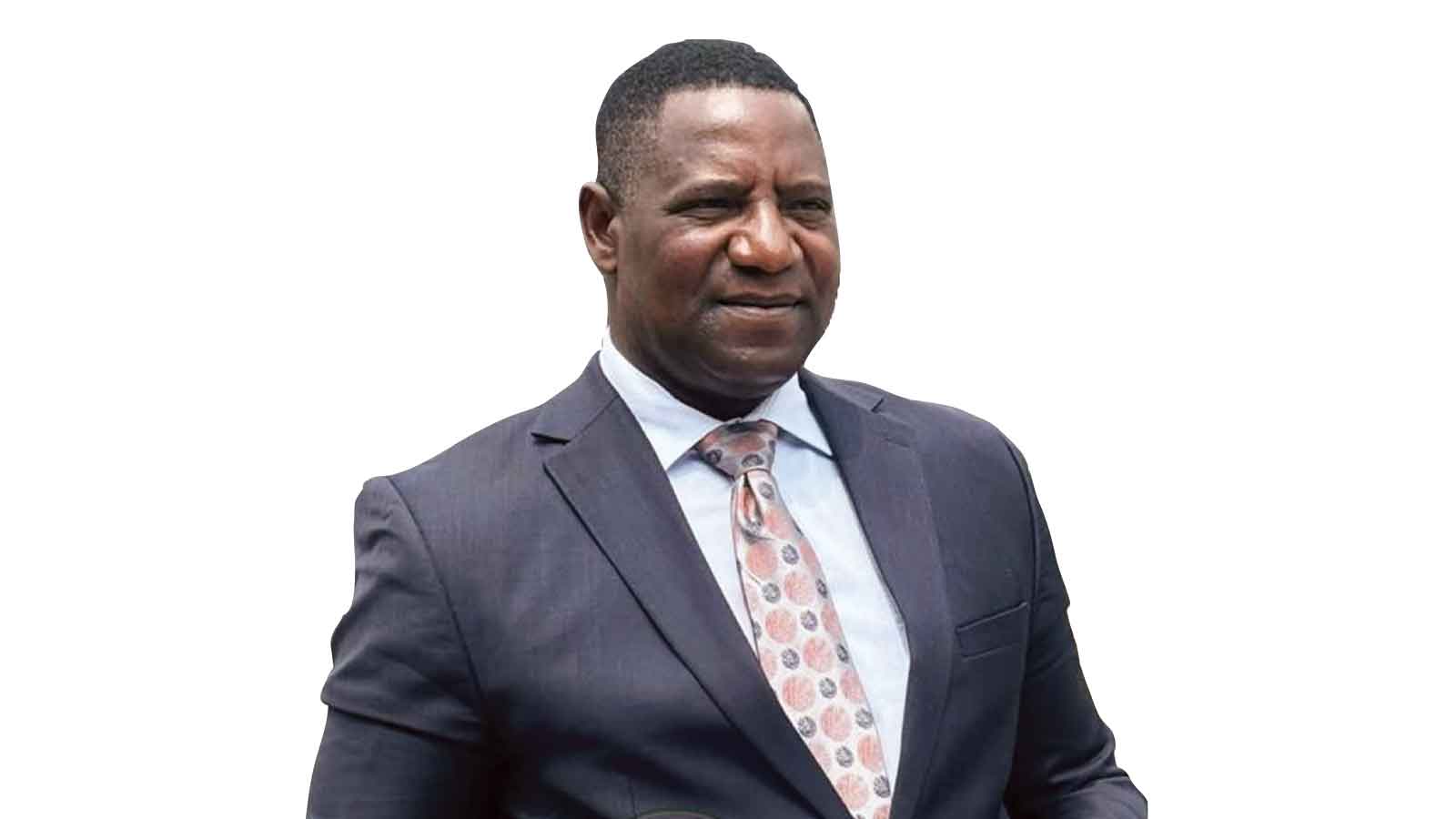
adminSydney Kawadza Senior Features Writer
International relations scholars have been grappling with the debate on the role of international non-governmental organisations (INGO) in conflict resolution, particularly those working in Africa.
The debate rages when some argue that INGOs working in Africa have overstepped their mandates as they appear to be dabbling in the internal affairs of their host countries.
The latest incident involves a “harrowing” video published by Amnesty International, claiming that the Sudanese government was abusing its citizens’ human rights in the Darfur region. In a statement accompanying the video, Amnesty International claims that the Sudanese government is inflicting unspeakable suffering on its own people.
“Amnesty International has gathered harrowing evidence strongly suggesting that the repeated use of chemical weapons against civilians, including very young children, in Jebel Marra — one of the most remote parts of Darfur.
“The effects of these chemicals on the human body are gruesome and frequently fatal,” the INGO working in Sudan claims. They based their claims on testimony from caregivers and survivors estimating that between 200 and 250 people may have died as a result of exposure to chemical weapons agents.
Amnesty International further claimed that its investigation unearthed at least 30 suspected chemical attacks have taken place so far this year. However, these allegations have been disputed by other agents working in Sudan. Organisations that have strongly condemned the video include the United Nations/African Union Mission in Darfur (UNAMID) and the Organisation of Prohibiting of Chemical Weapons.
In a statement issued a few weeks after Amnesty International released their report, UNAMID acknowledged the volatility of a small portion of Jebel Marra within the Darfur region.
The mission said although it has 20 000 UNAMID personnel in the Darfur region, none of them has seen any Darfuri with the impact of chemical weapons use as described in Amnesty International’s report.
It further noted that not even a single person meeting such a description shown by the INGO had shown up at any UNAMID Team Site clinics where affected people would have gone for help.
“Amnesty International claimed to have made calls into Jebel Marra but did not for once call any of the almost 20 000 UN personnel all over Darfur, including in places like Sortony and Nertiti within a stone’s throw from the places where chemical weapons were reported to have been used.
“Not one among the leadership of the armed movements in Darfur discussed use of chemical weapons . . .during several meetings spanning January, April, May, July, August and September this year,” Mr Martin Ihoeghian Uhoibhi, the Joint AU-UN special representative to Darfur and chief mediator said in a statement.
His statements were corroborated by the Organisation of Prohibition of Chemical Weapons, the international implementing body of the Chemical Weapons Convention, which aims at preventing chemistry from ever again being used for warfare.
The OPCW acknowledged that Sudan was party to the CWC and a member of the OPCW since 1997. It further stated that Sudan was by no means in possession of any type of chemical weapons, adding that its industrial facilities, military and civil, were open to verification of the OPWS.
They said that it was difficult to draw conclusions basing on the findings of the Amnesty report.
In their statement refuting the allegations by Amnesty International, the OPCW said; “it examined the relevant parts of the Amnesty International report regarding allegations of the use of chemical weapons in the Darfur regions of Sudan . . . Without further information and evidence being made available, it is not possible at this stage to draw any conclusion based on the content of the report.”
These statements from credible, authoritative bodies on the international arena bring with them underlying questions on the role of an INGO with a suspected agenda.
The Sudanese government argues that despite being involved in one of the longest and most difficult wars in South Sudan, it never resorted to the use of chemical weapons in the South.
It further questions the use of weapons while peace is prevailing in Darfur.
It also states that the area identified in the report is densely populated and the Sudanese army does not use protective masks hence they could also be affected. The US Special Envoy to Sudan also visited Jebel Marra in September for five days prior to the release of the damning video.
Questions have also been raised on how Amnesty International, which does not have presence in the area, came up with the “credible evidence” that UNAMID or the US Envoy failed to notice. Some have argued that Amnesty International came up with the allegations based on rumours.
Elements of the Sudan Liberation Army (Abdul Wahid), the only armed movement in Darfur, have been accused of providing testimonies for the INGO. There are further accusations that Abdul Wahid, who is based in Paris, France, was aware of the contents of the report by Amnesty International.
Academic, Robert K. Christensen of the School of Public and Environmental Affairs at Indiana University in the USA, identified categories linked-INGOs as isolation, advocacy, and cooperation.
He argues that these categories are input strategies that INGOs adopt as they engage in a myriad of pursuits including policy creation and modification, monitoring, and enforcement.
INGO influence manifests itself in several forums; local, national, and international, he further argues.
It is in these pursuits that Amnesty International can be caught offside, as they try to influence the world’s perceptions on Sudan.
The video released on YouTube seeks to suggest that General Omar al Bashir is still killing thousands of civilians in Darfur. It also portrays Africa as a hotbed of conflict in the international arena.
Valuable lessons can be drawn from such activities from non-governmental organisations that try to influence the people’s perceptions of their leaders.
Africa, in as much as it needs assistance from the world since it does not exist in isolation, needs to be careful of the shenanigans of these international organisations.
Since the United Nations recognized the influence of the NGOs and tried to separate its activities to those of INGOs, it has had its own weaknesses.
Some of these INGOs have been used to exploit resources from their host countries and pushing the neo-imperialist agenda in Africa. These organisations have also been insitgating conflicts across the continent.
Remember Rwanda? Reports are that INGOs that were in Rwanda at the onset of the worse ever genocide experienced in Africa watched as people mercilessly obliterated a generation.
Zimbabwe, which has personnel attached to UNAMID, should also draw lessons from what Amnesty International has done in Darfur.
The argument will always be on the role played by INGOs in fuelling armed conflicts on the African continent.
If a report that has gone viral on social media is credited to an international organisation that has so much influence across the globe is dismissed by credible authorities, what does it mean for the people of Sudan? Are international organisations such as Amnesty International setting an agenda against the Sudanese government? What is the role of INGOs in conflict areas of Africa?
At the end of the day it is prudent for Africa to start asking questions related to the role international organisations have played in fuelling armed conflicts.
Africa should also start questioning the idea of allowing these organisations when they begin fighting them. The latest debacle also supports the call for Africans to solve African problems, instead of waiting for such organisations to come under the humanitarian guise, with intentions to fan conflicts and strife.
Feedback: [email protected]



 Online Reporter