Online Reporter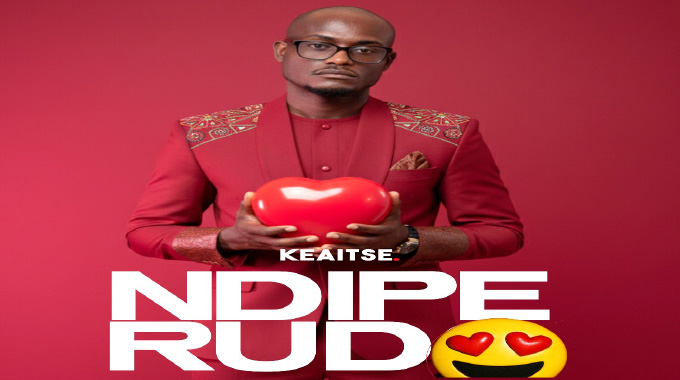
Mbulelo Mpofu, [email protected]
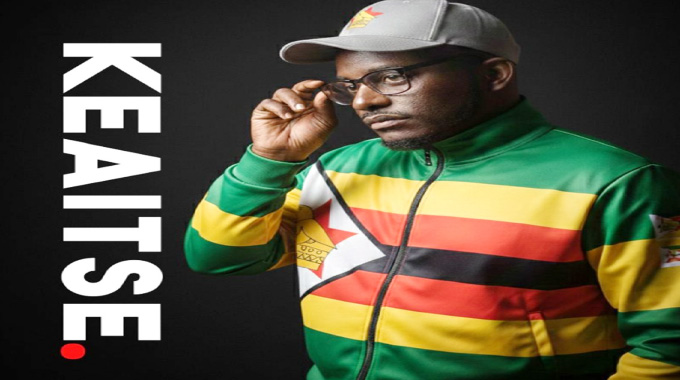
WHILE many are consumed on whether to use Artificial Intelligence (AI) in their creative endeavours, Bulawayo-based videographer, Qinisela Keaitse, aka “Rasquesity” is putting his money where his mouth is.
To him, AI is a potent weapon. Within Zimbabwe’s cultural powerhouse, Bulawayo, a quiet revolution is being orchestrated. Rasquesity, stands at the forefront, not as a tech bro evangelist, but as a trained artiste wielding AI as his latest, most potent creative tool.
Armed with a Bachelor of Science Honours Degree in Film and Theatre Arts from Midlands State University and an abiding passion for “all things art”, Rasquesity embodies a new breed of creator: one who sees AI not as a threat to human expression, but as an unprecedented amplifier, capable of democratising artistry and propelling unique cultural voices onto the global stage.
His traditional arts background is far from a relic; it’s the very bedrock of his innovative approach.
When asked how his studies in human-centric storytelling translate to “non-human” AI music design, his answer is revelatory: “My background in Theatre and Film is actually my secret weapon when using Suno (an AI music generation platform). In theatre, we look for narrative tension, subtext, and character arc. I apply that same dramatic structure to AI music design.”
He dismantled the myth of the passive AI user.
“I don’t just click a button; I use my understanding of mood and pacing to direct the AI.”
Drawing a compelling parallel, he explained: “Just as a director uses an algorithm of blocking, lighting, and dialogue to produce a specific human emotion on stage, I use prompts and algorithmic creativity to create that Afro-house song. The AI is simply a new type of performer.”
For him, the technology is subservient to the human vision: “My theatre and film background ensures that even if the tool is digital, the intent and story remain deeply human because it is me, a human, behind the prompting.”
The rise of AI in music has not been without controversy, starkly highlighted by Sweden’s recent ban of the AI-generated hit, Jag vet, du är inte min from its official charts, despite its massive streaming success.
Rasquesity views this not as a definitive answer, but as symptomatic of industry growing pains.
“I see it as a bit of both protection of human artistry and resistance to inevitable technological evolution. While Sweden aims at protecting their artistes, banning a song that millions of people are choosing to stream feels like resisting change. If the public connects with the song, it has artistic value,” he reflected.
His solution lies not in prohibition, but in radical transparency: “However, transparency is the key. I don’t believe AI music should sneak into charts. Music charts should adapt by creating verified categories.”
He proposes a model inspired by other creative industries: “Instead of a total ban, they should have clear disclosures. Just as we have Best Original Score and Best Adapted Screenplay in film, charts can distinguish between human-performed and AI-assisted works. We shouldn’t fight the technology but create transparency so people know it’s AI.”
This call for nuanced categorisation reflects his belief in co-existence rather than conflict.
One of the most pressing challenges surrounding AI-generated art is the murky territory of copyright.
Who owns the rights: the programmer who built the AI, the user who prompted it, or the AI itself? For creators like Rasquesity, this ambiguity is stifling.
“This is the most critical challenge. The law is lagging,” he said.
He dismissed the notion of AI ownership outright: “AI cannot own anything because it has no legal personhood or intent.”
His advocacy is clear: the human creative director must be recognised. “I believe the person who provides the prompts, selects the lyrics, and curates the output should hold the copyright, provided there is significant human creative input. We need new laws that recognise the creative director or person prompting as the author.”
This stance is crucial for protecting the livelihoods and intellectual property of artists navigating this new frontier.
A common criticism levelled against AI art is its perceived lack of authentic emotional depth. Rasquesity, as an artiste bridging both worlds, offers a powerful rebuttal rooted in his process.
“AI is a mirror; it only reflects the emotional depth you give it. If you give it a shallow prompt, you get a shallow song. I imbue depth by using my artistic background to whatever song I do with AI,” he asserted.
He challenged the idea that the human role is diminishing to mere curation: “The human role is definitely evolving, but I wouldn’t say we are just curators. We are becoming creative orchestrators. We are the ones who decide why a song needs to be sad or why the beat needs to drop at a specific moment.”
He employs a fitting analogy: “The AI provides the car, but the human still has to drive it.”
Ultimately, he sees AI as an efficiency tool that liberates artistes: “It is not replacing artistes; it is removing the technical delays in production time so the artist can spend more time on the authentic emotional message.”
Looking five years ahead, Rasquesity’s vision for AI in music is one of ubiquity and empowerment, particularly for regions like Zimbabwe.
“In five years, AI will be as common in a musician’s toolkit as a guitar or a laptop,” he predicted.
His greatest enthusiasm lies in its democratising potential: “I am a firm believer that it will democratise artistry, especially here in Zimbabwe. For a long time, talented people in under-represented communities couldn’t record because they couldn’t afford studio time. Suno has made that easy, it’s just your phone, subscription and your data bundles.”
He readily acknowledged the risk of cultural homogenisation —the, “everything sounds the same” pitfall — but sees it as a challenge of human intent, not an inherent flaw of the technology.
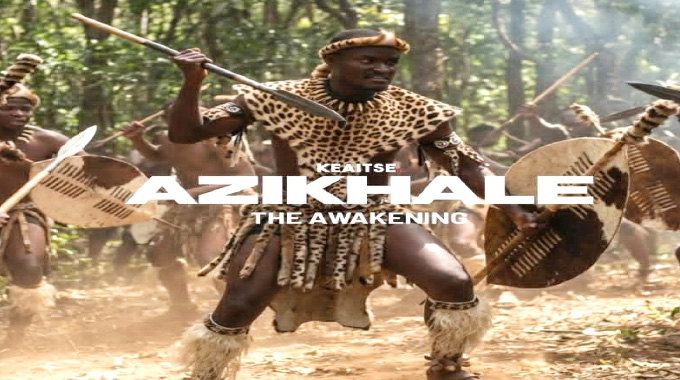
“The risk . . . only happens if we are too lazy.” His own work stands as a proactive counter-measure. Singles like, Azikhale, Mazuva Ese, Ndipe Rudo, Penya and ZvemaKamera — celebrating universal themes of beauty, love, patriotism, and Zimbabwe’s tourism potential —are deliberately rooted in local identity.
“The songs I have done with AI address this by using ChiShona or IsiNdebele lyrics and traditional rhythms to ensure our unique cultural style is fed into the system.”
His message to African creators is one of urgency and opportunity: “If we accept the tool, we can use it to flood the global market with our sounds, faster and cheaper than ever before. We shouldn’t fear the AI but we should teach AI how to speak our language since it sometimes falls short in pronouncing words with a proper accent.” This act of teaching the AI — feeding it local languages, rhythms, and stories — becomes a vital act of cultural preservation and assertion in the digital age.
Rasquesity is not a performing musician, but said AI makes music production less tedious. He rejected the false binary of human vs machine, instead positioning the artiste as the essential “creative orchestrator” or “director,” harnessing the computational power of AI to execute a deeply human vision. —@MbuleloMpofu