
Trade Focus
Allan Majuru
Zimbabwe’s export performance for the first five months of 2026 provides an encouraging signal that the country is gaining traction in international markets.
BETWEEN January and May 2026, total exports grew by 42 percent to US$4,45 billion, up from US$3,14 billion recorded during the same period last year.
This performance is not only about numbers. It reflects growing confidence in Zimbabwean products across global markets, supported by deliberate efforts under the Second Republic to reposition the country as a reliable trade partner.
The growth is also a practical expression of President Mnangagwa’s “Zimbabwe is open for business” mantra, which has created a strong foundation that continues to guide economic diplomacy, market development and private sector-led export growth.
When looking at export performance by sector, the growth in value-added exports is particularly encouraging.
Value-added exports increased by 26 percent from US$198 million during January-May 2025 to US$250 million during the same period this year.
This growth comes at a time when global trade is facing disruptions from geopolitical tensions, shifting supply chains and rising competition for markets.
For Zimbabwe to record strong export growth under these conditions shows that the country is increasingly finding space in international value chains.
In addition, the growth of value-added products is a strong indicator that Zimbabwean manufacturers are beginning to respond to opportunities created through market access initiatives, investment in productive capacity and growing acceptance of local products abroad.
The import structure between January and May this year further points to an important signal. Imports rose by 29 percent to US$4,94 billion, up from US$3,84 billion last year. Although imports continue to exceed exports, the trade deficit narrowed from US$700 million to US$491 million, showing that export growth is beginning to reduce the gap. More importantly, machinery and equipment accounted for the largest share of imports, rising by 46 percent from US$705 million to US$1,03 billion.
Raw material imports also increased by 26 percent to US$655 million.
This structure is encouraging because it points to investment in productive assets and growing capacity utilisation in industry.
The understanding here is that an economy importing machinery, equipment and raw materials is preparing to produce, which is different from an economy dominated by imports of finished consumer goods.
Movers
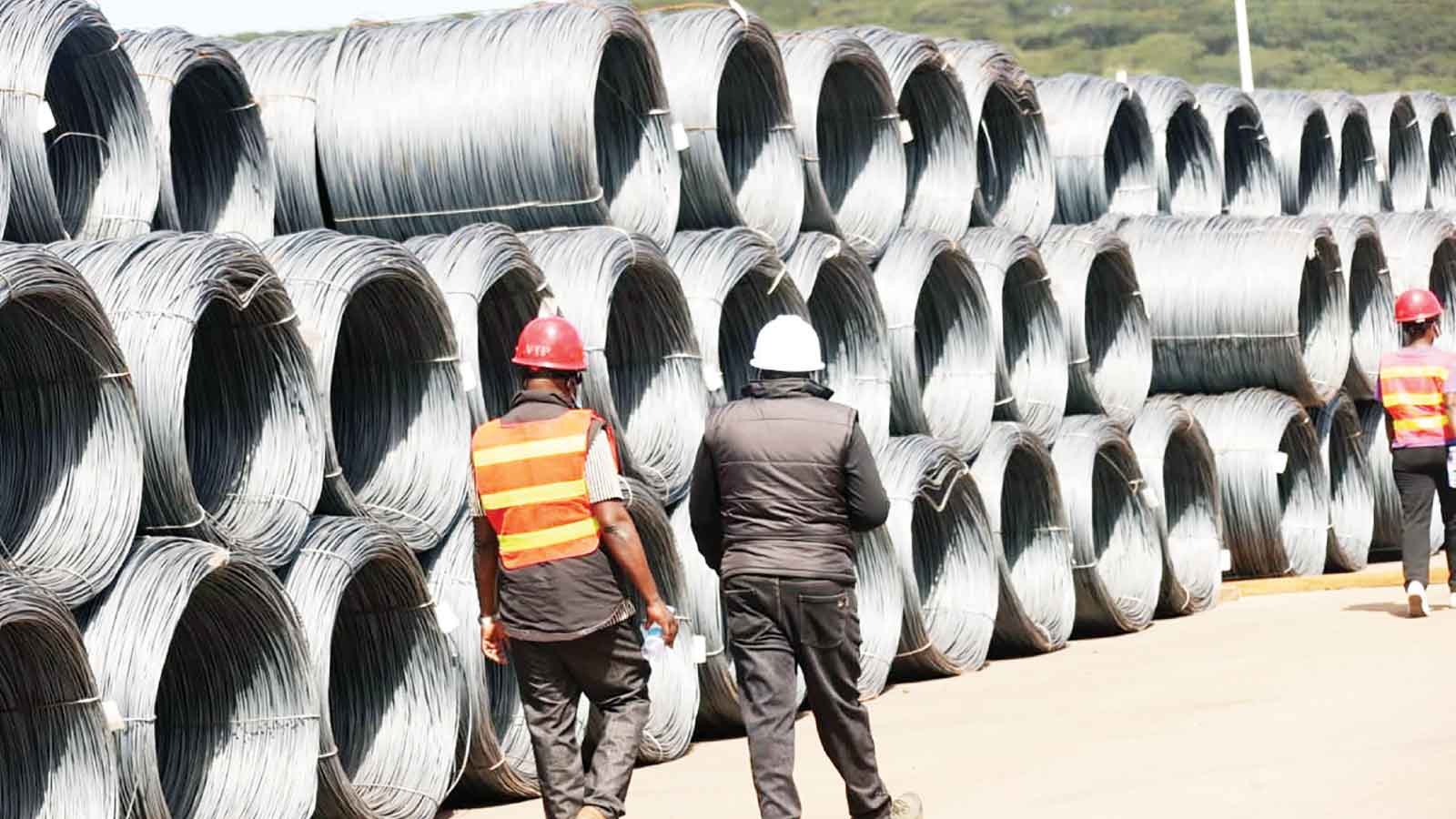
The growth in value-added exports is supported by strong performances across several sectors. Engineering products were among the standout performers, increasing by 147 percent from US$39,3 million to US$96,8 million.
This is an important development because engineering products are associated with industrial capability and deeper value chains.
The growth was largely driven by iron and steel products, including bars and rods. The performance points to a structural shift in Zimbabwe’s industrial base, supported by new investments in iron and steel production. A stronger engineering sector also has spillover benefits for agriculture, mining, construction, transport and infrastructure development.
Chemicals recorded the highest percentage growth among the key value-added sectors, rising by 557 percent from US$2,4 million to US$15,6 million. This growth was largely driven by sulphates and alums.
The emergence of commercially processed lithium sulphate exports is particularly significant. It shows that Zimbabwe is beginning to move beyond raw mineral exports into processed mineral products that feed global industrial and clean-energy value chains. This is aligned to the Government’s policy direction of encouraging beneficiation and value addition.
Building and construction material exports increased by 11 percent to US$12,2 million from US$11 million last year.
This sector is important because it demonstrates the capacity of local firms to supply regional infrastructure and housing markets.
Products such as tiles and related construction materials have strong potential in the region, especially where construction activity remains high. Zimbabwe’s proximity to regional markets gives local producers an advantage if they can maintain quality, pricing and reliable supply.
Cotton exports also grew by 38 percent from US$2,5 million to US$3,5 million.
Although this increase was mainly supported by raw cotton, it remains an important pointer to opportunities that can be unlocked through deeper value addition.
Minerals and alloys remained the largest export category, rising by 42 percent from US$2,51 billion to US$3,56 billion in the review period.
Overall, they accounted for about 80 percent of total exports. This performance confirms the continued importance of mining to Zimbabwe’s export earnings.
The next step is to ensure that mineral export growth translates into broader industrial development through beneficiation, local procurement, infrastructure investment and linkages with domestic firms.
Unmanufactured tobacco also performed strongly, increasing by 51 percent to US$612,5 million from US$404,5 million last year.
Tobacco remains one of Zimbabwe’s most recognised export products, supported by established markets and strong farmer participation. Manufactured tobacco also grew by 26 percent to US$56,4 million, which shows the direction the country must continue to pursue.
Some shakers
While the headline export numbers are positive, some sectors require renewed support to recover lost ground.
Clothing, textiles and footwear exports declined by 7 percent to US$6,8 million from US$7,3 million.
The sector remains important because of its employment potential and strong linkages with agriculture, especially cotton. Its recovery will depend on improved competitiveness, access to modern equipment, design capacity, consistent supply of fabrics and stronger market linkages.
Hides, leather and leather products exports fell by 59 percent from US$16,3 million to US$6,6 million. The decline was mainly driven by a fall in exports of raw hides. Arts and crafts exports declined by 5 percent to US$5,4 million.
This sector remains one of Zimbabwe’s most distinctive export categories because it carries cultural identity and heritage.
The sector needs stronger market access, better packaging, digital marketing and deeper linkages with tourism and diaspora markets.
Destination markets
Zimbabwe’s export growth is also reflected in the performance of destination markets. The United Arab Emirates remained the largest export market, with exports increasing by 36 percent from US$1,45 billion to US$1,97 billion.
South Africa remained the second-largest market, with exports rising by 31 percent to US$1,03 billion. China was third, with exports increasing by 45 percent to US$670 million.
This concentration shows the importance of maintaining strong relationships with key markets, while also accelerating diversification.
Indonesia emerged as the fastest-growing major export market, with exports increasing by 225 percent to US$56,7 million.
Exports to Botswana grew by 79 percent to US$27,7 million, while exports to the Russian Federation increased sharply to US$20,9 million. Exports to Zambia also increased by 34 percent to US$69,8 million.
These numbers show that more countries are warming up to Zimbabwean products.
They also demonstrate the importance of sustained economic diplomacy, diversification and private sector engagement.
Allan Majuru is the chief executive officer of ZimTrade.