Sundaymail Editor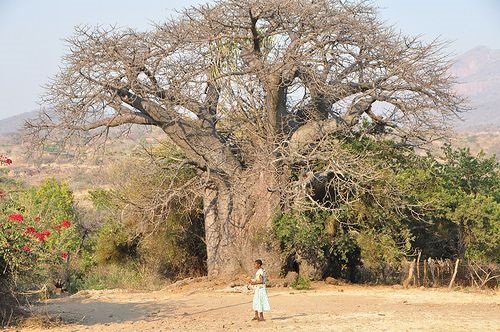
Trade Focus
Allan Majuru
ZIMBABWE’s future success is premised on the need to transform the country’s rich heritage into sustainable sources of income for communities.
President Mnangagwa has emphasised the importance of turning heritage-based products into economic gains for communities as part of the country’s broader strategy for development.
It is believed the integration of heritage with science, technology and innovation forms a solid foundation for national progress. This approach is encapsulated in the Heritage-Based Education 5.0 model. The concept seeks to transform the education system to produce graduates capable of creating wealth and advancing national interests.
What is perhaps important is a deeper understanding that natural resources form part of the wider heritage-based products that are earmarked to deliver economic transformation.
In fact, wild fruits play a significant role in this heritage-based innovation framework, as many local communities rely on them for nutrition and medicine, among many other uses. This is where wild fruits like the baobab come in.
African baobab
The African baobab, scientifically known as Adansonia digitate, is an iconic tree found across the continent.
Its distribution is influenced by climatic conditions and habitat suitability.
In Zimbabwe, it is widespread.
It generally occurs in low-altitude areas as it thrives in hot and dry woodlands.
The specific regions where baobab trees are abundant include the Zambezi Valley in Matabeleland, Mashonaland provinces, as well as Masvingo and Manicaland.
So, overall, in Zimbabwe, the baobab tree grows in very dry areas, where rainfall is as little as 500mm a year.
The trees fruit in the middle of the dry season, when there is little else growing and few other income opportunities for communities. The baobab fruit is one of the most nutritious foods in the world. In fact, it is considered a super fruit. Also, it is regarded as a nutrient-dense fruit. The pulp is particularly rich in vitamin C, as well as vitamin B, potassium, magnesium, iron, calcium and fibre.
Source of income
For people in the drylands of Zimbabwe, especially women and youths, the fruit is a convenient source of income.
Households generate income from harvesting and selling the fruit.
Zimbabwe has an estimated five million baobab trees, of which four million are in communal areas. The fruit is seasonally available for harvest from April to September. For generations, the baobab fruit has been harvested and sold at local markets, either as fruit with seed or as powder.
In recent years, there has been a realisation that the tree and its fruit are much more than a source of food for rural communities, but a cash crop that can provide huge returns.
Through training and capacity-building interventions, the fruit presents huge potential for commercialisation.
For example, the national trade development and promotion organisation, ZimTrade, has developed several products, together with small businesses and rural communities, where innovation has resulted in the creation of export-competitive products such as essential oils and animal feed.
In Mudzi, ZimTrade is working with Camfed and the Harare Institute of Technology to develop a processing plant that will allow a group of 10 young women to process baobab into high-end products.
The group has already participated at international trade fairs such as the Intra-African Trade Fair held in Egypt last year, where they engaged leading buyers in the market, who expressed desire to source their product from Zimbabwe.
The group has sent sample orders to Egypt and once approved, the market will absorb most of the products coming from Mudzi, which will put the community on the national export map.
Some of the current products from the baobab fruit that have been developed for export are baobab powder and oil.
Baobab powder is highly versatile and finds applications in various sectors, including food and beverages, nutraceuticals and cosmetics.
Research shows distinctive nutritional content on different parts of the plant, such as the leaves, pulp and seeds.
Nutraceuticals, smoothies, yoghurt, baked products and cosmetics are some of the applications where baobab powder is gaining popularity.
Furthermore, the seeds and kernel of the plant are loaded with fibre, fat and micronutrients like thiamine, calcium and iron.
Since they are a natural source of these nutrients, they are more bioavailable than manufactured vitamin supplements, and the health-conscious markets are opening up to this novel product.
Baobab oil contains Omega 3, 6 and 9 fatty acids, and exhibits potent skin moisturising activity.
The residual cake from the oil pressing is a useful, high-protein stockfeed.
Additionally, the baobab has a natural shelf-life of three years, so there are no additives or preservatives in baobab products that maintain their deliciously sweet and citrusy flavour over time.
Research by ZimTrade has shown that a kilogramme of baobab powder sells for between US$20 and US$40 in international markets, with the oil price much higher, at between US$80 and over $100 per litre.
A 20-litre tin of unprocessed cracked baobab is sold for US$1 in some parts of Zimbabwe.
Markets
In terms of markets, Europe is a key importer of baobab powder due to its growing demand for natural health products.
The product is marketed as a food supplement that supports health and overall well-being.
According to the Netherlands Enterprise Agency’s Centre for the Promotion of Imports from developing countries (CBI), the European market for baobab ingredients is expected to grow by 4 percent in the coming years.
Other studies put the expected compound annual growth rate at anything between 5,6 percent (Global Market Insights) and 9,4 percent (Market Research Future).
According to Tridge, the United States ranks first in baobab powder imports, with an import value of US$90,7 million in 2023.
China ranks second, with an import value of US$38,3 million.
The demand for baobab powder has surged in China, driven by its nutritional content and taste.
Germany is the third-largest importer, with an import value of US$28,9 million.
France ranks fourth, with an import value of US$18,4 million.
The French market appreciates baobab powder for its unique flavour and health benefits.
Canada is the fifth-largest importer, with an import value of US$18 million.
Baobab powder is increasingly incorporated into food and beverage products in Canada.
To export baobab to Europe, several market requirements must be met, which are set by the European Union (EU).
Baobab products must comply with the EU’s General Food Law, which ensures safety and traceability.
Products must meet requirements on maximum residue levels, contaminants and microbiological contamination.
Baobab is usually tested for heavy metals such as lead, mercury, cadmium and arsenic.
Exported baobab powder must comply with EU labelling requirements, including the supplier’s name, address and telephone number; product name and identification; batch code; country of origin; date of manufacture; and best before date.
While not mandatory, having organic certification is important in the European market for baobab products.
* Allan Majuru is the chief executive officer of ZimTrade.



 Online Reporter