malvernmugadzikwa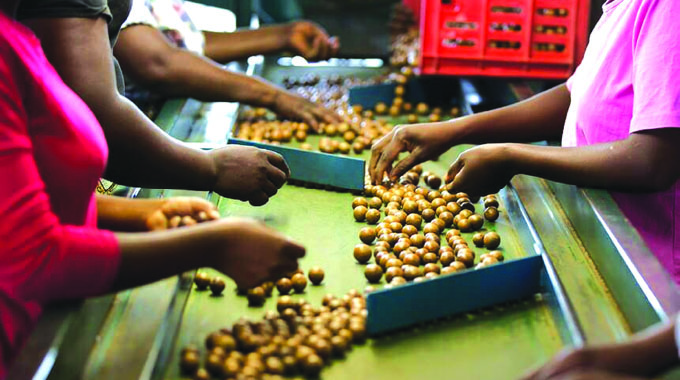
ZIMBABWE is re-integrating into the global economy with a considerable measure of success following Government’s engagement and re-engagement drive.
Trade Focus
Allan Majuru
Over the past few years, there has been an increase in the number of Western countries doing business with Zimbabwe.
President Mnangagwa’s administration has been doubling down on economic diplomacy through the Ministry of Foreign Affairs and International Trade. In these efforts, focus has been on unlocking economic value from political relations with countries across the world.
The private sector can potentially tap into these existing and emerging opportunities.
Countries such as Germany are now coming out as potential markets for Zimbabwe’s high-value niche products, and with support, there is scope to increase the visibility of local products in those markets.
Last year, Germany’s imports from Zimbabwe stood at US$57,2 million. Most of them were dominated by exports of raw tobacco, accounting for 44 percent of the total figure.
There is, however, room to do better.
Opportunities also exist for goods such as fresh produce, raw hides and skins, black tea, coffee and clothing.
Germany market
Germany — the fourth-largest economy in the world after the United States, China and Japan — is a country well-known for its engineering and automotive industries, as well as precision manufacturing.
With a population of 80 million people, it is famed for its advanced infrastructure, economic strength, high standards of living and excellent education system.
In 2022, it was the third-largest importing country in the world. It imported goods worth US$1,6 trillion and services valued at US$381 billion, according to Trade Map.
The German economy grew by 1,9 percent in 2022, despite the ongoing Russia-Ukraine war, which has negatively affected several European economies.
According to the German Federal Statistical Office, the growth witnessed in 2022 was mainly driven by increased consumer spending. The growth in consumer spending also shows that the market has enough buying power for imported products that meet the requirements and expectations of consumers.
Germany, a member of the European Union (EU), is one of the European countries and potential markets Zimbabwe can trade with through use of the EU-Eastern and Southern Africa Economic Partnership Agreement, which both countries are signatory to.
Key products
According to Trade Map, products with great export potential from Zimbabwe to Germany include raw hides and skins of reptiles (fresh or cured), fresh oranges, nuts, black tea and peas.
Zimbabwe has the highest supply capacity of raw hides and skins of reptiles (fresh or cured), while horticulture is another area with a lot of potential for export. In 2022, citrus exports topped the list of Zimbabwe’s horticultural exports to Germany at over US$3,9 million.
In the same period, Zimbabwe was the fourth-largest supplier of peas into Germany, exporting US$2,1 million worth of the produce.
Avenues created in the peas sub-sector can be used to introduce more horticultural produce in the market, such as berries, avocados, macadamia nuts and a wide range of fresh fruits.
Zimbabwe’s exports of avocados to Germany have also been on an upward trend, growing from US$869 000 in 2021 to US$1,2 million in 2022.
The Hass avocado variety, which is commercially grown in Zimbabwe for export, is the variety in demand, hence it should be easy for producers to upscale production to meet the emerging market.
Blueberries are also another product with a lot of potential.
Data shows that Germany’s total imports of berries stood at US$1,5 billion in 2022, against Zimbabwe’s exports to the country of US$144 000 in 2022.
With increased production, there is potential to provide the berries to an already growing market in Germany, riding on the reputation of local produce, considered to be of top quality and having better taste by buyers in Europe.
Further, macadamia nuts are starting to gain prominence in Europe, and Germany presents a potential market for Zimbabwe.
Zimbabwe currently exports nuts in shell mainly to China and South Africa.
Germany imported shelled nuts valued at US$77,5 million in 2021.
Local farmers looking to earn better value from macadamia exports are encouraged to consider cracking the nuts before exporting them.
There is also potential for coffee in Germany.
In the past, farmers entered into partnerships with the likes of Nescafe to come up with brands such as the Tamuka muZimbabwe, so the opportunities to explore this product and market exists.
Other products of interest include men’s apparel.
Encouragingly, Zimbabwe already has a market in that country.
Germany, in 2021, imported men’s apparel worth US$2,2 million from Zimbabwe.
Creating stronger linkages
Whilst identifying export opportunities is important, creating linkages with buyers in Germany will make it easy for local producers to land their products in the market.
Already, some efforts are being made to strengthen linkages between local exporters and buyers in Germany, who have indicated willingness to import more from Zimbabwe.
For example, ZimTrade’s activities in Germany align with efforts to grow trade and business networks among companies in the two countries, as well as identify opportunities for local products in the various sectors where Zimbabwe can enhance trade with Germany.
Earlier this year, ZimTrade facilitated Zimbabwe’s first participation at the Ambiente Show in Frankfurt, Germany, which is a leading international trade fair for arts and crafts.
The companies, which were exhibiting some exceptional arts and crafts, got opportunities to meet and engage with some leading buyers in Germany.
Some of the products exhibited were stoneworks from Guruve and some hand-made baskets from Buhera.
The show generated interest in basketry, as well as stone and metal sculptures, with some meaningful market leads being created.
In addition, following a successful learning visit to Fruit Logistica in Berlin, Germany, in 2017, ZimTrade has since been facilitating participation of local farmers to showcase Zimbabwe’s finest fruits and vegetables.
Fruit Logistica is one of the most important business and communication showcases of the international fresh produce trade globally, and the trade fair allows the world to see just how rich Zimbabwean produce is.
This year, a lot of interest was shown, as is always the case, for Zimbabwe’s fresh produce, which was deemed to have a unique and rich natural flavour, just as nature intended.
Meetings were also held during the show with international organisations. There was an interest in enhancing production of fresh produce for export to the European Union, Germany included.
Allan Majuru is the chief executive officer of ZimTrade.



 Online Reporter