admin
admin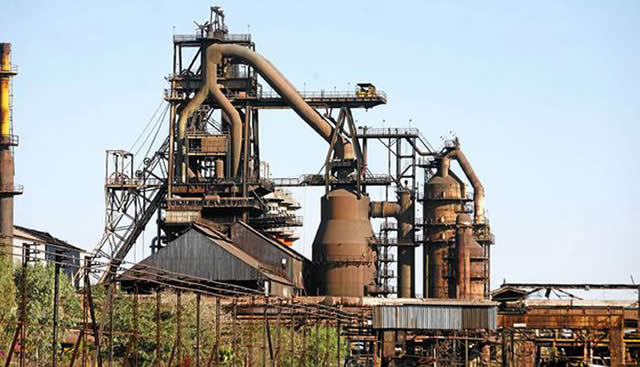
Lovemore Zigara Midlands Correspondent
ONCE a hub of heavy industries in the country, Kwekwe is now a shadow of its former self. The city’s vibrancy, its fast-paced life and the smoke from most of the industries are now all gone. Most industrial infrastructure is slowly turning out to be white elephants and the ripple effects of their collapse are affecting the national economy.
Downstream and related industries have been severely affected which has put a dent on the value chains of the mining industry as well as the agro-processing industry in the Golden City.
Thousands of workers lost their jobs and now find themselves on the streets following the closure or downsizing of companies such as Ziscosteel, Sable Chemicals, Lancashire Steel and Zimasco. Most of them have resorted to gold panning to eke out a living.
However, this has come at the expense of the environment. Thousands of former workers who have resorted to artisanal mining do not consider the impact of their activities on the environment.
Ziscosteel was once Africa’s largest integrated steelworks employing over 5,000 employees but today the company resembles a museum. The steel company, gave birth to the satellite town of Redcliff.
Sable Chemicals — the country’s sole Ammonium Nitrate (AN) fertiliser manufacturer — is operating with a skeleton staff of about 10 percent of its staff compliment of 500 workers. This was after the power utility, Zesa, cut off electricity rendering the electrolysis plant useless.
Zimasco has been facing viability challenges due to the depressed chrome prices on the world market. Not even the recent lifting of the chrome export ban has saved the company from collapse. The ferrochrome smelter, which used to employ 3,000 workers in all its three divisions of Kwekwe, Shurugwi and Mutorashanga, is now left with just over 150 workers as the economic downturn continues to take its toll.
In essence about 8,500 people have directly lost their jobs due to the three companies’ viability challenges while thousands more in the downstream industry have also been affected.
Other companies such as Zimbabwe Castings whose survival was hinged on the three companies are operating way below capacity. Zimcast, that was based in Gweru, has shut down completely while Zimbabwe Chemical Refiners (Zimchem), ailing parastatal the National Railways of Zimbabwe (NRZ), Lancashire Steel and Steelmakers are struggling to stay afloat.
Alexander Johnson, the group general manager for Steelmakers Zimbabwe, says part of their operations are at 50 percent capacity. He says they used to get most of their raw materials from Ziscosteel.
“Overall, we’re operating at 80 percent capacity utilisation. However, some sections of our plant where we can operate at optimum levels are operating at half capacity because we used to get most of our raw materials such as billets from Ziscosteel. As a result of the non operation of the company we can’t get the raw materials that we need.
“We’ve been forced to import some of our raw materials which we used to access locally and this has come at a price. When we export we become uncompetitive on the export market. We’ll be competing with foreign companies which don’t have costs like ours. We’ve to pay duty and other costs related to importing raw materials and those expenses are factored on the final product, hence we’re uncompetitive as compared to our counterparts who aren’t burdened with such costs,” he said.
Steelmakers’ state of affairs reflects the situation prevailing at other steel manufacturers in the country such as Haggie Rand and Lancashire Steel, a subsidiary of Ziscosteel. Lancashire Steel is, in fact, worse off. There is no production to talk about and workers who were reporting for duty spend the day doing “basic housekeeping issues,” according to Zisco Workers Joint Union chairperson, Benedict Moyo.
The government has since fired the remaining workers at the steel manufacturer on three months’ notice.
Sables Chemicals which had a symbiotic relationship with Ziscosteel and Zimasco as the three companies were inter-dependent can also attribute its recent scaling down to the fate of the other two companies. A major infrastructural investment in the form of a pipeline linking Sable Chemicals and Ziscosteel, has been reduced to a white elephant. The fertiliser manufacturer used to supply the steel giant with oxygen through the pipeline before the scaling down of operations.
Sable Chemicals chief executive officer, Jack Murehwa, before the switching off of the company’s electrolysis plant, said they were forced to release about 60 percent of the oxygen into the atmosphere. He said the remainder was sold to the likes of Zimasco, BOC Gases and some smaller clients such as hospitals. The biggest consumer of the commodity, Ziscosteel, had ceased operations.
“The closing down of our electrolysis plant meant that those companies which used to supply us with spares and equipment no longer have business,” said Murehwa.
Zimchem also faces a similar fate as it cannot access raw materials it used to get from Ziscosteel. The Redcliff based company processes crude benzol and tar into a range of chemical products including xylene, napthas, road tars, toluene and benzene. However, the shortage of raw materials from Ziscosteel which constitute 85 percent of Zimchem’s inputs have impacted negatively on the company’s operations. Zimchem was commissioned in 1994 by the government to manufacture more chemicals within the country so as to reduce the loss in foreign exchange.
Perhaps the biggest casualty has been the National Railways of Zimbabwe, one of the worst performing parastatals. The rail utility public relations manager, Fanuel Masikati, said the parastatal is losing substantial business which could breathe life into its waning fortunes.
NRZ used to ferry 1,5 million tonnes of freight per year to and from Ziscosteel. Masikati, however, could not quantify the business lost to date saying it is difficult especially after the changeover from the Zimbabwe dollar era to the multi-currency regime.
Confederation of Zimbabwe Industries (CZI) president, Busisa Moyo, said there is a need to revisit the value chain of the different sectors of the economy if the local manufacturing sector is to be revived.
“We’ve been looking at value chains as part of our approach to industrialisation, from local, national, regional and ultimately international value chains. What we mean by value chains is that instead of coming as the bakers association let’s look at the whole wheat to bread value chain. And if you’re in the shoe industry let’s look at the beef to leather value chain.
“This is because if you’ve interventions at one level of the industry and you don’t attend to issues downstream, it becomes very difficult to find the performance that we want as an economy which includes quantity of supply and quality,” he said.
Moyo said the industrial lobby group has identified 18 value chains which will be a guide to action to resuscitate local industry.
Economic analyst, Clive Samvura, buttressed CZI’s call by urging the government to come up with an industrial policy to complement the country’s economic blueprint, ZimAsset.
“It’s imperative that the government prioritises a survey and detailed analysis of our manufacturing and industrial sector (company by company) prior to drafting an industrial policy paper. This survey should also analyse the labour sector to determine the skills set and demographic profile of the 80-90 percent formally unemployed. We need a database of companies operating in Zimbabwe as the information provided on the Zimstat website isn’t detailed enough. It only provides manufacturing volumes at best,” said Samvura.
He called on the government to identify local manufacturers and look at the cost drivers inherent in the economy in view of correcting some of the distortions. After correcting the distortions, Samvura said, the government will then proceed with the crafting of a policy which will usher industrialisation.
Industry and Commerce Minister, Mike Bimha, remains confident of economic recovery. He said the government is pursuing a “robust economic recovery programme” that won’t fail. The Minister said there has been renewed interest on Ziscosteel from investors following the collapse of the Essar deal.
Bimha said: “Ziscosteel will act as a stimulus to the recovery of the entire economy because of its strategic importance.”



 Online Reporter