

 admin
admin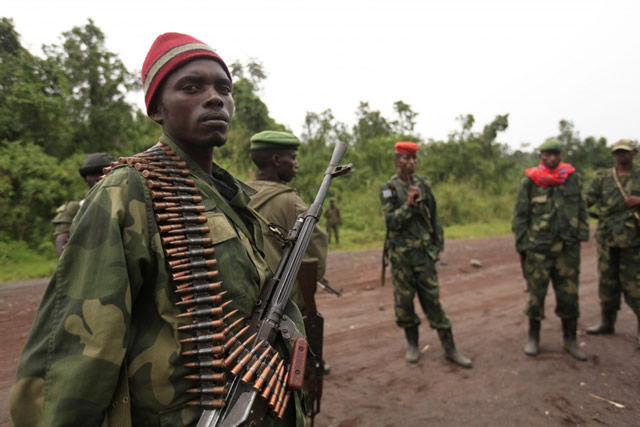
KAMPALA. – Peace efforts between the Democratic Republic of Congo government and defeated M23 rebels will continue, Uganda said yesterday, a day after the two sides failed to sign a much hoped for agreement. The last-minute failure to sign a deal on Monday was a blow to international efforts to stabilise the African nation’s conflict-prone east.
“Both parties are still here in Uganda . . . the talks have not been officially called off,” Ugandan government spokesman Ofwono Opondo told reporters.
Negotiations fell through after Kinshasa demanded changes to the agreement, but despite the failure to sign, DRC Foreign Minister Raymond Tshibanda insisted the government is committed to peace.
Uganda, which is hosting and mediating the long running talks, said it was expecting new rounds of talks but gave no date.
“As and when the DRC delegation will be ready, the facilitator will communicate a new date,” Opondo said.
Tshibanda returned to Kinshasa yesterday, although the rest of the government team remained in Kampala.
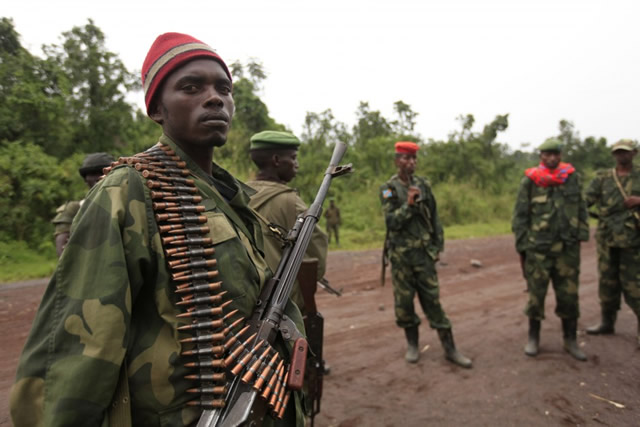
The M23 rebels, one of the many armed groups operating in the mineral-rich east of the DR Congo, have been routed by the national army backed by a 3 000-strong special UN intervention brigade.
The United Nations had accused both Rwanda and Uganda of backing the M23, a charge both countries have repeatedly denied.
With support from Rwanda notably whittled away to nothing in the face of concerted international pressure, the M23 announced last week that its 18-month insurgency was over.
The M23 said in a statement that the government had wanted to revise the text that already had been agreed, calling the demand “unacceptable”.
It said the agreement had been settled earlier this month and “other stages preceding the signature had been accomplished”.
However, since that stage of the talks, the rebels had suffered a series of crushing military defeats, changing the situation on the ground and leaving government troops with the upper hand.
The lack of a deal on Monday was a disappointment to many in the international community, who had hoped it would be a key step towards building peace in the troubled region.
UN special envoy to the Great Lakes Mary Robinson, the UN secretary-general’s special representative in the DRC Martin Kobler, and US special envoy Russ Feingold voiced regret that the signing had not happened.
But they noted in a joint statement that the parties involved “expressed no differences on substantive points within the draft document”.
The M23, a mainly ethnic Tutsi force of mutineers from the Congolese army, have no military leverage left and little room for manoeuvre.
A key outstanding issue is the fate of about 1 500 M23 fighters who have crossed into Uganda and whom Kampala has refused to hand over to the DRC. Around 100 more injured rebels have crossed into Rwanda.
More complicated is the fate of some 100 M23 commanders.
These include M23 leader Sultani Makenga, accused of participating in several massacres, mutilations, abductions and carrying out sexual violence, sometimes against children.
“Any solution must allow the pursuit of accountability for those who have committed war crimes, crimes of genocide, crimes against humanity, including those involving sexual violence and recruitment of child soldiers,” added the statement from Robinson, Kobler and Feingold, which was also signed by African Union and EU officials.
Opondo said Uganda would continue to host Makenga until a peace deal was struck, at which point the UN and US sanctioned leader would be “forwarded to the appropriate authorities”, without clarifying exactly who that might entail.
“He is not a prisoner, he surrendered himself . . . If you are being sanctioned by UN it does not remove from you from your international rights to be protected,” he said.
“As of now, we have received no (arrest) request and even if we had, we would not have proceeded until the agreement is signed.”
Delegations from both Kinshasa’s government and the rebels turned up Monday to Uganda’s State House in Entebbe, a town close to Kampala on the shores of Lake Victoria, but the two sides never met, only eyeing each other through a window, Opondo said.
“Negotiating with the Congolese is difficult generally, and negotiating for a peace agreement is even more difficult,” he added.
Even if a deal is signed, stabilising eastern DRC will not be easy, with multiple other rebels groups still operating.
Previous deals have foundered because they were not implemented or did not address underlying problems. – AFP.



 Online Reporter