Online Reporter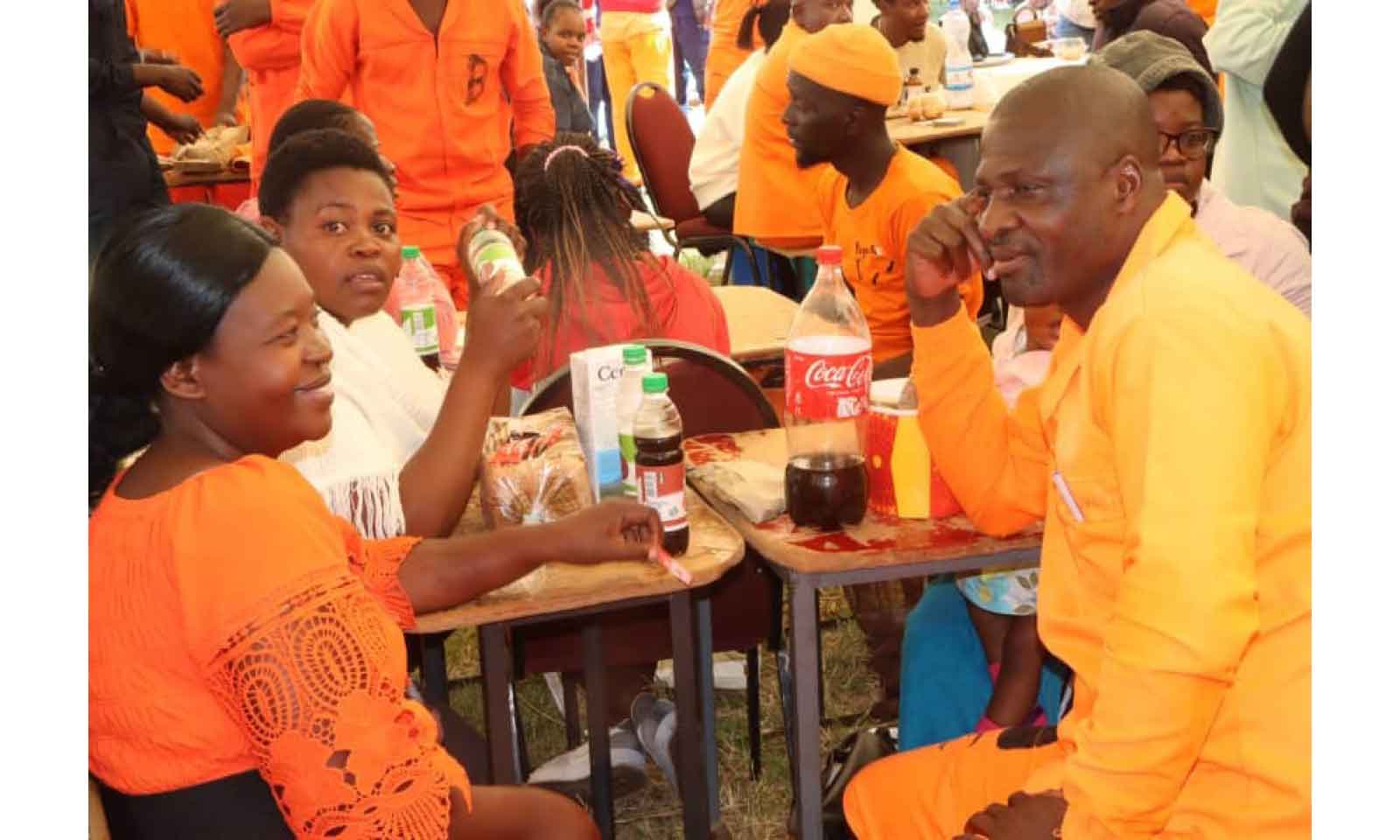
Ison Ndoro
Correspondent
As Zimbabwe Prisons and Correctional Service commemorates Family Week from April 6-12, attention turns to the vital role played by families in inmate rehabilitation and reintegration.
Family is the foundation of humanity where the seeds of Ubuntu are metaphorically planted in our personality right from birth. It is on this basis that most of us regard family as an enclave endowed with emotional resources that enable us to thrive in the face of adversity.
We also celebrate life within that same sphere, because it is all we have at birth, and it will again be the last to eulogise us at our gravesides when we eventually depart.
It is on that foundational premise that the ZPCS Commissioner General, Dr Moses Chihobvu, saw it fit to accord correctional inmates quality time with their families in what we call the prison family week.
This initiative is as essential to inmates as it is to their families.
Family is pivotal
As the iron-gates of prison open wide for the public to enter with limited restraint from April 6- 12, families will be welcome to experience that rare moment of delving into what has always been conceptualised as a belly of the beast. That image was created by colonial masters who used prison as an instrument of oppression and subjugation of indigenous people, but it has since changed in the recent past, courtesy of favourable laws and transformative leadership.
What used to be a belly of the beast is now a nourishing womb that nurtures individuals and prepares them for a productive pro-social life, filled with hope.
Family Week is therefore more than just a ceremonial event, it is an intervention that plays a crucial role in reducing the effects of imprisonment and promoting long term desistance from crime.
It is our conviction as ZPCS that family members play a pivotal role in facilitating the rehabilitation and reintegration of correctional inmates.
Addressing the Effects of Prisonisation
Culture is a way of life, and it is progressively shaped by various nuanced factors in society. Organisations have their own values and norms that culminate into a sub-culture.
When one walks into prison as an inmate, chances are that the individual encounters a whole new set of values, morals and traditions.
Some of these might be diametrically opposed to what they have known for all their lives. As they try to adapt, they may internalise some of these norms, values and survival strategies within the confines of prison. In psychological parlance, this process is known as prisonisation.
Over the passage of time, the process weakens the individual’s pro-social identity, reinforces criminal thinking patterns and tends to create emotional detachment from conventional society.
When inmates maintain meaningful family contact, they remain psychologically anchored to the outside world. Family interactions remind them of social roles as parents, spouses, siblings or children.
This instils a sense of responsibility in them and helps them frame their thinking in pro-social terms. Family week therefore disrupts excessive institutionalisation and reinforces a pro-social identity which is instrumental in successful reintegration.
Mitigating Secondary Prisonisation
Imprisonment tends to curtail not only the inmate’s latitude to exercise freedom, but it also subjects families to secondary prisonisation. When your loved one goes to prison, you may also experience social stigma, economic strain and emotional trauma. In other words prison affects the family in a vicarious manner. In some cases it disrupts the family structure through divorces and intra-family conflicts.
ZPCS acknowledges the silent burden carried by families when their loved ones are incarcerated. It therefore reaffirms their indispensable value as partners in rehabilitation.
The family week initiative provides structured engagement that promotes emotional healing, information sharing and trust building between families, inmates and correctional authorities. This approach strengthens the rehabilitative ecosystem as opposed to isolating correctional work from the community.
Strengthening Family Bonds as a Protective Factor
Research in correctional psychology consistently demonstrates that strong family bonds are among the most powerful predictors of desistance from crime. Family support enhances emotional stability, reduces hopelessness, encourages accountability and promotes long-term goal orientation. When offenders believe that they are still valued members of their families, their motivation to change increases significantly. Family Week creates structured, safe opportunities for reconciliation, restorative dialogue and emotional reconnections. This process directly contributes to the reduction of reoffending behaviour.
Conclusion
Family Week is not a lenient approach to crime, as some would be inclined to believe. Rather, it is a strategic and psychologically grounded intervention aimed at reducing prisonisation, mitigating secondary prisonisation, strengthening pro-social bonds and enhancing reintegration outcomes.
ZPCS continues to align correctional practice with evidence-based principles that promote sustainable behavioural change. Family Week stands as a practical demonstration of this commitment to safer communities and long term desistance.
Chief Correctional Officer Ison Ndoro is a Forensic Psychologist & Acting National Staff Officer for Rehabilitation and Reintegration at ZPCS. He is also an Adjunct Lecturer of Psychology at the University of Zimbabwe.