Online Reporter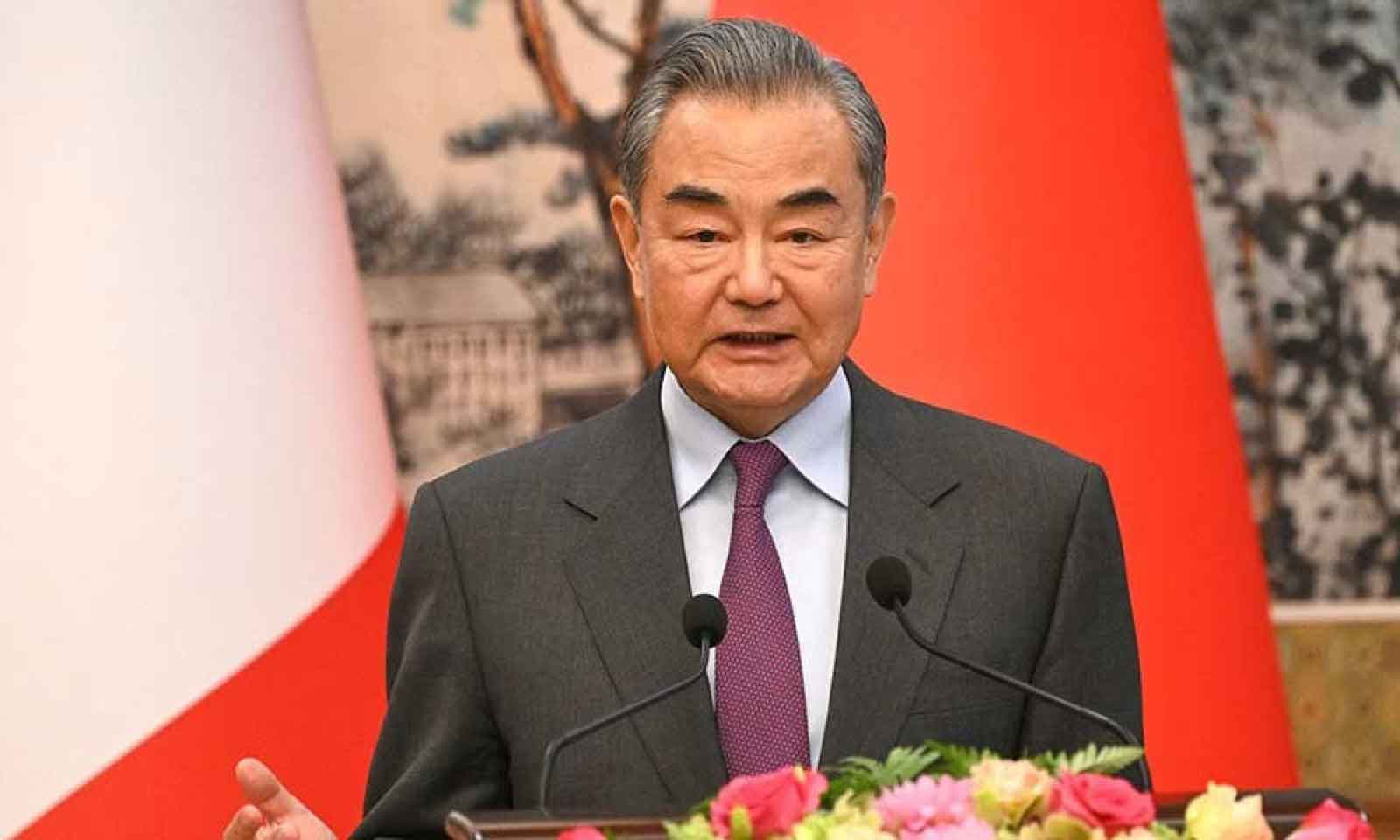
Kuda Bwititi in BEIJING
THE 2026 Two Sessions, China’s annual legislative meetings, concluded successfully last week, amid confidence that the world’s second-largest economy will continue to remain resolute on its growth trajectory.
For strategically aligned economies such as Zimbabwe, the outcomes of these meetings carry weight far beyond Beijing’s borders, directly influencing the contours of bilateral trade, investment and diplomatic engagement.
Comprising the National People’s Congress (NPC) and the Chinese People’s Political Consultative Conference (CPPCC), the Two Sessions represent the pinnacle of China’s political calendar.
NPC is China’s top legislature whilst the CPPCC is the highest political advisory body.
This year’s gatherings, held in the iconic Great Hall of the People, were imbued with a palpable sense of purpose.
As the final gavels fell, lawmakers had not only approved the annual government work report but had also enshrined the nation’s developmental roadmap for the next half-decade: the 15th Five-Year Plan (2026-2030).
The approved 15th Five-Year Plan is a document of immense significance, both domestically and internationally. Its contents will shape global supply chains, influence commodity markets, and create new avenues for cooperation with nations like Zimbabwe.
Lawmakers also voted to adopt the Ecological and Environmental Code as China amplifies its drive to promote green energy and to be a global leader in the fight against climate change.
Commitment to Africa
On the sidelines of the Two Sessions, Foreign Minister Wang Yi’s press conference offered key insights into Beijing’s diplomatic priorities. His remarks dedicated significant attention to Africa, underscoring the continent’s growing importance in China’s foreign policy calculus. Within this broader context, Zimbabwe received a distinct and notable mention, reinforcing that Harare occupies a privileged position in the country’s strategic engagement with the Global South.
Minister Wang said: “We’re just two months into 2026 and already President Xi Jinping has sent three letters or messages to our African brothers: a letter of congratulation on the launch of the China-Africa Year of People-to-People Exchanges, a reply to veterans of Zimbabwe’s liberation struggle, and a congratulatory message to the African union Summit for the 14th year running. It’s clear from these messages that China’s top leader wants the torch of China-Africa friendship to be passed from generation to generation, and Africa can count on China’s steadfast support for its development and revitalisation.”
2026 is a special year for China and Africa relations, as it has been designated the China-Africa Year of People-to-People Exchanges.
It is also the 70th anniversary of the beginning of diplomatic relations between China and African countries.
Minister Wang said President Xi Jinping deeply values the bond with Africa. The Chinese leader emphasises sincerity, real results, amity and good faith in working with Africa.
Consequently, 2026 is poised to be a transformative year for China-Africa economic relations, driven primarily by the implementation of a zero-tariff scheme covering 100 percent of imports from 53 African nations starting May 1.
For Zimbabwe, the policy’s impact is expected to be positive and structural, given recently finalised protocols that open the Chinese market to high-value agricultural exports, including blueberries, citrus and avocados.
This is a massive opportunity for farmers to serve the large Chinese market.
The integration of Zimbabwe’s small-scale farmers into this export matrix would be transformative, potentially unlocking millions of dollars in annual revenues and catalysing profound socio-economic mobility at the grassroots level.
One cannot help but draw parallels with the tobacco sector—a billion-dollar industry built largely on Chinese demand—as a benchmark for what strategic market access can achieve.
Another exciting prospect is that about 600 events are going to take place under the China-Africa Year of People-to-People Exchange with visits between the two parties.
These reciprocal visits and cultural initiatives are designed to strengthen inter-societal linkages, ensuring that the partnership is sustained not only by policy alignment but also by enduring human connections.
Minister Wang said:“We are always ready to work with our African brothers and sisters to draw inspiration from our civilisational heritages, forge a stronger bond between our people, and carry forward our friendship for many, many generations to come.”
Tech development
Under the 15th Five-Year Plan (2026-2030) approved during the Two Sessions, China affirmed its commitment to technological development.
During the Two Sessions, wide deliberations were held on embodied AI, quantum computing and brain-computer interfaces.
According to the outline of the 5-year plan, “the level of scientific and technological independence and self-reliance has increased significantly.”
The plan says China will undertake to:
“Accelerate the development of strategic emerging industries such as new generation information technology, new energy, new materials, intelligent networked new energy vehicles, robots, biomedicine, high-end equipment, aerospace, etc., build strategic emerging industrial clusters with their own characteristics and complementary advantages according to local conditions, and strive to create a number of emerging pillar industries with high growth potential, high technology content and wide penetration.”
It was therefore no coincidence that on Friday, just after the end of the Two Sessions, China’s first pharmacy robot went into service in Beijing’s Haidian District.
This marked a new real-world application of embodied intelligence in the healthcare retail sector.
The Galbot G1 robots have been trained to serve as sales assistants and can locate medicines placed on the shelves, pick them up and package them before placing the order in a smart pickup cabinet.
This was just one of many revolutionary initiatives being implemented by China to take technology to another level. During a visit to Zhejiang province, one of China’s top robotics companies, Unitree, revealed that its robots are being manufactured to carry out many heavy-duty activities.
A representative of the company gave an example that robots can be used to carry out tasks in hard-to-reach areas when natural disasters such as floods and cyclones take place.
For nations like Zimbabwe, which launched its national AI policy on Friday, the trajectory set by China’s latest plan offers a compelling case study. The lesson extends beyond hardware as it lies in the systematic integration of technology to enhance productivity across all sectors, from healthcare to agriculture and disaster management. The speed and scale of China’s technological deployment present a clear benchmark for developing economies seeking to leapfrog into the digital age.
As Beijing implements the targets set during the Two Sessions, Zimbabwe can strategically position itself to leverage these policy shifts — from zero-tariff access to technological collaboration.a