admin
admin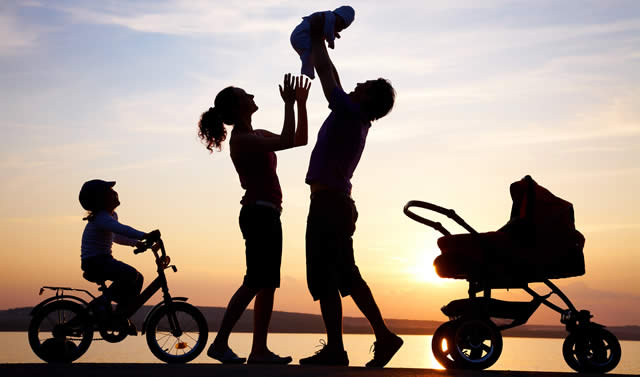
Flora Teckie A Baha’i Perspective
International Day of Families was celebrated on May 15 worldwide. The role of family towards the realisation of a social order based on justice and unity can never be overlooked every day of the year. The family is the most important institution of the society. Attitudes and behaviours learned in the home have a direct
bearing on the order, prosperity and peace in our communities and of the world at large.
The family lays the foundation of both the individual’s spiritual and intellectual development and happiness, as well as society’s cohesion and advancement.
In a world suffering from social and moral crises, societies often overlook the importance of balancing individual and societal needs and reconciling the individual interest with the common good.
It is within the family that character is developed, moral and spiritual attitudes are formed and one learns to serve the common good.
It is within the family where the values of tolerance, peace and social responsibility can be initiated and taught.
It is also in the family where sense of responsibility and of values such as loving, caring and sharing are developed.
Role of equality
Bahá’ís view the belief and practice of the equality of men and women as an important factor which transforms relationships within a family.
Practising gender equality within family creates a nurturing and positive atmosphere; it helps building partnership between the members of the family; and thereby further strengthens the family unit.
The equality of men and women is an essential aspect of a broader principle: the oneness of humanity.
Belief in the oneness of humanity is essential in order to have justice. Observing justice is a requirement for attaining unity and lasting peace.
If the vision held by the family is a global one and one of unity. Children from the earliest age learn the principle, and the reality of the oneness of humanity.
They learn to associate with people of all races and religions and appreciate the different cultures and the contributions different people have to make. They respect the ideas of others and have open minds.
Avoiding narrow social views
Although one’s family may be stable and united, excessive and unbalanced attention to the family interests, according to the Universal House of Justice, the governing council of the Bahá’í international community, “can lead to narrow social views, one that is ultimately detrimental to the broader community”.
The Universal House of Justice further explains: “How many in the stable and united families that, in their intolerance towards one or another segment of society, instil in their younger generations an “us and them” mentality, heedless of the fact that the transmission of such poisonous attitudes stifles in their children love for humanity and hampers their sense of justice.
Small wonder if, upon attaining adulthood, individuals reared in such an environment tend either to be indifferent to the suffering of others or to regard violence and oppression as justified – indeed, even to contribute to tyranny”.
Teaching justice and to be fair-minded to the children in the home is most important to address this problem. According to the Bahá’í Writings: “Children must be so raised as to regard every soul, irrespective of religion, ethnicity, or any other affiliation, as a fellow human being and to hold dear the words [of Bahá’u’lláh] that capture the spirit of the age: “The tabernacle of unity hath been raised; regard ye not one another as strangers. Ye are the fruits of one tree, and the leaves of one branch.”
The family constitutes the basic unit of society and is the most important institution of our communities.
Unified and spiritually motivated families have a direct impact on the well-being of the wider community, the harmony of the nation, and, ultimately, the healthy functioning of human society. A healthy family is outward-looking and not just focused on its own well-being.
Education for a unified worldview must begin in the family. Through appropriate education, the family can make vital contributions to both development and transformation of individuals and to the advancement and unification of society.
Feedback: <mailto:[email protected] or [email protected]


 Online Reporter