Online Reporter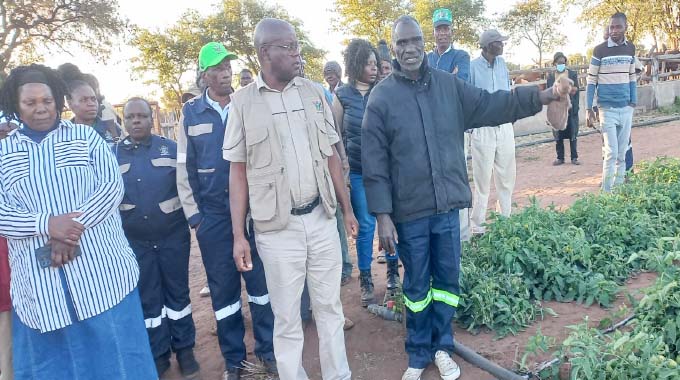
Thupeyo Muleya ,Beitbridge Bureau
THE Food and Agriculture Organisation (FAO) is making significant progress in strengthening irrigation development in Beitbridge District under its Enhanced Resilience for Vulnerable Households in Zimbabwe project.
The initiative has revitalised five major communal irrigation schemes in a district where rainfall alone cannot sustain viable crop production. Most farmers are now embracing solar-powered drip irrigation — a system that conserves water while relying on clean, renewable energy.
Beitbridge Rural District Council’s chairperson of the works, planning and projects committee, Councillor Thando Ndlovu of Ward 9, told a full council meeting on Tuesday that the project is designed to improve food security and build resilience against climate change.
The schemes benefiting under FAO’s programme include Mzingwane (Mtetengwe), Tshapfutshe (Aluwani), Jalukange, Sivule and Ndambe. At Bili, a contractor has been appointed and civil works are yet to begin.
“We have made great progress in reviving irrigation development around the district under this FAO-supported project, which is focused on expanding and modernising irrigation systems,” said Clr Ndlovu.
At Mzingwane (Mtetengwe) Irrigation Scheme in Ward 7, FAO facilitated the installation of a perimeter fence and drilled five boreholes, powered by two solar pumping stations.
At Tshapfutshe (Aluwani Farmer Learning Centre) in Ward 5, 10 hectares have been fenced, with two boreholes drilled and three others capacity-tested. Pump houses have been constructed, and infield works are already 65 percent complete.
The Jalukange scheme has also been fully revived. Three boreholes have been drilled and equipped, while a 20-hectare drip system has been installed. The project, now 100 percent complete, is benefiting 141 families after years of neglect.
At Sivule Irrigation Scheme, three boreholes with solar pumping systems have been completed, together with tank installations. This scheme is also fully operational, with wheat crops currently under cultivation.
At Ndambe Phase 2, work on the pump house, booster pump, solar system and infield drip irrigation has been completed.
Clr Ndlovu said the project will help boost household food security, strengthen resilience to climate change and improve livelihoods.
“As a local authority, we believe improved irrigation infrastructure will enable farmers to grow more crops, reduce dependence on food aid and secure better incomes,” he said.
In recent years, the Government and its partners have accelerated programmes to expand irrigation in drought-prone areas such as Beitbridge. However, many schemes have faced challenges, including underutilisation, low yields, water management inefficiencies and poor scheme administration.
The FAO-supported interventions are expected to help address these challenges and ensure more sustainable crop production in the district.