Vusumuzi Dube
Judith Phiri, Business Reporter
THE Food and Agriculture Organisation (FAO) has said it is working to ensure that the capacity within the Department of Veterinary Services (DVS) is enhanced to produce the January disease vaccine.
January disease also known as Theileriosis has over the years ravaged most parts of the country, with statistics from DVS having shown that over 500 000 cattle have so far succumbed to tick-borne diseases since 2016.
The disease is common between December and March and is spread through the bite of the brown ear tick.
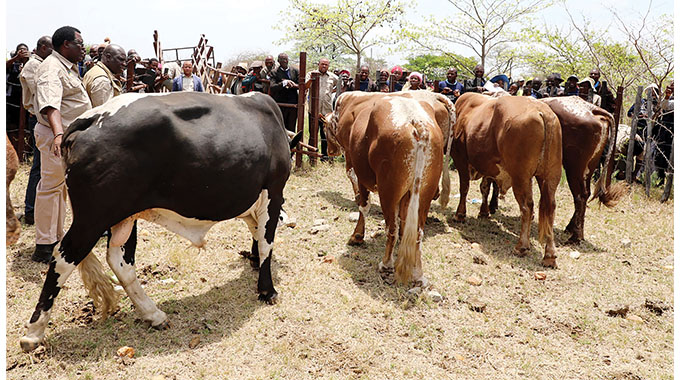
After receiving financial support from the Government and development partners that include FAO, DVS has managed to commercially produce the doses of Theileriosis (BOLVAC) vaccine with the first batch done sometime in August last year.
In an interview, on the sidelines of the recent Zimbabwe International Trade Fair (ZITF), FAO assistant country representative responsible for programmes, Ms Constance Pepukai said funding has been availed that will aid the transformation of the animal health delivery service.
“One of our projects funded by the European Union (EU) focuses on transforming the animals’ health delivery service. One of the key results under this project is the production of the Theileriosis (January disease) vaccine.

“The disease is a common tick-borne disease that affects cattle and the country has lost hundreds and thousands of cattle due to the January disease. With funding from the EU we have managed to support and work together with DVS to produce the vaccine against the disease,” said Ms Pepukai.
She said they were working to ensure that the capacity within DVS is enhanced for them to continue producing more vaccines. As a technical agency mandated to deal with issues on agriculture, food security as well as nutrition security in the country, Ms Pepukai said FAO was implementing other several projects.
“We have a project that focuses on enhancing resilience of vulnerable households in Zimbabwe where we work with smallholder farmers and promote various agricultural technologies in particular those that are climate smart to ensure that the resilience of smallholder farmers is enhanced. The other project is the FISH4ACP project which is a global project and Zimbabwe is one of several countries that is rolling out this project in support of enhancing the tilapia value chain in Zimbabwe.”
Among other key projects, Ms Pepukai said through Africa, Caribbean, and the Pacific (ACP) Multilateral Environmental Agreements (MEAs) they were supporting the Government of Zimbabwe to implement several multilateral environmental agreements to which Zimbabwe is a signatory.
DVS chief director, Dr Josphat Nyika is on record stating that the production of the Theileriosis vaccine was a milestone. He said this was a breakthrough because Zimbabwe could now produce vaccines against three out of four major tick-borne diseases prevalent in the country, except for Heartwater, while efforts were being made to have all vaccines manufactured locally.



 Online Reporter