Stanford Chiwanga, stanford.chiwanga@chronicle,co.zw
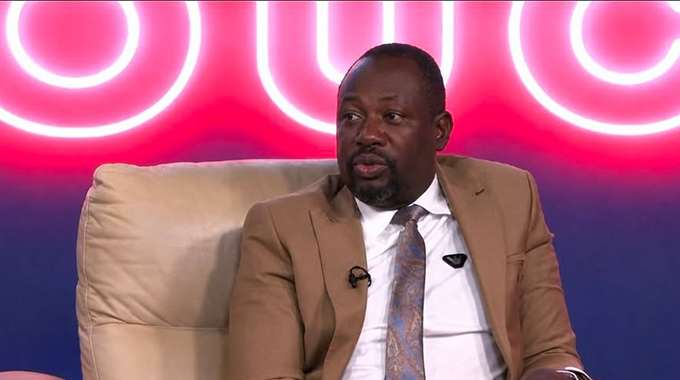
Football is an emotional game. It inspires devotion, creates heroes and, at times, produces villains. It can turn a player into a fan favourite one week and place him under intense scrutiny the next. That is why the recent comments by CAPS United president Farai Jere regarding goalkeeper Wallace Magalane have divided opinion across Zimbabwean football.
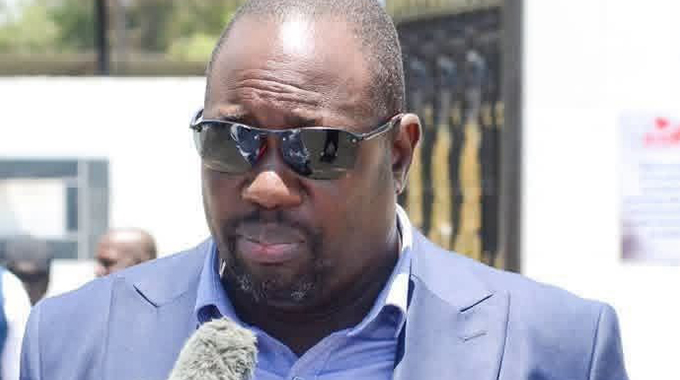
Many have criticised Jere’s public outburst, arguing that it was too harsh and unbecoming of a club leader. Others have rallied behind Magalane, pointing to the pressures goalkeepers face and the mistakes that inevitably come with the game. Yet before dismissing Jere’s remarks as the product of anger, it is important to understand the context from which they came. At the heart of the issue lies a question of accountability.
For years, Farai Jere has been more than just the president of CAPS United. He has been one of the club’s principal financiers, administrators and custodians. His association with Makepekepe dates back to 2005, when he joined the club’s ownership structure. Over the years, he gradually assumed a greater financial burden, eventually becoming the majority shareholder and, by all accounts, the man largely responsible for keeping the Green Machine afloat through some difficult periods.
Those who have followed CAPS United closely know that the club has experienced recurring financial challenges over the years. Through many of those storms, Jere remained one of the key figures ensuring the club survived. More recently, he revealed that CAPS United’s monthly salary bill stands at around US$100 000, a figure he continues to fund because of his passion for the club. He has also stated that his personal investment in Makepekepe over the years runs into millions of dollars. Whether one agrees with Jere’s style of leadership or not, those figures cannot simply be ignored. They paint the picture of a businessman who has invested not only money but also a significant portion of his life in the club.It is against this backdrop that his comments on Magalane should be viewed.
Jere’s frustration was not based solely on a costly goalkeeping error. According to his account, the bigger issue was what happened afterwards. He claimed that after making a mistake during CAPS United’s defeat to Triangle United, Magalane refused to return for the second half despite efforts by team-mates and the coaching staff to persuade him. Jere described this as unacceptable and a betrayal of the club’s values. If those allegations are accurate, then this ceases to be a debate purely about footballing mistakes.
Errors are part of the game. Every great goalkeeper in history has made them. From David de Gea to Loris Karius, even the finest professionals have endured painful moments under the spotlight. Players deserve understanding when performances dip or mistakes occur.
However, commitment is different.
A football club can forgive poor form. It can support a player through difficult moments. What becomes harder to accept is perceived abandonment of responsibility during a match. Football is a team sport built on trust. Every player depends on the person next to him. When that trust appears to break down, emotions inevitably follow.
This is also where many critics of Jere may be missing an important point. His comments were not delivered by a detached administrator balancing figures on a spreadsheet. They came from a man who has spent two decades pouring resources, energy and emotion into CAPS United. To him, the club is not merely a business venture. It is a personal project, a passion and, in many respects, a legacy.
That does not automatically make every word he said correct. But it helps explain why he spoke with such emotion.
Indeed, football history is full of powerful owners and presidents who have publicly criticised players and coaches when they felt standards had slipped. Real Madrid president Florentino Pérez has never hidden his expectations of excellence at the Spanish giants. Over the years, he has overseen managerial changes, player departures and squad overhauls whenever he believed Real Madrid’s standards were under threat. Likewise, Nottingham Forest owner
Evangelos Marinakis has become known for his passionate and sometimes public interventions when dissatisfied with performances or decisions affecting his club.
Neither man has escaped criticism for such behaviour. However, supporters often understand the source of their frustration. When individuals invest millions into football clubs, they naturally become emotionally attached to results, performances and standards. While supporters may disagree with how those emotions are expressed, few can deny the depth of commitment behind them.
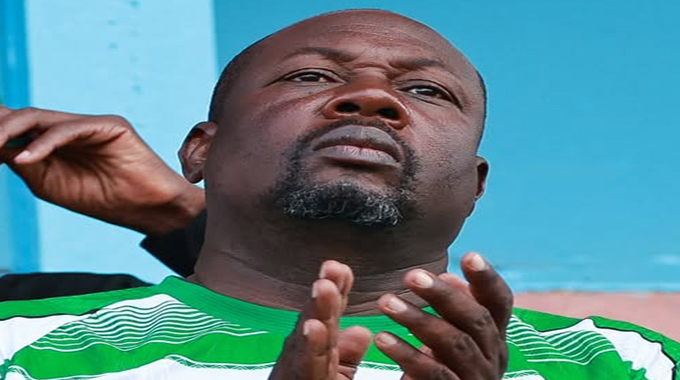
The same principle applies to Jere. Zimbabwean football supporters sometimes view club owners as distant figures who merely sign cheques. Yet the reality is often different. Many local football clubs survive because of the dedication of a handful of individuals willing to absorb enormous financial costs with little prospect of direct financial return.
For someone funding a wage bill of around US$100 000 every month, seeing a season potentially derail because of repeated errors and alleged indiscipline is bound to trigger a strong reaction.
In many ways, Jere’s comments reflect a growing frustration within Zimbabwean football regarding professionalism and standards. Club owners, administrators and sponsors are increasingly investing significant resources into the game. They expect players to demonstrate the same level of commitment and professionalism that is required in any other profession.
This is not unique to CAPS United. Across world football, players are constantly reminded that wearing a club’s badge comes with responsibilities. Supporters invest emotionally. Sponsors invest financially. Club executives invest both financially and personally. In return, they expect effort, discipline and accountability.
Of course, this does not mean players should be publicly humiliated. The Footballers union of Zimbabwe was right to call for due process and respect for contractual obligations. Professional football must always balance accountability with fairness.
However, it is equally unfair to portray Jere merely as an angry club official lashing out in frustration. His reaction is that of someone who has spent years investing heavily in CAPS United, carrying substantial financial obligations and shouldering the expectations of one of Zimbabwe’s largest football institutions.
Football supporters may disagree with his methods. They may question whether the matter should have remained behind closed doors. Those are legitimate debates.
Yet there is another side to the argument. Public accountability has long been a feature of elite sport. When players make mistakes on the pitch, those mistakes unfold before thousands inside the stadium and many thousands more watching on television or online. The scrutiny is public because professional sport itself is public. Leaders, coaches and players alike are judged in the open arena.What should not be questioned, however, is the depth of Jere’s commitment to CAPS United.
For a man who says football is his passion, and who has committed millions of dollars to the Green Machine over two decades, watching his team’s title ambitions unravel through a combination of costly mistakes and alleged indiscipline was always likely to provoke a strong response.
Viewed from that perspective, Jere’s comments were not simply about Wallace Magalane. They were about standards, accountability, professionalism and protecting an institution to which he has dedicated years of his life.
And while some may disagree with the delivery, many will understand the anger. In fact, in a football world where owners from Madrid to Nottingham have publicly voiced their frustrations when they believed their clubs were being let down, Jere’s outburst was perhaps less an aberration and more a reflection of a universal truth: those who invest the most often care the most.
Whether one agrees with him or not, that passion cannot be denied.