

 daniel chigunwe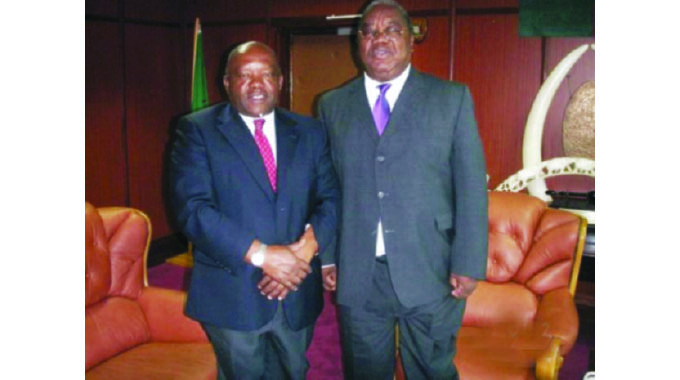
Tommy Sithole
The late former President of the Republic of Zambia, Mr Rupiah Bwezani Banda, who passed on, on March 11, 2022 was an affable gentleman who once joked to me: “I can never be President of this country. I’m Zimbabwean!”
Mr Banda was born in Gwanda, Zimbabwe 85 or so years ago. During one of the many mad moments in one of his predecessor’s reign, a law was proposed that anyone who was either not born in Zambia or that one of his or her parents was a foreigner could not stand for election in the highest office in the land.
But then those mad moments were particularly shared around. One day I found out that three of my four children had lost their citizenship of my beloved Zimbabwe because they were born in Tanzania although both the mother and I are red-blooded Zimbabweans.
The law required that they first “renounce” their Tanzanian citizenship before applying for the Zimbabwean one. The only problem is that Tanzania does not have the same citizenship rules as, say the United States where they treat anyone born there as a citizen.
In Tanzania itself, many friends that I grew up with found themselves stranded because their great grandparents came from either Rwanda or Burundi.
I remember sitting in on an address by my hero, Mwalimu Julius Kambarage Nyerere scolding Zanzibaris for going after Zanzibaris of Omani descent after someone killed the revolutionary Sheikh Abeid Amani Karume.
“I’m Mzanaki by tribe,” he fumed. “There’s no such tribe. We came from Burundi and settled in and around Butiama. My forefathers had nothing and waZanaki simply means poor people in a local language. People who came with nothing. So, why don’t you deport me to Burundi? Start with me. Question my citizenship,” he fumed while grinding his teeth as he usually did when he lost his cool.
Years later Mwalimu Nyerere voluntarily left the presidency and my former editor, Benjamin Mkapa took over. Suddenly, for absolutely weird reasons, people started losing their citizenship because they had some foreign blood in them, no matter that they were black and from neighbouring countries whose borders were demarcated by fuzzy lines drawn in the sand.
To make it worse, one of the prominent people who suddenly realised that somewhere down his family tree his great, great, great grandparents hailed from somewhere in the then Kingdom of Burundi had for many years been one of Ben’s most trusted senior journalists.
To cut a long story short, the then Tanzanian High Commissioner to Zimbabwe, a former journalist with me on The Daily News, ironically under Ben Mkapa, wrote me a letter affirming that “Mr Thomas Amos Ganda Sithole’s children were never citizens of Tanzania”.
When I rushed to the citizenship office to triumphantly lodge my application for my children’s citizenship I found, to my real surprise, three distinguished ladies sitting outside having given up the fight.
One was a judge of Tanzanian ancestry and married to a former chief of protocol; the second one had been a minister and was a widow of a leading former freedom fighter who was murdered in a bomb blast in Lusaka. She had South African background.
The third one was similarly of South African descent, a former deputy minister, also a widow whose husband was a minister in independence government and was interred at the Heroes’ Acre.
All is well that ends well, they say in the Queen’s language. My children got their citizenship. The three ladies got theirs’ too and my friends in Tanzania are still plying their journalistic trades on the streets of Dar es Salaam.
So, on that fateful evening at Lusaka International Airport (now Kenneth Kaunda International Airport) as my best buddy in Zambia, then chairman of the Zambian Civil Aviation Authority Patrick Chamunda introduced us, I felt sorry for Mr Banda as the polo shirt he was dressed in appeared to be a size too small. His jeans were displaying signs of old age and the joggers. Oh, the joggers. What immediately came to mind was this man’s venomous tongue when he was KK’s foreign minister. His knack for rubbing the Britons on the wrong side over Rhodesia was legendary.
We reminisced about those good old days. We laughed at the way one of his top diplomats made the British establishment climb the walls when he called them “toothless bulldogs”.
Why was he standing there with us simpletons when politicians all over Zambia were busy with the elections? Mr Banda smiled: “No more politics for me, Mr Sithole. I contributed my bit. No more politics for me,” he repeated with a wry smile.
That was on a Friday in October 2006. I had been visiting Zambia as IOC director for International Co-operation to negotiate with the Zambian government on an IOC president’s offer to build an experimental multi-million-dollar multi-purpose sports facility in Lusaka.
I took the Sunday morning British Airways flight to London as Zambians were busy throwing missiles at each other in what was turning out to be an acrimonious election.
When I landed in London that evening Patrick told me Levy Mwanawasa, a quiet, unassuming gentleman who didn’t look or sound like a politician, had won the presidency.
The next day Patrick continued with his running commentary on the outcome of Zambian election outcomes when I arrived in Lausanne, Switzerland. “Remember Rupiah Banda, the guy who said he was done with politics?” I could sense the excitement in Patrick’s voice. Yes, I said. “He’s just been appointed vice-president of the republic and head of government.”
I caught the next flight back to Zambia to visit the now-suited new VP and HoG in his spanking new office. We spoke official business with a lot of “sirs” sprinkled in my sentences. I promised him we would expedite the construction of the facility, which we did.
Then his boss died and the man who thought he was done with politics and in jest told me he could never be “Republican President” because of his having been born in Zimbabwe, became one.
One year later, Mr Banda made an official visit to Lausanne to personally thank the IOC President for the facility – the only one ever built in Africa and only one of two in the world, the second one having been built in Haiti.
Mr Banda was very much unlike the first two presidents of Zambia that I had come to know. Dr Kenneth Kaunda (KK) was a fatherly figure, a serious politician who was obsessed with the ideals of liberating Africa from apartheid and colonialism in Angola, South West Africa, South Africa and Rhodesia.
KK was an institution. He never saw it coming that a vertically challenged, high platform shoe-loving trade unionist by the name of Frederick Chiluba would one day blindside him. Mr Chiluba certainly did not have the physical stature of a Head of State. Others argued he didn’t have the mentality either.
But he got in there.
He was a bosom buddy of my cousin, Gardy Tanda. Twice he and Gardy visited me in Harare. On both occasions, they bugged me by turning up without an appointment and twice I berated them for doing so. Chiluba would look at his shoes and smile sheepishly, unlike Mr Banda, who looked me in the eye and (almost) bellowed “No more politics for me”, as if he was trying to convince me.
He died a politician to the end. He was a good man. Fare thee well, Mtakwethu. No matter your so-called tribe, you were always a Pan-Africanist. Nenkathazo to the Banda family.
Thomas Ganda Sithole is the chairman of Zimpapers (1980) Ltd. He writes in his personal capacity


 Online Reporter