Chronicle Editor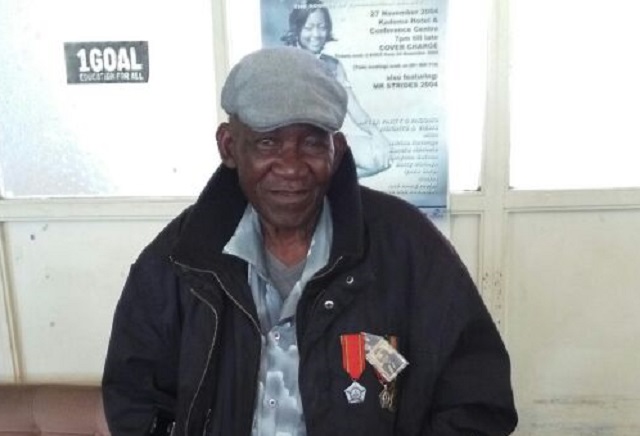
Saul Gwakuba Ndlovu
A prominent son of Bulawayo, Abel Sinametsi Sithole (83), was buried at the city’s provincial heroes’ acre on July 7, 2017, and the burial was attended by the Minister of Welfare Services for War Veterans, War Collaborators, Ex-Political Detainees and Restrictees, Retired Colonel Tshinga Dube.
The author of this belated obituary did not attend the burial because he had not heard about the death of that man whose exciting life was actively relevant to this country’s social life from the 1950s to the late 1960s before he joined the armed liberation struggle full time in Zambia.
Sinametsi’s father was from the predominately Shangaan sector of Manicaland and was also referred to as Makuyana. I stand to be corrected on this view as Sinametsi more often used Sithole as his totem, but did on some occasions use Makuyana.
His father met Sinametsi’s mother in Bloemfontein in the early 1930s, and they got married. Sinametsi was born in 1934, after the couple had moved northwards into what was then called Bechuanaland Protectorate (BP) now Botswana.
The name “Sinametsi” sounds like a dialectal variation of “Sikhametsi”, drawer of water. It may also mean the drinker of water, Sinwametsi.
The family later settled in Bulawayo where their son later exhibited not only a passion for singing especially township jazz, but a pronounced talent in performing acts.
Between 1950 and 1960, social life of black communities in Zimbabwe was characterised by the existence of many quartets, quintets, sextets and double quartets in urban, peri-urban areas and mission farms such as Epworth and Dombodema.
In Bulawayo’s Makokoba suburb, Dorothy Masuka and her Golden Rhythm Crooners ruled the roost. Masuka had returned from South Africa and featured most successfully at the Rhodes Centenary Exhibition at the city’s Trade Fair Grounds in 1953.
She had hand-picked two highly gifted brothers, Finny and Sonny, to support her vocally, and two instrumentalists, Timothy Mnkandla, a brilliant guitarist, and an extroverted bass player, Duncan, whose father was a member of the Makokoba Salvation Army Band.
The Golden Rhythm Crooners made a very memorable impact throughout the country as well as in Northern Rhodesia (Zambia) and in the BP (Botswana).
A couple of years later, Sinametsi joined the Crooners whose fame had hit the clouds by way of several Gallotone recorded ditties unforgettable among which were Masuka’s composition, Hamba Nontshokolo, and a rhythmically vibrant piece titled Mama Nginika Imali yami Ngitheng’ utshwala.
After Sinametsi had joined the highly popular group, it soon recorded a thrilling composition, Ndathi Ndikubona, Ngaka lovalo, Georgina Wami ngicel’ uxolo….
That song swept the entire country, if not the whole Federation of Rhodesia and Nyasaland off its feet. The Stanley Hall would be chock-a-block whenever the Golden Rhythm Crooners were staging a concert at that historic social venue.
At that time, it was very easy to travel throughout the Federation, and so the Golden Rhythm Crooners toured Northern Rhodesia (Zambia) and were always a hit wherever they staged a show. Sonny had virtually been replaced by Sinametsi by that time.
Political organisations would hire the Crooners to perform at their rallies and Northern Rhodesia was awash with cash from that country’s Copperbelt. That was the situation when Zapu established offices in Northern Rhodesia in the early 1960s.
The Golden Rhythm Crooners had become “guilty” (in Southern Rhodesia) by associating with Zapu, a banned organisation. It would have been risky for them to return home, so they remained in Northern Rhodesia, (Zambia) organising fund-raising shows for the Kenneth Kaunda-led United National Independence Party (Unip), and also for Zapu.
In about 1967, the Zapu leadership in Zambia decided to recruit most able-bodied male Zimbabweans living in Zambia, and that was how Sinametsi and Finny joined Zipra. They went for military training and returned to be deployed, Finny initially in the Deka (DK) sector of Matabeleland North, and Sinametsi in the Hurungwe-Karoi region of Mashonaland West province.
Sinametsi’s group was engaged in several battles against the Rhodesian troops, and actually turned the Karoi-Hurungwe-Chinhoyi-Zvimba region into a no-go area for the Rhodesians. The region became a semi-liberated zone sooner than later after Sinametsi’s group had fought a very hard, long and bitter battle against Smith’s forces.
The group was scattered during the clash, and Sinametsi hid in an ant bear hole for several days. The Rhodesian forces using sniffer dogs eventually found him.
They photographed him as he emerged from the hole, a gallant but hungry and thirsty patriotic fighter. The photograph taken as he came out of the hole was later given by the Smith regime to the Rhodesian Herald which used it for its futile propaganda purposes.
He was sentenced to life imprisonment in 1969, but was released soon after the country’s attainment of independence in April 1980.
Meanwhile, Finny, had become a section commander in a Nkayi sector in Matabeleland North province. Because his group controlled a fairly large geographical terrain, he and a colleague, a Masuku, decided to board a Bulawayo-bound bus to get to the city.
Their aim was to establish urban guerilla units in the city, and to give morale to Zapu’s underground structures and to co-ordinate actively and more effectively with the sources of their logistics supplies.
However, a few days later Finny was arrested at a girlfriend’s house. He too was sentenced to life imprisonment and was also released on Zimbabwe’s attainment of independence.
Masuku, meanwhile, tried to escape either back to their operational area in Nkayi, or back to Lusaka, but failed. He left Bulawayo for Salisbury (now Harare).
He was picked up by Smith’s Special Branch from a relative’s house in one of Harare’s high density suburbs. He served a shorter prison term and was freed shortly before independence. He returned to Zambia to rejoin the struggle.
Sinametsi was given independence medals by President Mugabe in Harare in 2015, a very well deserved honour for an unsung patriot, a renowned performing artist who contributed no less to Zimbabwe’s social welfare and happiness than to its political freedom. Tsamaya sintle Sin! Ritla bonana gape!
-Saul Gwakuba Ndlovu is a retired, Bulawayo-based journalist. He can be contacted on cell 0734 328 136 or through email. [email protected]


 Online Reporter