Chronicle Editor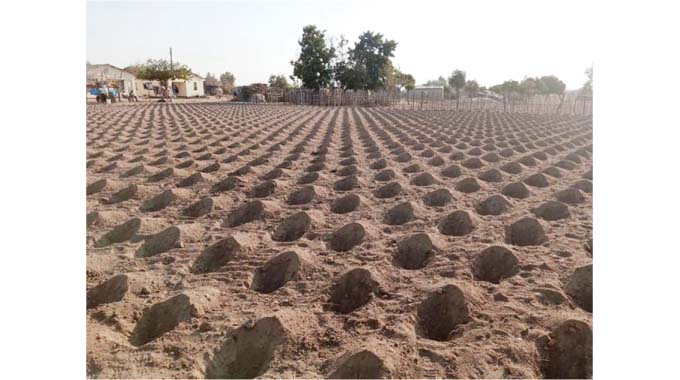
Patrick Chitumba/ Yoliswa Dube, Chronicle Reporters
SOME farmers in Midlands Province are counting their losses as their crops are wilting due to the prolonged dry spell.
Despite projections of normal to above normal rainfall in both the first and second-half of the 2021/2022 cropping season, the dry spell has persisted causing moisture stress on crops.
In separate interviews, farmers said the situation is not pointing to a bumper harvest that they initially projected.
Mr Oslo Ncube from Shamrock Park in Gweru said crops in his area were a complete write-off.
“We have been patient, you know, hoping that the rains will come and we salvage something. But the prolonged dry spell has seen us losing hope and we are starting to count our losses,” he said.
In Zhombe, some villagers have since left their cattle to roam freely in fields.
“We have since freed our cattle to graze in the fields because there is nothing that can come out from there. The crops are a complete write-off, so we said we could not continue bothering ourselves looking after our cattle and keeping them away from the fields,” said Mr Maxwell Ncube.
Chief Ngungumbane of Mberengwa said they are facing a drought.
“Villagers planted several times hoping that they could get something, but it seems that it is not our season,” he said.
Shurugwi district development coordinator Mr Romeo Shangwa said: “The situation in Shurugwi district is bad and even if we get rains today much of the crop will not recover. This is the time when much of the crop had reached the reproductive stage that required moisture.”
Meanwhile, Matabeleland South acting provincial agricultural officer Mr Mkhunjulelwa Ndlovu warned that disaster was looming.
“We’re heading for a disaster. The bulk of the crop which was at vegetative stage is severely moisture stressed because we have not been receiving rains. When maize aborts, that’s the end of everything. But with traditional grains like sorghum and pearl millet, when the rains come, they re-shoot and produce heads that yield something.
Those are better crops to grow in drier areas. In terms of the first crop, especially traditional grains, the crop is almost physiologically mature although there are signs of moisture stress,” said Mr Ndlovu.
He said the crop which was grown under the Intwasa/Pfumvudza performed better and farmers could still get significant yields despite the dry spell.
“Also the crops where water logging is a challenge are in a better state. The crops under Intwasa/Pfumvudza which were planted late December to early January are in a better state. If we’re to receive rains this week, there can be something to salvage. But with the other crop, especially the maize, it’s almost a write-off,” said Mr Ndlovu.
“What’s important is to embrace traditional grains. About 80 percent should be traditional grains in terms of area planted and input support programmes in terms of seeds then 20 percent maize for areas where it doesn’t do well.
This is a good lesson learned.”
Mr Ndlovu encouraged farmers to embrace intwasa/pfumvudza despite it being a labour-intensive method.



 Online Reporter