

 admin
admin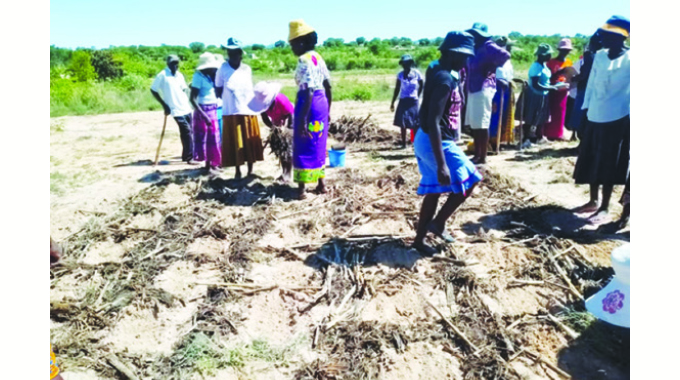
Agriculture Specialist Writer
AS the country moves to mitigate the negative impact of climate change and climate-proof agriculture, 120 086 farmers have been trained on hydrogel technology, a concept that absorbs excess soil moisture and releases the same under dry conditions.
Agricultural and Rural Development Advisory Services (ARDAS) chief director Professor Obert Jiri revealed this in the weekly summer season preparedness report dated December 12.
“Farmer trainings on hydrogel technology have reached 120 086 from the country’s eight rural provinces. Apart from farmers, 2 144 agriculture extension officers (AEOS) and supervisors (AES) have also been trained.
“Of the targeted 600 hydrogel demonstrations, 259 (43 percent) have been established with 98 of them under Pfumvudza/Intwasa programme. Hydrogel is being applied as a moisture retention mechanism and is expected to mitigate the effects of mid-season dry spells,” said Prof Jiri.
Prof Jiri further indicated that demonstrations and trials were being established following standard protocols developed by ARDAS and agronomists from the Department of Research and Specialist Services (DR&SS).
“Makoholi, Chipinge, Matopos, Kadoma, Chiredzi and Harare research stations will each host two hydrogel trials. Of the targeted 194 hydrogel trials, 99 are planted to date,” added Prof Jiri.
Elaborating further on the hydrogel technology, ARDAS senior agribusiness and marketing specialist Mr Walter Makotore said the country started testing its efficacy since last year under the two agro-ecological regions of four (4) and five (5).
“Hydrogel innovation is a climate proofing technology in Zimbabwe, which can be used to complement the Pfumvudza/Intwasa by reducing the risk of moisture stress and write-offs due to long dry spells and droughts.
“It helps farmers to grow crops in dry areas, as well as reduce total production costs in well-watered areas. It is a moisture absorber applied into the soil to absorb excess water during heavy downpours and releasing it later when moisture stress kicks in due to dry spells thereby mitigating its impact,” said Mr Makotore.
“Every plant basin will be applied between 2,5 and 5 grammes. The hydrogel is mixed with the soil before planting of the seed. The hydrogel technology mimics the operations of a diaper in absorbing liquids. Hydrogels are granules with a teaspoon capable of absorbing two litres of water and making a gel like product,” added Mr Makotore.
Mr Makotore added the process was cost effective and also reduced fertiliser application by between 40 to 50 percent.
“It also fights nutrient leaching thereby making sure that the fertiliser is within the plant roots reach.
“It improves irrigation efficiency, helps combat plant pathogens with lower pesticide dosages and greatly contributes to water and environmental conservancy practices,” he said.



 Online Reporter