Online Reporter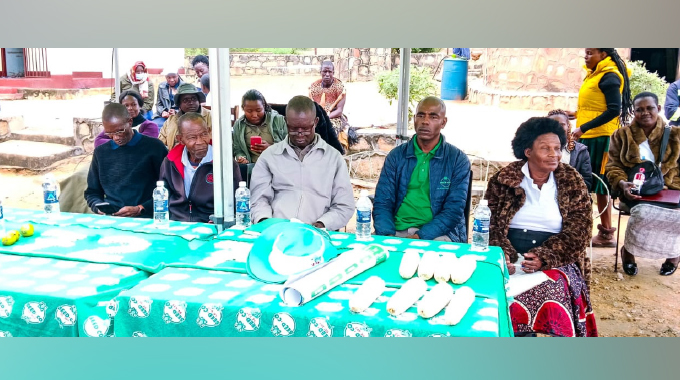
Nothando Zondo, [email protected]
FARMERS in Umzingwane District are being firmly encouraged to rethink how they till their land and tend their animals, as climate change continues to redraw the rules of agriculture.
With seasons growing increasingly unpredictable, the call is for climate smart agricultural practices that not only cushion farmers against erratic weather, but also boost productivity and safeguard household livelihoods for the long term.
This message was delivered by Umzingwane District Agricultural Business Advisory Officer, Mr Bhekilizwe Ncube, during a recent field day at Esibomvu.
The gathering, hosted by Ward 4 farmer Mr Japhet Ncube, brought together farmers and agricultural stakeholders in a shared space of learning and reflection, where practical knowledge met lived experience in the pursuit of sustainable farming.
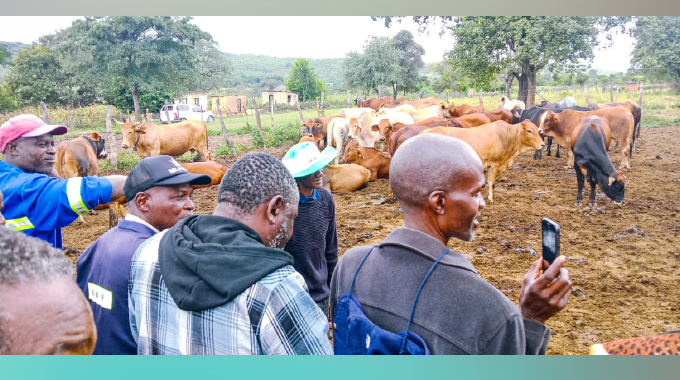
The host farmer’s homestead stood as a living classroom. His land tells a story of diversification and thoughtful planning, blending crop production with livestock enterprises that include poultry, goats and cattle. Guided by an understanding of natural cycles, his farm makes careful use of manure to enrich soil fertility, while crop residues are channelled back into livestock feed — a closed loop system that embodies the principles of sustainable agriculture.
Against this backdrop, Mr Ncube urged farmers to adopt practical and accessible climate smart approaches, including conservation agriculture, the use of drought tolerant seed varieties, sound livestock management and the deliberate integration of crops and animals as complementary systems rather than separate ventures.
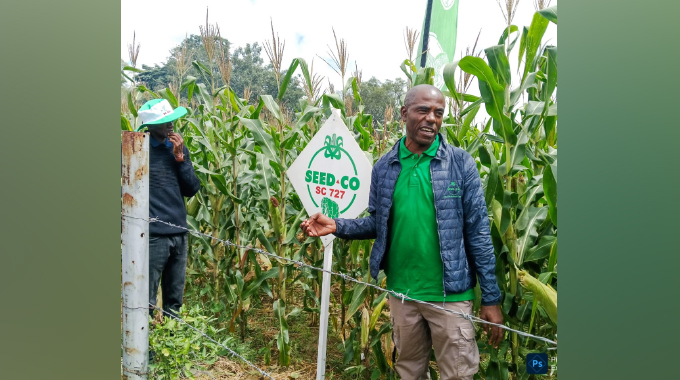
“Diversified and climate-smart farming is key to building resilience and ensuring that farmers continue to produce even under difficult climatic conditions. As climate variability continues to affect agricultural production, adopting these methods is no longer optional but essential for sustainable rural development,” he said.
Turning attention to livestock, Mr Ncube highlighted goat production as a particularly climate resilient option for semi arid regions such as Umzingwane. He encouraged farmers to invest in hardy breeds and to apply good management practices that allow animals to thrive even when pasture is scarce.
He said that goats require relatively low inputs, reproduce quickly and enjoy strong market demand, making them a practical and profitable choice for smallholder farmers seeking reliable returns.
“Cattle production remains a key source of wealth, draught power, and manure for crop production, urging farmers to adopt improved breeds and better management practices, including supplementary feeding and regular disease control. Integration of crops and livestock is central to climate-smart agriculture, as it allows for efficient use of resources and continuous income generation,” said Mr Ncube.
As he spoke, the host farmer’s operations offered a clear illustration of these principles in action.
By combining maize production with poultry, goats and cattle, the farm spreads risk, smooths income across seasons and creates multiple pathways for resilience, even when one enterprise underperforms.
“I am grateful for the support I get from agricultural business advisory officers, whose guidance has helped me achieve all this. Their knowledge has played a key role in improving my farming operations,” the hosting farmer, Mr Japhet Ncube.
The conversation then shifted firmly into the language of enterprise. Ward 4 Agricultural Business Advisory Officer, Miss Taelo Xaba, challenged farmers to see beyond tradition and habit, calling for a business orientated approach to farming in the district.
“Farming must be treated as a business, not merely a way of life. Farmers need to plan their production, keep proper records, manage costs, and diversify their income streams,” she said.
Miss Xaba added that thinking like a businessperson equips farmers to make informed decisions, identify profitable markets and maximise returns, rather than farming blindly and hoping for favourable outcomes.
Throughout the field day, discussions and demonstrations showed how integrated farming systems improve efficiency, reduce waste and strengthen household food security, while at the same time creating multiple income streams that cushion families against shocks.
She also urged farmers to embrace innovation, sustainability and knowledge sharing as vital tools in transforming agriculture, emphasising that the choices made today will determine not only current harvests, but the security of livelihoods for generations still to come.