Online Reporter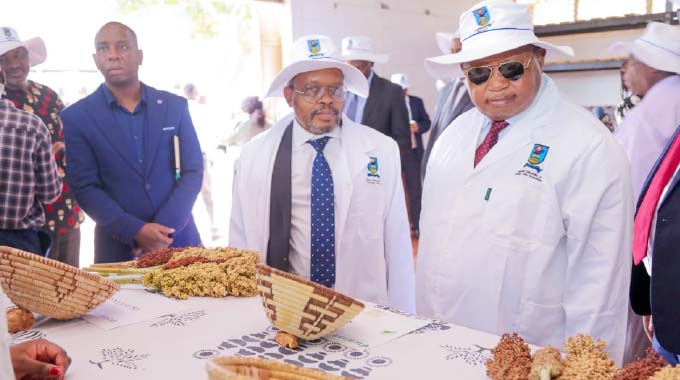
Raymond Jaravaza, [email protected]
SMALL-SCALE grain farmers across the country now have the chance to increase their yields and help national food security by accessing over 8 500 plant genetics for free from the International Crops Research Institute for the Semi-Arid Tropics (Icrisat).
Icrisat is a global agricultural research organisation focused on developing more sustainable and nutritious food systems in the drylands of Asia and sub-Saharan Africa to combat poverty, hunger, and environmental degradation.
Its main activities include breeding improved, resilient crops (sorghum, millet, chickpea and groundnuts), managing a large gene bank of these crops, researching sustainable farming practices and working to improve food systems through policy and market interventions. Operating globally with hubs in Nairobi and Bamako, and an office in Zimbabwe, Icrisat’s work has led to numerous crop releases and contributes to the UN Sustainable Development
Goals, with a long-standing effort in Zimbabwe to enhance agricultural productivity and food security.
Icrisat’s regional gene bank, based in Matopos, Matabeleland South, holds a diverse collection of sorghum, millets, groundnuts, chickpeas and pigeon peas. These crops are ideally suited for the country’s dry regions, particularly Matabeleland, which falls under agro-ecological regions three, four, and five, known for their low rainfall and frequent droughts.
Farmers under the free seed facility, can only obtain small starter quantities, approximately five to six grammes of the genetic material, which they are encouraged to multiply through successive plantings for future use.
Icrisat scientific officer Ms Tanyaradzwa Monicah Tenesi said the gene bank plays a crucial role in conserving plant genetic resources for both current and future use.
“Icrisat is the regional gene bank for Eastern and Southern Africa and our mandate is the conservation of plant genetics, particularly for small grains such as sorghum and millets, and a variety of legumes. The preservation of plant genetics is important as the building blocks for developing different varieties of genes for small grains. The genetic materials we store at Icrisat are not only for breeders or farmers but also for researchers who use them for scholarly purposes.”
Ms Tenesi highlighted the national and regional importance of the Icrisat gene bank, which conserves thousands of genetic materials for sorghum, millets, groundnuts, chickpeas, and pigeon peas. These resources are provided free to farmers across the country.
“We serve Eastern and Southern Africa, so it’s not feasible to give out large quantities of genetic material to farmers and other end-users. We can only provide about five to six grammes.
However, the institute is available to assist farmers in planting the genetic materials and harvesting more seeds for future use,” she said.
Ms Tenesi said the gene bank conserves 8 517 different plant genetics, acquiring seeds from farming communities and preserving them under controlled conditions. Each crop’s material undergoes rigorous characterisation, a process where about 32 traits such as germination period, flowering time and drought tolerance are documented, to help farmers and researchers identify suitable varieties.
“We may not provide large seed quantities because we serve a wide region but farmers are encouraged to plant the samples, harvest and preserve seeds for larger plantings in future,” said Ms Tenesi.
The free plant genetics offer comes at a time when the Government is encouraging farmers, particularly in dry regions, to shift from water-intensive crops like maize to drought-tolerant small grains.
Nyamandlovu farmer Ms Agnes Moyo, who was recently recognised for her efforts in championing small grains production, said many farmers are unaware of the free resources available at Icrisat.
“I switched to small grains a few years ago and before I engaged Icrisat, I struggled to find the right sorghum and millet varieties,” said Ms Moyo.
She said farmers, especially from areas that receive low rainfall, need to be educated about the benefits of growing small grains.
In the past, small grains were seen as “crops for the poor,” but perceptions are slowly changing as climate change threatens food security. Small grains are now valued for their ability to withstand moisture stress, nutritional value and their potential to improve livelihoods.