

 admin
admin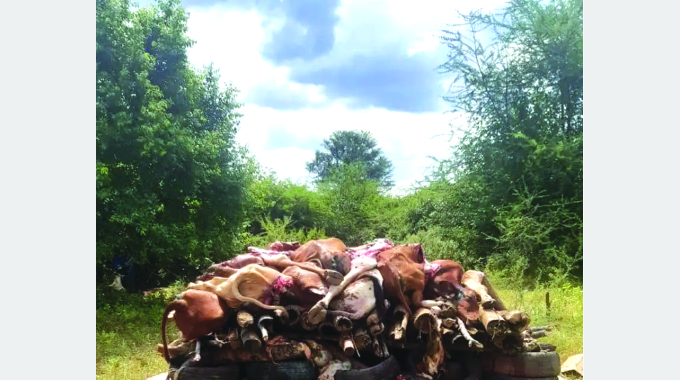
Elita Chikwati Features Editor
The agriculture sector is faced with challenges that include the january disease, foot and mouth disease and the resurfacing of plant diseases that had been extinct for more than 60 years.
These challenges will affect the industry and result in huge loses.
For instance, the country cannot export beef if there is foot and mouth disease detected.
Livestock will continue to die of january disease while crop yields will suffer because of the diseases.
Some of these challenges will be easily solved if farmers make informed choices and adhere to set regulations.
Some of the regulations in the livestock industry require farmers to get permits to move animals from one area to another.
In most cases the veterinary department will inspect the animals for diseases and a permit will be issued if the livestock is disease free.
A number of farmers and dealers have not been following these regulations, while others have found ways of by-passing the procedures.
Some farmers have contravened the provisions of Animal Health (Movement of Cattle and Pigs) Regulations, 1984.
This has seen a number of people being arrested for illegally moving livestock, while in some cases the animals are destroyed by the veterinary service department.
If farmers and traders illegally move animals; cattle, pigs, goats, sheep and wildlife without permits from the DVS, the animals will be destroyed and the owners prosecuted, fined or jailed.
Owners of the cattle will not receive any compensation.
While this measure may appear cruel, it is meant to curb the illegal movement of animals.
Illegal animal movements are the single most important driver of transmission of animal diseases from one area to the next, with the most dreaded being foot and mouth disease and january disease.
The regulation is meant to curb the spread of diseases.
For instance, some farmers may find ways of dubiously moving cattle from FMD red zones to free areas.
This will spread the disease to areas that did not have FMD and will require lots of money, vaccines and other remedies to deal with the situation.
A number of people have criticised the burning of the illegally moved animals, describing it as cruel. But it is because of these illegal activities that our national herd had been declining.
It is because of this activity that the country can no longer export beef to the European Union and has lost in terms of foreign currency earnings.
The country is buying FMD vaccines to curb the spread of the disease which could be achieved by animal movement control.
Zimbabwe imports FMD vaccines and spend lots of foreign currency to control the disease through routine annual vaccinations.
If farmers and traders comply with animal movement regulations, Zimbabwe will be able to maintain a stable animal health situation and there will not be FMD outbreaks.
It is thus important for stakeholders in the livestock industry to comply with veterinary restrictions if the cattle economy is to revive successfully.
Another challenge is the vandalism of veterinary infrastructure, including game and cattle fences and absence of physical boundaries in many communal areas.
In some areas such as Gokwe, FMD control zones have been lost due to the vandalism of boundary fences in wildlife areas and cattle farming areas.
The disease has been spreading in the area because of the mixing of livestock with wild animals due to vandalism of game fences.
Farmers in Gokwe cannot move their cattle out of Gokwe to better markets because of the movement restrictions due to the disease and they end up selling their livestock at giveaway prices.
Thus the farmers can not realise huge profits from their animals, a situation which can improve if only they adhere to regulations.
The country has lost about 500 000 cattle to january disease. The disease has also been spreading due to the illegal cattle movements.
Government came up with a programme to give farmers free tick grease.
Farmers should religiously dip their animals and also apply tick grease to curb the spread of the disease.
So by following the dipping intervals, farmers will be reducing the spread of disease.
The same challenge of ignoring regulations is also affecting the tobacco industry were farmers have not been adhering to the planting dates and destruction of stalks.
The Plant Pests and Diseases Act (Chapter 19:08) makes it mandatory for tobacco farmers to destroy tobacco stalks on or before May 15.
December 15 is the last day of destroying unsold tobacco and December 31 is the deadline for the destruction of all seedbeds to control pests and diseases.
The tobacco planting and destruction of stalks deadlines are always communicated to farmers and if there is need to extend, farmers are told to do so.
But in some parts of the country some farmers have established seedbeds, while tobacco stalks from the previous seasons are still in the fields.
Failure to destroy stalks and crop residues may adversely affect a viable industry that has immensely contributed to the well-being of the economy.
Currently, the tobacco industry is faced with the challenge of the resurgence of the Potato Virus Y.
Potato Virus Y is a viral disease that has the potential to wipe out the whole crop.
It is unfortunate that some of these diseases have been under control, but are now resurfacing because of the reckless behaviour.
The tobacco industry is one of the viable sectors which brings in around US$1 billion from sales and exports and can be destroyed by these negative activities of failing to destroy stalks and residues.
It is important that farmers and stakeholders in the agriculture industry sector change the way they do things.
They need to be responsible.
The agriculture industry is growing and boosting its viability through the hard work of Government and other stakeholders, but all this can be put to waste if the reckless behaviour continues.
Agritex officers and the department of veterinary services and other players should continue educating farmers on the dangers of not following regulations.
Stiffer penalties will also be a deterrence to some who may want to contravene the laws and regulations.
The agriculture sector contributes immensely towards the economy of this country and employs millions of people.
But some seem to be gradually destroying the industry through the failure to comply with legislation of destroying stalks and stop movement of livestock that spread diseases.



 Online Reporter