Online Reporter
Theseus Mauruki Shambare in MANGWE
FARMERS in Matabeleland are targeting tobacco production of up to 50 million kilogrammes as the region emerges as a new frontier for Natural Cured Virginia (NCV) tobacco production amid shifting climatic conditions and growing adoption of low-cost curing technologies.
Commercial growers in Mangwe Distrisct the expansion of tobacco production could significantly transform the Matabeleland economy, traditionally dominated by cattle ranching and dryland farming.
The optimism follows successful tobacco trials and growing adoption of the marula barn curing system, an innovative natural air-curing technology that uses solar heat instead of conventional coal or firewood-fired curing methods commonly used in Mashonaland provinces.
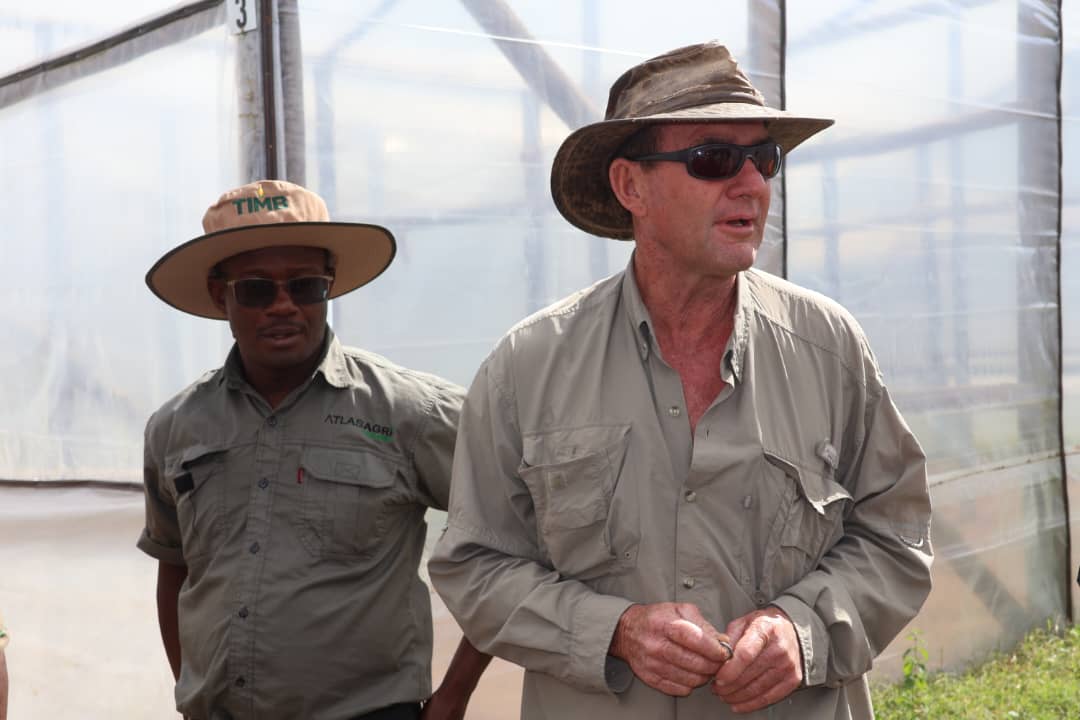
The marula barn is fully enclosed with transparent UV-protected polyplastic that traps solar heat while protecting tobacco from rain and excess humidity.
Commercial farmer Mr Gary Rosenvale said tobacco production in Matabeleland was not entirely new, recalling that Turkish tobacco had previously been grown in the region during the early 1960s before exports were disrupted during the Unilateral Declaration of Independence (UDI) era.
“Tobacco was grown in this area around 1961 to 1964 by my parents,” he said during a media tour organised by the Tobacco Industry and Marketing Board (TIMB).
“And basically we could figure out that tobacco does grow in Matabeleland. We do not have the humidity that happens in Mashonaland, but it does grow.”
Mr Rosenvale said recent above-normal rainfall seasons had also improved prospects for tobacco production in the region.
“We have had nearly 900 millimetres of rain this season, which is unusual for us in Matabeleland where we normally get about 450 to 500 millimetres,” he said.
He said while the first tobacco season came with several technical challenges, including curing complications caused by prolonged cold and wet conditions, the crop had performed beyond expectations.
“This year I managed to get about 600 bales off the farm,” he said.
“Again, it is just learning, being first year at it. Those are the school fees you have to pay.”
Mr Rosenvale said the marula barn system had significantly reduced energy and labour costs associated with conventional tobacco curing.
Unlike flue-cured tobacco systems that require constant feeding of coal or firewood into furnaces, the marula barns rely mainly on trapped solar heat and controlled ventilation systems.
“There is no need for someone to spend the whole night feeding firewood into a furnace,” he said.
Farmers regulate moisture and heat levels by strategically opening and closing vents installed on the barns.
The system is also being viewed as an environmentally friendly alternative that could reduce deforestation associated with conventional tobacco curing methods.
Mr Rosenvale said tobacco production could become a major economic driver for Matabeleland if more farmers embrace the crop.
“If we could even get to a position where we produced 50 million kilogrammes in Matabeleland, what that would do for Bulawayo’s economy and Matabeleland economy would be huge,” he said.
“For the small-scale farmers to have an alternate source of income coming in that would pay them to do it would be a very good thing for Matabeleland.”
First-time tobacco grower Mr Reed Sola of Woolendale Farm Plot 32 said the marula barn system had given farmers confidence to venture into tobacco production despite the region’s dry climate.
“We are learning every day, but the results we are seeing are encouraging,” he said.
“I am expecting about 30 bales from my first crop cured through the marula barn system. The advantage is that the curing costs are much lower because we are using natural heat instead of firewood or coal.”
Mr Sola said tobacco offered farmers in Matabeleland an opportunity to diversify from livestock production, which has increasingly been affected by droughts and cattle diseases.
TIMB officials say the expansion of tobacco into non-traditional regions forms part of broader efforts to increase national production while promoting climate-smart and sustainable agricultural practices.


 Bongani Ndlovu