


 Chronicle Editor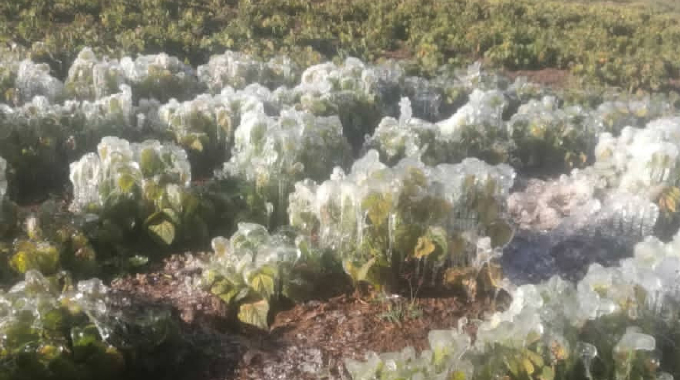
Judith Phiri, Business Reporter
FARMERS have been urged to continue taking precautions to ensure their crops are not affected by the low temperatures of the winter season.
The winter season conditions create a range of hazards to livestock and crops which farmers can minimise by planning and taking the right action.
Winter cropping consists of cultivating crops tolerant to sub-zero or near-freezing temperatures for their growth and development cycle and requires considerably lower temperatures to initiate their reproductive phase, a phenomenon known as vernalisation in grains.
In Zimbabwe, winter crops that are predominantly cultivated include wheat, barley and oats as grains and diverse horticultural crops.
In an interview, agronomist consultant, Mr Leo Maphosa who is the founder of CropTech Systems, said farmers should continue to be on the lookout for their crops.
“We are still in winter and farmers should not relax just because they have already planted their crops. They should continue to monitor them and be on the lookout to ensure that they optimise their yields,” he said.
“Low winter temperatures are a big threat to farmers as an unexpected freeze during this time can easily devastate a farmer’s plants, leaving the leaves and branches either black or brown.”
He said radiation frost occurs when a clear sky and calm winds (less than 5 mph) allow an inversion to develop, and temperatures near the surface drop below freezing.
Mr Maphosa said farmers were also encouraged to water their plants in the afternoon as moist soil has an insulating effect that radiates heat upwards come nightfall.
He added: “Due to climate change like in recent years we are experiencing late seasonal occurrences and this has an effect on the planting dates. If in the past, our maize’s last planting dates were towards the end of November, we need to observe what the Meteorological Services Department is advising on the current year so that we can plant in accordance with critical times with enough rainfall for crops to produce adequate yields.”
Mr Maphosa said using online web applications and satellite tools such as Ensodisc, will assist farmers get advice on at least six months’ timelines on radiation and amount of rainfall since we are in the southern part of the country and our climatic conditions may be as similar with those on the northern part of South Africa.
He said farmers could grow crops suitable for the low season like cabbages and broccoli among other horticultural produce, while in frost-prone areas they should try to avoid anything that can be affected.
“You can only grow any other crop in those areas if you have proper greenhouse infrastructure which can regulate temperatures and help control adverse conditions. The use of nap liners, frost blankets and frost liquid covers are helping in the control but are still to be proven under set conditions as to whether to what level they are effective,” he said.
“In other regions or areas that are not frost prone, farmers have the liberty to grow anything, but with climate change, such areas have been affected this year.”
Meanwhile, wheat farmers have been urged to ensure their water reservoirs are in optimal condition to meet the water requirements of the winter wheat cropping season.
Irrigation management plays a crucial role in maximising the yield and quality potential of winter wheat. It involves controlling the rate, amount and timing of applied irrigation water in a planned and efficient manner.



 Bongani Ndlovu