admin
admin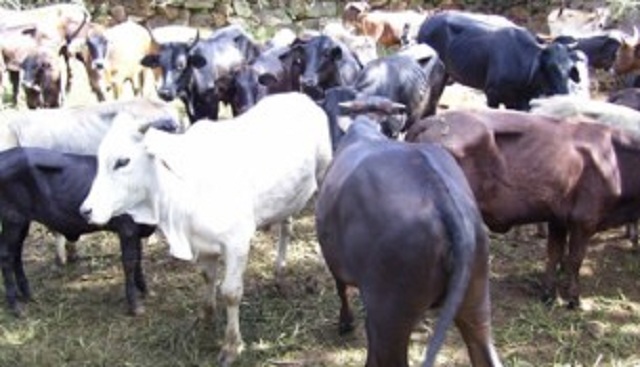

Mhlupheki Dube
THE recently reported shoot to kill policy by our neighbours Botswana calls for serious internal and external dialogue as it relates to the socio-economic impact of such a drastic policy.
A shoot to kill policy always causes discomfort and at times resistance even when it is implicated against animals of less economic value such as stray dogs, what more when we are now talking to the mainstay livelihoods of many in this country, livestock?
It is not in doubt and not in question that Botswana is a sovereign nation and hence they are absolutely within their right to make policies as they see fit to address their situation. In case there are others who missed the shoot to kill story and are wondering what that is, Botswana is said to have put in a new policy which is intended to deal with stray cattle into their boundaries. They will simply shoot the animals and burn the carcasses. This is primarily a Foot and Mouth Disease control measure.
As a Zimbabwean my natural instinct is to spring to my country’s defence and lambast Botswana for such a drastic and perhaps inconsiderate approach. However, my more discerning self would like to look at the issue from both the Botswana side and the Zimbabwe side so as to come up with a much balanced assessment.
Botswana is a major beef exporter to the European Union, a market which we used to enjoy before. This is both a lucrative and sensitive market which demands very high animal health and traceability standards. You simply have to abide by those standards or you can simply kiss the market goodbye.
As is the case in every aspect of life maintaining high standards comes at a price. Simply put Botswana has invested heavily into Foot and Mouth Disease control and those who have visited the country can attest to this fact as you have to go through a foot bath right at the border. They have even gone to the extent of vaccinating our own animals along the border communities just to protect their herd!
Now picture this, you are producing vegetables in your yard and you have a lucrative contract to supply big chain supermarkets with your lettuce but you have the challenge of a neighbour who is keeping indigenous chickens that constantly stray and feed on your lettuce!
The neighbours seem to be incapable of penning their chickens and is not showing any urgency in the desire to remedy the challenge despite your protest about his chickens, what would you do? This is by no means a public relations article for Botswana but just a call to put our ducks in row.
As a country we are obviously not in a position to do some of the veterinary controls at the moment due to economic challenges. However, I am convinced that we certainly can police our borders to first, avoid vandalism of the boundary fences and secondly, minimise straying of animals into our neighbour’s yard.
If we can easily afford to mount a six-member roadblock at every 10 kilometre of our highways we surely should be in a position to police our boundaries! I also should point out that in the majority of cases the boundary fence is vandalised by nuisance smugglers who in some cases do it right under the watch and illicit co-operation of some of the police force members.
I stay in a border town, therefore, I know what am talking about. Smugglers cut the fences to smuggle their goods in and out of the country. These holes become straying points for cattle belonging to communities along border areas.
So we should not approach this simplistically and generalise that communities along the borders are vandalising the fences and hence they should bear the brunt of the new Botswana policy. In fact, these communities need Government protection as most of them have been losing big heads which stray into Botswana and disappear forever.
I know community members around Nswazi area along the border that have lost as high as 17 head into Botswana. In simple terms the Government through its relevant arms need to step up and protect the farmers through policing our border fences with the same enthusiasm as we do our roads.
Secondly, reviving veterinary restriction fences and points at least along border communities. Lastly, a massive education exercise through the extension department should be carried out to make farmers aware of the new unfriendly stance by Botswana.
Feedback [email protected] or cell 0772851275


 Online Reporter