Fashion 263 Correspondent
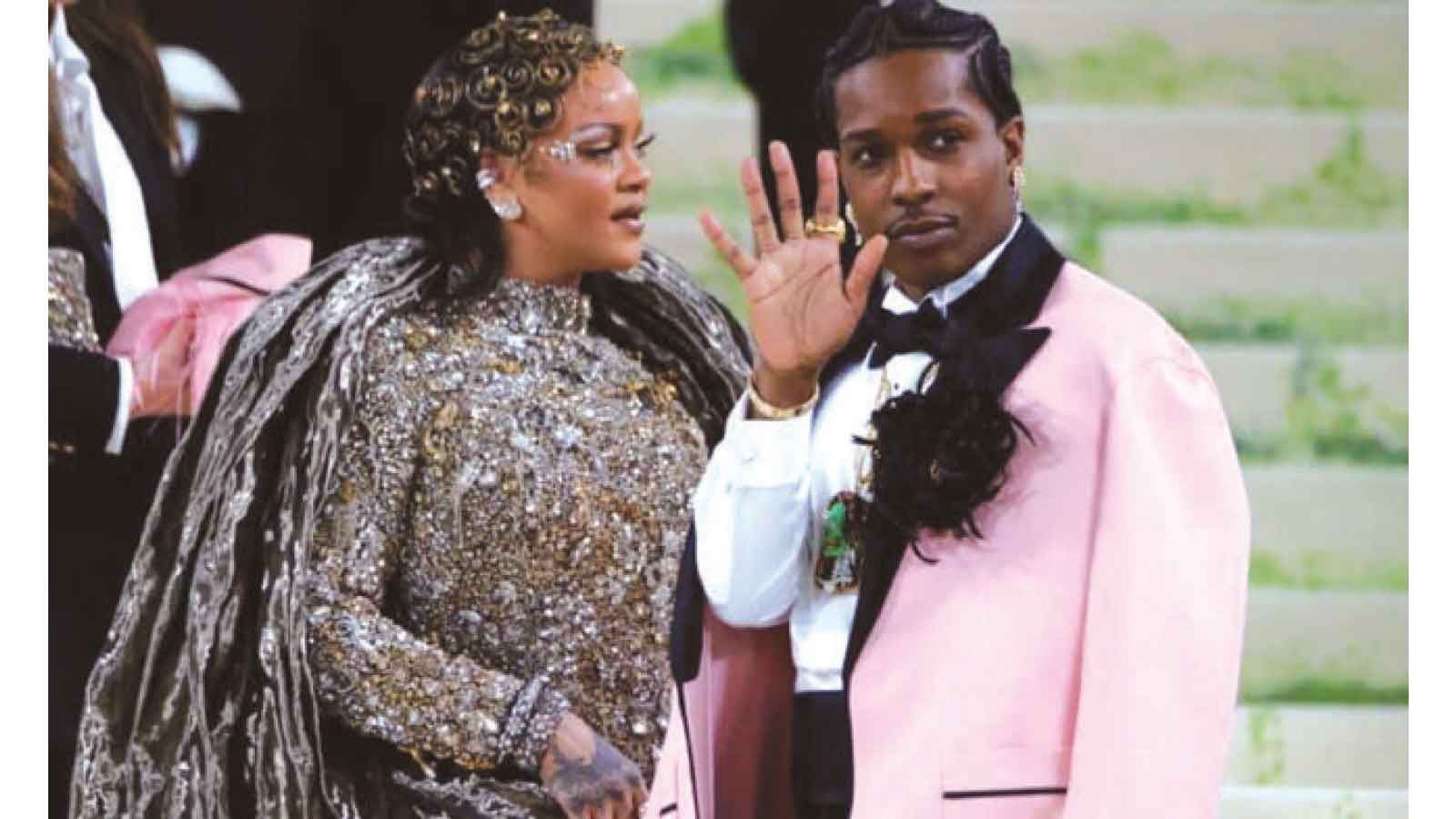
While some of you are praising this one and that one’s outfit at the Met Gala, some are sitting here trying to make sense of it all.
You would think the eyes of society would be open by now, but the celebrity culture machine is still running strong.
The Met Gala has once again sparked debate, not only for the fashion but for what it represents in today’s cultural and political climate.
While the event is known as a glamorous fundraiser for the Metropolitan Museum of Art’s Costume Institute, its ties to billionaire influence and brand power have left many questioning the optics behind the spectacle.
Meredith Lynch took to Instagram to criticise the stars attending this year’s event, particularly due to its association with honorary co-chairs Jeff Bezos and Lauren Sánchez Bezos.
She warned celebrities against wearing “ICE Out” pins at the gala, arguing that Bezos is “part of the reason we’re in this mess”, linking it to wider political tensions and his past support of Donald Trump.
Lynch acknowledged that the Met Gala raises funds for a cultural institution but questioned how that aligns with billionaire-backed prestige events.
Actress Taraji P Henson also reacted to the discussion, commenting on the post: “I am so confused by some ppl that are going.”
Her response reflects a growing sense of disbelief among some public figures about the direction and meaning of such highly publicised cultural events.
American astrologer and writer Rob Brezsny offered a more extended critique, describing his reaction in strong terms: “Watching the Bezos-sponsored Met Gala last night, I felt disgust.”
He added that while he has never opposed glamour or celebrity pageantry in principle, “this year it felt grotesque.”
Brezsny went on to question the contrast between extreme wealth and global instability, arguing that “we are in the midst of an ongoing moral emergency” while elite figures gathered in celebration of luxury fashion.
He also suggested the event operates as a form of image-making disguised as philanthropy, calling it “elite self-consecration” where status and influence are reinforced under the banner of culture and charity.
He further challenged public figures to reflect on their role, asking: “What will you do with your visibility while the world is being decimated? Will you bear witness? Will you resist? Or will you keep posing?”
The Met Gala debate is no longer just about fashion but what it represents. Critics question billionaire influence, celebrity participation and the disconnect between glamour and global reality.
As Brezsny suggests, it feels like “elite self-consecration” while the world faces a crisis. The real question is why this spectacle still holds so much attention.
However, on African context while the Met Gala claims to celebrate global fashion, its execution often leans Eurocentric. African presence, for instance, is frequently visible through celebrities rather than designers.
Stars of African descent arrive in bold, culturally inspired looks, but in many cases, those outfits are still created by Western houses interpreting African aesthetics, not African designers telling their own stories.
Take recent years as an example: African celebrities have increasingly used the platform to honour their roots, incorporating traditional fabrics, silhouettes, and symbolism. Yet only a handful of designers from the continent have consistently broken into that elite circle. The imbalance raises a critical question — is the Met Gala amplifying African culture or simply consuming it?
Still, it would be unfair to dismiss the event entirely.
The positives are undeniable.
The Met Gala is one of the most powerful visibility engines in fashion.
A single appearance can redefine a designer’s career overnight. When emerging brands, including a few from outside Europe and North America, are featured, they gain access to global markets, celebrity endorsement, and media attention that would otherwise take years to build. This year, there were signs of progress. A small but noticeable shift saw newer and more diverse designers step onto the carpet, dressing high-profile guests and challenging traditional dominance. These moments suggest that the Met Gala is not static but is evolving, albeit slowly. Moreover, the event’s charitable core cannot be ignored.
As a fundraiser, it supports the preservation of fashion as an art form, funding exhibitions that often explore cultural themes from around the world.
In that sense, it does contribute to global storytelling at least within the museum space.
But the negatives remain just as strong.
Access is the biggest barrier.
The cost of participation alone excludes many designers from developing regions, including Africa.
Without corporate backing or celebrity connections, even the most talented creatives struggle to secure a seat at the table literally and figuratively.
There is also the issue of narrative control.
Western institutions still decide which cultures are highlighted and how they are interpreted. This creates a cycle where non-Western fashion is curated through a Western lens, rather than presented authentically by its originators. For Africa, the takeaway is both a challenge and an opportunity.
The continent boasts a rich, diverse fashion ecosystem, from intricate textiles to avant-garde designers pushing boundaries.
But talent alone is not enough.
Strategic investment, global partnerships, and stronger industry structures are needed to position African designers on platforms like the Met Gala.
Rather than waiting for inclusion, Africa can actively claim space.
Because in the end, the Met Gala is not just a red carpet, it is a power map of the fashion world. And until that map becomes truly global, the question will persist: is it a celebration of diversity or a well-dressed illusion of it?