admin
admin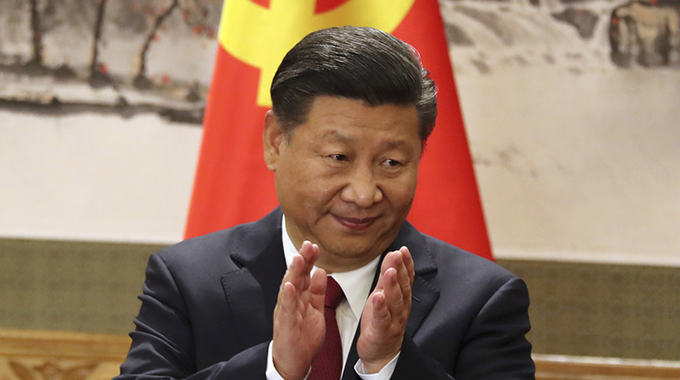
Leroy Dzenga
Features Writer
Vision 2030 is an economic growth outlook being pursued by Government, the key goal is for the country to have an upper-middle income economy by the said year.
An upper middle income country is described by the World Bank as a country whose citizens make between US$4 125, but not more than US$12 736 reading what is known as Gross National Income per capita.
It is under this cluster that you find countries like China, Jordan, Iran and Belarus.
Done right, this means thousands, if not millions, are going to be elevated from poverty to a life of fair comfort.
The good thing is Zimbabwe, will not be shooting in the dark, there is a precedent to be followed plus there is political will.
One of the countries it enjoys good relations with, managed to successfully implement one of the most iconic economic ascensions the modern world has seen.
China has just overtaken the United States to become the world’s largest economy. Perhaps, now is the best time to put our alliance to good use and learn from them what they did right.
There is need to follow the trail to see how they managed to turn around their economy for the better of their people.
Some of the policy directions taken by Government show that we are on the right path.
Fight Against Corruption
Ever since getting into office, President Mnangagwa has declared war against abuse of office and misappropriation of public funds.
Corruption has been bleeding the country of resources which are supposed to be directed towards infrastructure development projects.
Before Operation Restore Legacy and the subsequent ushering of the Second Republic, graft had become endemic to the extent that even traffic police officers were mounting roadblocks purely for fundraising purposes with very little interest in road safety.
President Mnangagwa enunciated a war on corruption, which has seen a number of high-ranking members of society and public office holders being arrested. Two Cabinet ministers, lost their jobs after being implicated in corruption cases.
While many have cases which are still going through due processes of law, some have already been convicted of financial imprudence while in public office.
This includes former director of State Residences Douglas Tapfumaneyi who was sentenced to four years in prison for criminal abuse of office.
Former Energy Minister Samuel Undenge was also slapped with a two-and-a-half year sentence after financial dishonesty when he held public office.
The convictions and the reconstitution of the Zimbabwe Anti-Corruption Commission shows that Zimbabwe is taking elaborate steps to arrest corruption.
President Mnangagwa promised to ensure that the fight against corruption remains well funded and on track.
Addressing the 345th Politburo session in Harare, this week, President Mnangagwa warned people in his party ZANU PF against corruption saying the law will not respect affiliation.
“I thus exhort party cadres and the citizenry at all levels in line with our national development agenda to be guarantors of a corrupt free Zimbabwe. Report all cases of corruption to the Zimbabwe Anti-Corruption Commission and the Zimbabwe Republic Police,” he said.
In the fight against corruption, the most complicated elements are those who try and cushion themselves using institutions, especially political parties which control the levers of power and President Mnangagwa was right to blow that cover.
Presenting the Ministry of Finance and Economic Development’s Pre-Budget Paper recently, Professor Mthuli Ncube said there will be more budgetary support to ZACC and other institutions that fight graft in Zimbabwe.
Directing financial resources to a policy position is the best form of political will. This is similar to what China has done over the years in its fight against corruption.
President Xi Jinping in his book, The Governance of China Volume 3 speaks on the importance for people in his Chinese Communist Party to abstain from graft under all circumstances.
“We must develop a positive and healthy political culture in the Party and improve the Party’s political ecosystem, resolutely correct misconduct in all its forms, and show zero tolerance for corruption,” President Xi wrote to his fellow CPC members.
Infrastructure Development
An economic recovery strategy which does not give precedence to the development of infrastructure is at best rhetoric poetry.
Good roads, dams, bridges, well-functioning factories are part of what many marvel at when they look at the so-called developed countries.
Academics Kobus Jonker and Bryan Robinson in a chapter in their book China’s Impact on the African Renaissance argue that infrastructure is the most important enabler of organic growth in Africa.
Fortunately, for Zimbabwe, the previously neglected infrastructure question which was in the past relegated is finally being answered.
The new dispensation has placed priority on infrastructure.
Across the country, there have been efforts to institute road improvements, dam rehabilitation and a general improvement of infrastructure.
Transport and Infrastructure Development Minister, Joel Biggie Matiza listed the Harare-Beitbridge road as the uppermost priority for the Government.
“This involves rehabilitation, construction and widening of the road to 12,5 metres in line with the SADC Transport and Communications Commission standard from the current seven metres,” Minister Matiza said.
The improvement of the busiest highway in the SADC region stands as a statement of intent on how far the country is willing to go in ensuring that there is enabling infrastructure.
Zimbabwe, should consider aligning itself with the Belt and Road Initiative which is China’s global infrastructure development strategy, which has been in effect for the past seven years.
Explaining the Belt and Road Initiative idea, President Xi said: “The Belt and Road Initiative is designed for economic cooperation, not for geopolitical or military alliance. It is an open and inclusive process which does not exclude any party.
“It is not designed to form an exclusive bloc or a ‘China club’ its participation is not based on ideology and it is certainly not a zero-sum game. Any country that wants to participate in this initiative is free to do so.”
Zimbabwe may want to make the best of its good relation with the Asian giants which will feed into the country’s national development strategy for 2030.
Decentralisation
One of the major issues affecting Zimbabwe was the centralisation of systems to the capital, Harare. This created bottlenecks as everything needed one overarching signature to make things move. Zimbabwe is seeking to create a new way of operating, by implementing devolution, a constitutional provision calling for the decentralisation of processes.
Zimbabwe recently took a bold step to appoint provincial coordinators who will lead the process of ushering in devolution. The provincial coordinators will be assisting Ministers of State for Provincial Affairs with “technical and administrative support” needed to promote economic growth, create jobs and uplift people’s living standards.
Interlinked with special economic zones, in which geographical areas play to their advantage, devolution can be a way to stimulate growth in previously neglected areas.
This dovetails into how China ensured the birth of new cities and productive regions.
Outlining the guidelines for coordinated regional development President Xi said there is need to “give full play to the comparative strengths of different regions, and promote rational flow and concentration of resources.”
Zimbabwe`s Vision 2030 may look like a lofty projection but in essence it is a workable plan that may materialise if there is political will to implement.
China has already shown how it is done and there is no need to reinvent the wheel. We can learn from what they have achieved, improve on it and crystalise our path to glory.
Our good relations with them can allow a smooth exchange of notes and perspectives.


 Online Reporter