admin
admin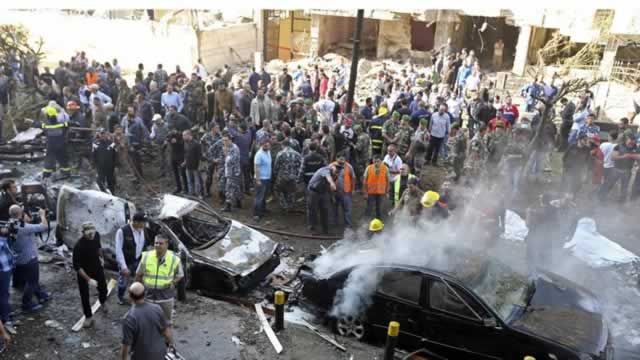

BEIRUT — Two explosions have targeted the Iranian embassy in the Lebanese capital Beirut, killing up to 23 people, injuring at least 146 and damaging buildings in the embassy compound.
Lebanese sources told Al Jazeera that the Iranian ambassador was safe, but that the cultural attache, Ebrahim Ansari, was seriously injured. A source inside the embassy told Al Jazeera that earlier reports that he was dead were not true.
The first explosion targeted the embassy gates and was caused by a suicide attacker on a motorcycle. The much larger second blast, caused by a suicide attacker in a 4×4 vehicle, struck yards away about two minutes later.
“The sheer scale of the destruction is an indication as to how powerful the explosives were,” reported Al Jazeera’s Zeina Khodr from near the site, “with over five buildings damaged by the blasts.”
Footage from local news channels showed charred bodies, and flames rising from several vehicles. Aid workers and residents carried away some of the victims on blankets.
“People are roaming the streets looking for loved ones,” said Khodr. “The scene is chaotic, and reports here on the ground have the number of casualties rising.”
The official Iranian news agency, IRNA, quoted a foreign ministry spokesman as saying the bombings were “an inhuman crime and spiteful act done by Zionists and their mercenaries.” Israel denied any links.
Syria’s government said the attacks “reek of petrodollars” – a reference to oil-rich Gulf Arab countries such as Saudi Arabia and Qatar that back the rebellion against Damascus.
However, the Abdullah Azzam Brigades, a group linked to al-Qaeda that has previously fired rockets at Israel from Lebanese territory, said it carried out the bombing.
“This is a double-martyrdom operation carried out by two heroes from the heroic Sunnis of Lebanon,” Sirajeddin Zreikat, a member of the group, wrote on Twitter. Operations will continue in Lebanon until two demands are met: first, withdrawing Hezbollah members from Syria; second, release our prisoners from jails of injustice in Lebanon.”
Fighters from the Shia group Hezbollah fought alongside Assad’s forces in several strategic battles in Syria against mainly Sunni Muslim rebels. Iran has been bank-rolling Assad’s fight, and also supports Hezbollah in Lebanon.
Ali Mikdad, a Hezbollah politician, told the local Lebanese station, Al-Mayadeen TV: “We tell those who carried out the attack, you will not be able to break us. We got the message and we know who sent it and we know how to retaliate.”
There have been several bomb attacks in Beirut and the northern city of Tripoli linked to the two-and-a-half-year conflict in neighbouring Syria. — Al Jazeera .


 Online Reporter