Remember Deketeke
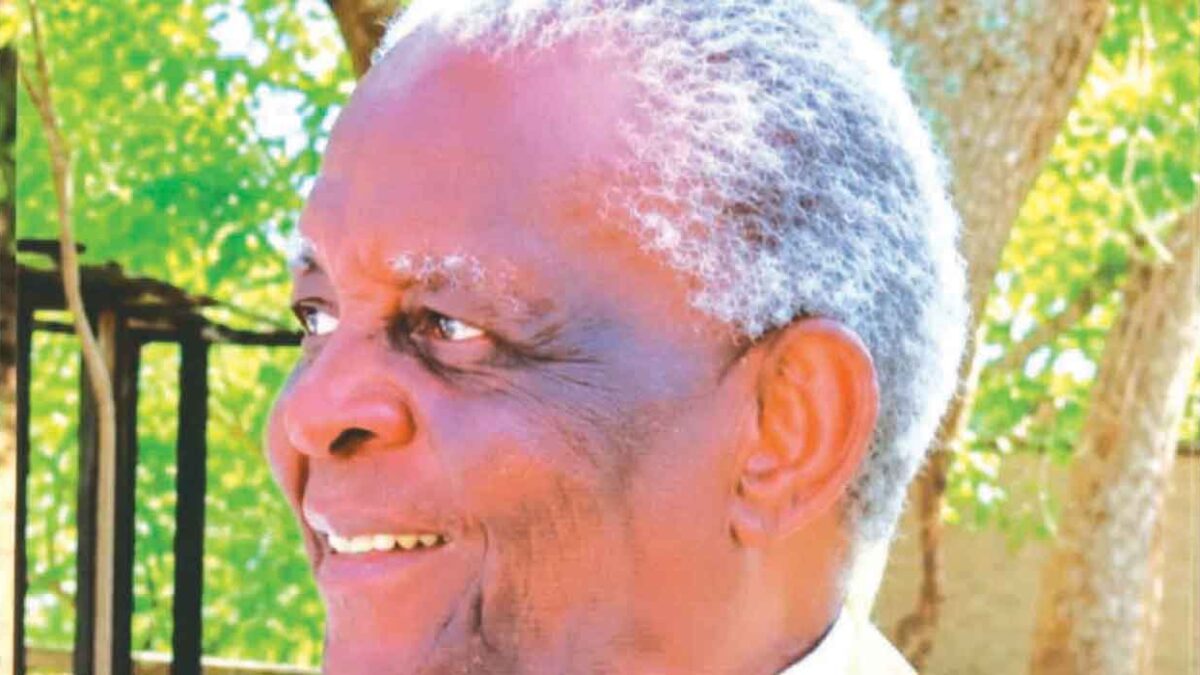
WHEN the guns of Zimbabwe’s liberation struggle roared across the countryside, many people ran for cover, churches became sanctuaries and communities lived under the constant shadow of death.
But for the late Monsignor Matthew Philip Mhishi, the sound of gunfire was not a call to abandon his people.
It was a call to serve them.
At a time when offering assistance to those caught up in the war could mean being arrested, tortured or killed, the Roman Catholic Church priest chose to remain at the side of the vulnerable, risking his own life to protect the injured, comfort frightened communities and ensure that those in need received medical attention.
He was not a soldier carrying a gun, nor was he a politician negotiating the country’s future. He was a priest whose greatest weapon was his faith and whose battlefield was the suffering of the people entrusted to his care.
On several occasions, his determination to save lives brought him dangerously close to death.
At one point, he was pursued by white soldiers and survived only after hiding inside a wardrobe.
But even such terrifying experiences did not extinguish his determination to serve. For Monsignor Mhishi, priesthood was not simply about celebrating Mass, preaching the Gospel or administering the sacraments.
It was about standing with people when the world around them was falling apart. This extraordinary chapter of his life emerged through emotional recollections by fellow Catholic priest Father Clifford Nhetekwa, who described the late cleric as a man who was prepared to die rather than abandon those who needed him.
“He could not simply walk away”
Speaking to The Sunday Mail on the sidelines of Father Monsignor Mhishi’s funeral service at Chishawasha Mission on Thursday, Father Nhetekwa recalled how the late priest continued serving communities despite the dangers associated with the liberation struggle.
“One thing about Father Mhishi is that he never abandoned his people. Even when the situation became dangerous, he remained there. He knew that people needed him, and he could not simply walk away because there was a war,” he said.
“He was a priest who understood that people needed more than prayers at that particular time. They needed someone to stand with them, someone who could help them and someone who could protect them.”
Father Nhetekwa recalled the destruction of St Martin’s Mission in 1975, where Monsignor Mhishi was serving when the place came under attack by planes.
“One of our oldest missions in 1975, St Martin’s was caught up in the war and the whole mission was destroyed by a plane. Only the church was left, without a single bullet mark,” he said.
“This happened while Father Mhishi was still serving there. Imagine being a priest and witnessing such destruction around you. People were living in fear, but he continued with his responsibilities.”
Taking a firm stand
The following year, Monsignor Mhishi was transferred to All Souls Mission in Mutoko, where the war was still raging and the danger to missionaries and surrounding communities remained high.
According to Father Nhetekwa, the situation at the mission was particularly difficult, with injured people requiring urgent medical attention following clashes between liberation fighters and Rhodesian Security Forces.
It was during this period that Monsignor Mhishi and Dr Luisa Guidotti demonstrated extraordinary courage in protecting wounded comrades and ensuring that they received treatment.
Father Nhetekwa said the two worked together to prevent armed soldiers from interfering with medical procedures, placing the welfare of injured people above their own safety.
“At All Souls Mission in Mutoko, the situation was very difficult. It was a dangerous place, and at some point, the situation nearly cost him his life,” he said.
“But Father Mhishi did not stop helping people. When people were injured, he would make sure that they received assistance. He worked closely with Dr Luisa because there were people who needed urgent medical attention.”
One particularly dramatic incident involved Dr Guidotti confronting white soldiers who wanted to enter an operating room where wounded liberation fighters were being treated.
Father Nhetekwa recalled how Dr Guidotti and Father Mhishi initially stood their ground, insisting that the soldiers could not enter the operating theatre because medical personnel were attending to patients.
“He was protecting the people who were being operated on. Dr Luisa first had to tell the white soldiers that they could not enter the operating room because there were people receiving treatment,” he said.
But the soldiers were not easily persuaded. It was then that Father Monsignor Mhishi stepped forward and came up with an explanation that would help protect those inside.
“Father Mhishi then told the white soldiers that there were pregnant women in the operating room who were about to deliver babies,” Father Nhetekwa said.
“He had to think quickly because those people needed protection. They were injured, they needed medical attention and the last thing they needed was for armed soldiers to come into that operating room.”
Father Mhishi, Father Nhetekwa added, once hid the comrades in a classroom and gave them uniforms to prevent the white soldiers from arresting them.
For Father Nhetekwa, the incident illustrated the late priest’s courage, presence of mind and willingness to place himself in danger to protect others.
He said Monsignor Mhishi understood that saving lives sometimes required extraordinary courage, particularly in an environment where even providing medical assistance could attract suspicion from the colonial forces.
“He was not someone who would watch people suffer and do nothing. He could not do that. If there was someone who needed help, he would find a way of assisting that person,” he said.
“He never stopped saving his people. He was ready to die for them. He kept on saving those people.”
Yet his courage came at a personal cost. Father Nhetekwa recalled an incident in which Monsignor Mhishi was pursued by white soldiers because of his actions during the war.
With his life in danger, the priest was forced to find somewhere to hide, eventually surviving by concealing himself inside a wardrobe.
“There was a time when the white soldiers were following him because of what he was doing. He had to hide in a wardrobe. That is how dangerous the situation had become,” he said.
“Imagine a priest having to hide inside a wardrobe to save his life, simply because he was trying to help other people. But that was Father Mhishi. He knew the risks, but he could not abandon the people.”
For Father Nhetekwa, his relationship with Monsignor Mhishi was not merely that of two clergymen who happened to serve in the same church.
It was a deeply personal bond that began shortly after the late priest’s ordination, when he baptised him.
“I am one of the people he baptised soon after his ordination. I was among those who received the sacrament of baptism from him,” he said.
That early spiritual connection gave Father Nhetekwa an opportunity to witness the priest’s dedication over many years, both within the church and among the communities he served.
A father figure
He said the late cleric was a father figure, whose influence extended beyond the administration of religious sacraments.
“He was not just a priest who would baptise you and then leave you. He remained concerned about the people. He wanted to see them grow, he wanted to see them do well and he wanted to see them remain close to God,” he said.
“He was a very caring and loving person. He never abandoned his people. We are grateful for what he did for us.”
Father Nhetekwa said Monsignor Mhishi’s example taught younger priests that the calling to serve God demanded sacrifice, humility and a willingness to place the needs of others before personal comfort.
“He was a priest who became someone we could emulate. We learnt a lot from him. No matter how difficult things became, he remained committed to what he was doing for us,” he said.
“He taught us through his actions. You would see how he treated people, how he cared for them and how he remained with them even when things were difficult. That is the kind of priesthood we must continue to practise.”
But the legacy of Monsignor Mhishi was not defined by his wartime courage alone.
Beyond the mission stations and the difficult years of the liberation struggle, he was also remembered as an exceptional administrator, mentor and spiritual guide who helped shape the lives of many people within the Catholic Church.
Mrs Agnes Chabikwa, who worked closely with him, described him as an exceptionally organised priest whose leadership combined gentleness with discipline. She said he was always willing to assist with administrative responsibilities, including preparing agendas, announcements and minutes, while ensuring that church activities were conducted properly.
“He was an organised priest. He had very strong administrative qualities. He would help me with the agenda, the announcements and the minutes. He was always present and offered guidance,” she said.
Mrs Chabikwa said what made Monsignor Mhishi particularly remarkable was his ability to exercise authority without intimidating those around him.
His gentle nature did not mean that he lacked firmness, especially when it came to discipline, principles and the execution of responsibilities.
“His softness should not be taken for weakness. He was very soft, but very firm,” she said.
She recalled how he encouraged members of the church to take responsibility for their duties, believing that effective service required teamwork, commitment and accountability.
“He believed in people working together. He would guide you, but he also expected you to do what you were supposed to do. If something was not right, he would tell you,” she said.
Mrs Chabikwa said Monsignor Mhishi was also a dependable spiritual father who offered reassurance and direction during important moments in people’s lives.
His ability to listen, advise and encourage others made him a trusted figure among those who sought his counsel.
“He was someone you could approach. He would listen to you and guide you. He did not need to shout at people to make them understand what was expected of them,” she said.
His administrative strengths complemented his pastoral work, allowing him to build relationships and empower others to contribute meaningfully to the church.
For those who worked alongside him, his leadership was an example of how authority could be exercised with compassion while maintaining high standards.
Monsignor Mhishi died on November 2, 2026, at the age of 96, at his residence in Belvedere Presbytery, Harare.
He was buried at Chishawasha Cemetery on Thursday, with fellow clergy, parishioners, relatives and those whose lives he had touched gathering to celebrate a life devoted to the service of God and humanity.
His death marked the end of a remarkable chapter in the history of the Catholic Church in Zimbabwe, but the memories of his courage, kindness and dedication remain deeply embedded in the lives of those he served.