


 Online Reporter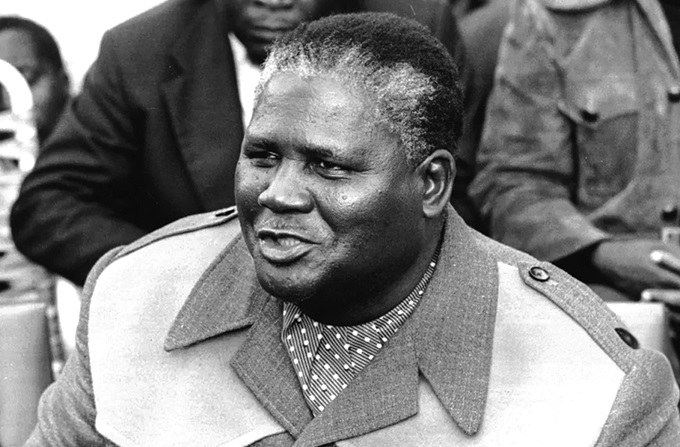
Gibson Mhaka
Zimpapers Politics Hub
JULY 1, 2025 will mark 26 years since the passing away of Vice President Dr Joshua Mqabuko Nkomo, affectionately known as Father Zimbabwe, Chibwechitedza (slippery rock) or uMdala Wethu.
He died on July 1, 1999 at the age of 82 and was subsequently buried at the National Heroes Acre.
Since then, Zimbabweans have commemorated Dr Nkomo’s life on this day, amid increased calls for it to be declared a national holiday.
Dr Nkomo was a towering figure whose selfless love, dedication to unity and commitment to the upliftment of black people were foundational to the liberation of the motherland.
A true statesman, liberator, unifier and visionary, he strongly advocated for the transfer of land from the minority whites to the majority black population under the “Son of the soil” slogan of the 1970s.
Foremost among his priorities for a free Zimbabwe were land redistribution, economic empowerment, unity among Zimbabweans and national development. These issues were central to his vision for a just and equitable society.
Dr Nkomo possessed a strong vision anchored in equality for all and a determined drive to develop every part of the country.
Many of these ideals resonate deeply with the aspirations of the Second Republic, led by President Mnangagwa, particularly its overarching goal of achieving an upper middle-income economy by 2030, encapsulated in Vision 2030.
This vision, significantly magnified by the Second Republic’s philosophy of “leaving no one and no place behind”, reflects and continues Dr Nkomo’s commitment to inclusive national development.
This is a cornerstone philosophy of the Second Republic, emphasising inclusive development that benefits all citizens, regardless of their location or background.
This directly echoes Dr Nkomo’s focus on equitable distribution of resources, ensuring a harmonious progression towards national prosperity.
Still on this philosophy, the late Father Zimbabwe was indeed a man of the people, an ever-present colossus in the liberation struggle, who inspired thousands to stand up for their rights against extreme cruelty by the settler regime.
His was the voice that empathised, sympathised and propelled freedom fighters to go beyond their limits to bring independence to the country.
This profound dedication to the welfare of every citizen directly aligns with the Second Republic’s “leaving no one and no place behind” philosophy.
Umdala Wethu’s dream of a truly liberated and equitable Zimbabwe, where every individual feels valued and included in the national development agenda, is thus actively embraced and pursued by the Second Republic, ensuring that the fruits of independence reach all corners of the nation and all its people.
This inclusive approach is crucial for achieving Vision 2030 by fostering broad-based economic participation, reducing disparities, enhancing social cohesion and building strong human capital, all of which are essential for the comprehensive economic and social transformation required to attain an upper middle-income economy.
Dr Nkomo fervently championed black economic empowerment and the equitable distribution of Zimbabwe’s natural resources.
He believed deeply in empowering indigenous Zimbabweans, consistently articulating his desire for the nation’s wealth to be shared fairly among all its citizens.
His foresight recognised the critical importance of agriculture, a conviction that led him to acquire farms not for personal gain, but for the benefit of many people.
He often emphasised, “If you want money, you should practise agriculture,” or in Ndebele, “lima nxa ufuna imali”.
The Second Republic, under President Mnangagwa, continues to pursue Dr Nkomo’s vision of economic empowerment for indigenous Zimbabweans, aligning it with the all-embracing goal of achieving an “empowered and prosperous upper middle-income society by 2030”.
This national vision, articulated through the National Development Strategy 1 (NDS1: 2021-2025) and its successor, focuses on policies that deliver broad-based transformation, create new wealth and expand economic opportunities for all Zimbabweans, ensuring “no one and no place is left behind”.
This includes efforts to move the economy up the value chain and structurally transform it, emphasising sectors like manufacturing and beneficiation of raw materials, a concept Dr Nkomo himself pioneered with initiatives like the Esigodini and Norton canning plants.
Recognising that economic empowerment goes beyond resource ownership, the Government is also investing in human capital development through improved access to education, healthcare and social safety nets.
This comprehensive approach to well-being aligns with Dr Nkomo’s broader vision for the advancement of all Zimbabweans; indeed, the New Dispensation is moving in “Big Josh’s” footsteps by championing the progress of marginalised communities through robust economic transformation.
At a rally in Victoria Falls on October 16, 1982, Dr Nkomo delivered a powerful statement that encapsulates his unwavering vision of a truly united nation: “People of Zimbabwe are one and there is no Shona or Ndebele, but there is one Zimbabwe.”
He unequivocally saw tribalism as a dangerous impediment to national cohesion and progress, believing that a united populace, free from internal strife, was the essential bedrock upon which a stable, peaceful and economically prosperous nation could be built.
In his view, disunity would perpetually undermine any efforts at development or self-determination.
The Second Republic, under President Mnangagwa, has consistently articulated and pursued a policy of national unity, drawing directly from Dr Nkomo’s unifying ethos, particularly in the context of achieving Vision 2030.
This is evident in the mantra “Nyika inovakwa nevene vayo/Ilizwe lakhiwa ngabanikazi balo”. This rallying cry directly embodies Dr Nkomo’s spirit of collective ownership and responsibility for nation-building, transcending ethnic lines and calling on all Zimbabweans, regardless of origin, to contribute to the country’s development, thereby fostering a shared sense of purpose towards Vision 2030.
Dr Nkomo’s vision was also for local communities to benefit directly from their endowments, a critical aim for fostering inclusive growth across all regions of the country.
This vision is now comprehensively embraced and magnified by the Second Republic through its devolution policy.
This policy, which closely aligns with Dr Nkomo’s original development trajectory, empowers provinces and districts to have greater say and control over their natural resources and economic development.
By decentralising governance and resources, devolution is instrumental in fulfilling the broader objectives of Vision 2030, ensuring that development reaches every corner of Zimbabwe and truly leaves no one and no place behind.
The Matabeleland Zambezi Water Project was also a central part of Dr Nkomo’s enduring vision for the development and prosperity of the region.
The completion of Gwayi-Shangani Dam is poised to fundamentally transform the Matabeleland region, while simultaneously ensuring Bulawayo has adequate and sustainable water supplies.
With a holding capacity of 650 million cubic metres, this dam is a critical component of the ambitious National Matabeleland Zambezi Water Project, an initiative first conceived in 1912, but which, despite its long history, had failed to materialise under various previous administrations.
The significance of Gwayi-Shangani Dam extends far beyond merely supplying water to Bulawayo; it is also designed to create a vibrant greenbelt across the Matabeleland region, significantly enhancing food security and fostering agricultural development.
Under the leadership of President Mnangagwa, the Second Republic has made delivering this long-standing promise a priority.
It is now becoming evident that Bulawayo, the country’s second-largest city, is finally receiving a lasting solution to its perennial water challenges through the completion of Gwayi-Shangani Dam and its associated pipeline project, a massive undertaking that forms a crucial part of the broader Matabeleland Zambezi Water Project.
The completion of Gwayi-Shangani Dam and the broader Matabeleland Zambezi Water Project is central to the fulfilment of Zimbabwe’s Vision 2030, as the reliable water supply is a fundamental prerequisite for urban growth and industrialisation.
By providing Bulawayo with a sustainable water source, the project removes a major impediment to the city’s economic expansion, attracting investment and supporting its population growth, all of which are critical
for achieving an upper middle-income economy.
The fact that this project was conceived over a century ago and persistently advocated for by leaders like Dr Nkomo highlights its long-term strategic importance.
Its completion by the Second Republic demonstrates a commitment to seeing through major national infrastructure projects that are vital for the country’s future, aligning with the sustained effort required to achieve Vision 2030.
Therefore, as we get ready to commemorate the passing away of Father Zimbabwe, it is imperative to recognise that the Second Republic is actively fulfilling his long-held promises to the people of Bulawayo and the broader region.
Upon its completion, the city will finally have a permanent solution to its perennial water challenges, a testament to Dr Nkomo’s enduring vision.
Indeed, Father Zimbabwe’s enduring foresight echoes profoundly in the Second Republic’s ambitious 2030 goals, a testament to his tireless commitment to the liberation, empowerment and prosperity of all Zimbabweans.



 Online Reporter